

The competitive landscape of the digital economy has shifted so decisively that the mere possession of advanced algorithms no longer guarantees market dominance for modern global enterprises. As Artificial Intelligence transitions from an experimental novelty to a foundational operational necessity, the difference between market leaders and laggards is no longer just the quality of their code, but the resilience of the physical and virtual systems supporting them. In an era defined by continuous inference and agentic AI, traditional IT procurement cycles are failing to keep pace, making proactive infrastructure planning a critical strategic priority for enterprise survival. This analysis explores the shift toward integrated systems, the hidden costs of delayed investment, and the strategic importance of building open, distributed, and full-stack AI environments.
The Accelerating Shift Toward Operational AI Ecosystems
Market Evolution: The Rise of Continuous Inference
The current market reflects a profound transition from batch-oriented processing to “around-the-clock” continuous inference workloads. Unlike the experimental phases seen in previous years, the 2026 landscape demands that AI models remain perpetually active, responding to real-time data streams and user interactions without latency. Statistics from the current fiscal year indicate a surge in demand for AI-optimized compute capacity, moving beyond the fragmented Proof of Concepts that once dominated corporate budgets. Organizations are now prioritizing large-scale production environments that can sustain the heavy throughput required for integrated business intelligence.
This evolution is fundamentally altering adoption patterns across all industrial sectors. Organizations are rapidly moving away from static IT models to accommodate the dynamic orchestration required by multi-agent AI systems. These systems do not merely execute a single task but manage a series of interdependent operations that require constant communication between different model layers. Consequently, the shift toward operational AI ecosystems is driving a complete redesign of the data center, where the ability to scale compute power in real-time has become the new standard for operational excellence.
Real-World Applications: Distributed AI Infrastructure in Action
Agentic AI is currently being utilized by coordinated agents to manage complex business logic across global networks, demonstrating the power of proactive infrastructure. These agents operate autonomously to optimize supply chains and manage customer interactions, requiring a robust underlying network that can handle high volumes of East-West traffic within the data center. Furthermore, edge deployment case studies highlight the necessity of having compute power located near the data source. High-stakes environments, such as medical facilities performing real-time diagnostics, rely on this localized infrastructure to ensure that life-saving decisions are made in milliseconds without relying on distant cloud servers.
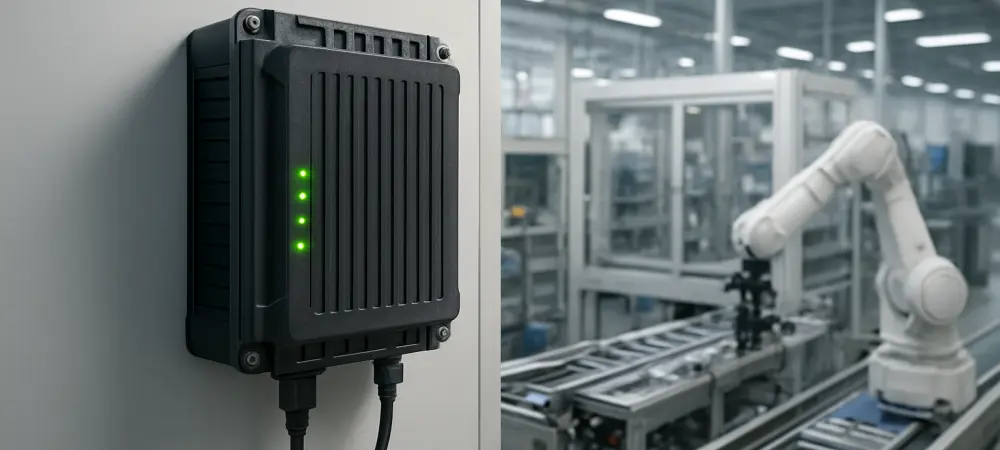
Success in this field is also being defined by the effective use of hybrid cloud models. Notable organizations are currently leveraging a mix of private data centers and public clouds to balance the strict requirements of data sovereignty with the need for massive, on-demand compute power. By maintaining sensitive data on-premises while using the cloud for intensive model training, these companies achieve a level of flexibility that reactive organizations lack. Smart factories have also adopted this distributed approach, utilizing proactive hardware setups to maintain automated precision and avoid the downtime associated with centralized system failures.
Expert Perspectives: The Full-Stack Systems Challenge
Beyond the GPU: Holistic Hardware Integration
Industry leaders are increasingly vocal about why a “GPU-only” strategy fails in the current market, emphasizing that a truly resilient AI foundation requires more than just raw processing power. While the Graphics Processing Unit remains a central component, the roles of high-performance CPUs, high-speed memory, and low-latency networking are equally critical. Experts argue that without a balanced architecture, expensive GPUs often sit idle, waiting for data to be moved across narrow bandwidth channels. This “starvation” of compute resources represents a significant waste of capital and highlights the need for a full-stack engineering approach. Moreover, thought leaders strongly advocate for open software platforms to avoid the restrictive nature of vendor lock-in. By building on open-source frameworks and standardized hardware interfaces, enterprises maintain long-term architectural flexibility, allowing them to swap components as newer, more efficient technologies emerge. This openness is not just a technical preference but a strategic safeguard against the monopolistic pricing and supply chain vulnerabilities that often plague proprietary ecosystems. Maintaining an agnostic stance toward hardware allows for a more competitive procurement process and a more adaptable technological roadmap.
Regional and Compliance Considerations: Navigating the Global Landscape
Navigating data sovereignty and localized compliance has become a primary concern for professionals, particularly in specialized markets like Australia. In these regions, strict regulations regarding where data is stored and processed necessitate a highly localized infrastructure strategy. Experts suggest that global companies must deploy “sovereign AI” stacks that comply with local laws while still integrating with a broader global network. This requires a sophisticated level of hardware-level governance, where security protocols are baked into the physical components to ensure that automated processes do not inadvertently violate privacy mandates.
Operational integrity also depends on the integration of rigorous security protocols directly into the hardware layer. Professional opinions suggest that as AI-driven automation takes over more critical business functions, the potential for catastrophic failure or cyber intrusion increases. Therefore, a proactive foundation must include hardware-based “roots of trust” and encrypted data paths that protect the integrity of the models. Building these protections early in the infrastructure lifecycle is significantly more cost-effective than attempting to patch vulnerabilities in a legacy system that was never designed for the rigors of modern AI.
Future Projections: The Cost of Delay and Architectural Evolution
The Scarcity Risk: Economic Implications of Reactive IT
Global hardware shortages and the relentless surge in demand make early infrastructure commitments a competitive necessity through the period from 2026 to 2028. The risk of scarcity is no longer a theoretical concern but a recurring market reality that can stall an entire organization’s digital transformation. Analyzing the long-term ROI of proactive planning reveals that the initial capital expenditure is often dwarfed by the cascading costs of lost productivity associated with reactive IT upgrades. Companies that wait for the “perfect” time to invest often find themselves at the back of a very long queue for essential components.
The move toward modular and portable design is also expected to accelerate, allowing AI workloads to move seamlessly between the edge and the centralized cloud. This architectural evolution will enable a more fluid distribution of resources, where compute power follows the data rather than the other way around. Economically, this portability reduces the long-term cost of ownership by preventing the need for massive data migrations. Proactive firms are already validating these modular designs to ensure they can pivot their operations as market conditions and technological capabilities change.
Sustainability and Scale: Addressing Power Consumption
As AI clusters grow in density and geographic distribution, addressing the challenges of power consumption and cooling has become a non-negotiable part of infrastructure planning. The environmental impact of massive data centers is under increasing scrutiny, and organizations that fail to implement efficient cooling technologies or renewable energy sources face both regulatory and reputational risks. Strategic planners are looking toward liquid cooling and advanced thermal management to maintain the operational efficiency of high-density racks. This focus on sustainability is not merely about compliance; it is about the physical ability to scale operations without exceeding the power limits of existing facilities.
Economic implications also extend to the efficiency of the software running on these machines. Proactive infrastructure involves optimizing the entire stack to ensure that every watt of electricity translates into meaningful inference or training progress. The evolution of the AI foundation will likely see a closer marriage between green energy initiatives and compute expansion. Those who successfully integrate these elements will find they can scale their AI capabilities at a much lower cost per unit of intelligence, providing a significant advantage in a market where operational margins are increasingly tight.
Strategic Imperatives: A Proactive AI Foundation
The transition toward proactive AI infrastructure proved to be the defining factor in enterprise longevity during this pivotal period of technological integration. Organizations realized that treating hardware as a series of isolated purchases was a flawed strategy that led to significant bottlenecks and diminished returns. Instead, the successful adoption of a holistic, full-stack business approach allowed leaders to harmonize their computational needs with their operational goals. Infrastructure readiness emerged as the primary enabler of modern enterprise agility, providing the necessary stability for innovation to flourish without the constant threat of system failure or resource exhaustion.
Decision-makers who embraced open ecosystems and started the validation process early secured their positions in the AI-driven economy. They moved away from the reactive models of the past and established a foundation that was both resilient and adaptable. The era of trial and error concluded as companies stabilized their environments through rigorous governance and strategic hardware alignment. By prioritizing the physical layer of the AI stack, these enterprises ensured that their digital future was built on a sustainable and scalable base. This proactive stance transformed IT departments from cost centers into the very engines of corporate growth and market leadership.