

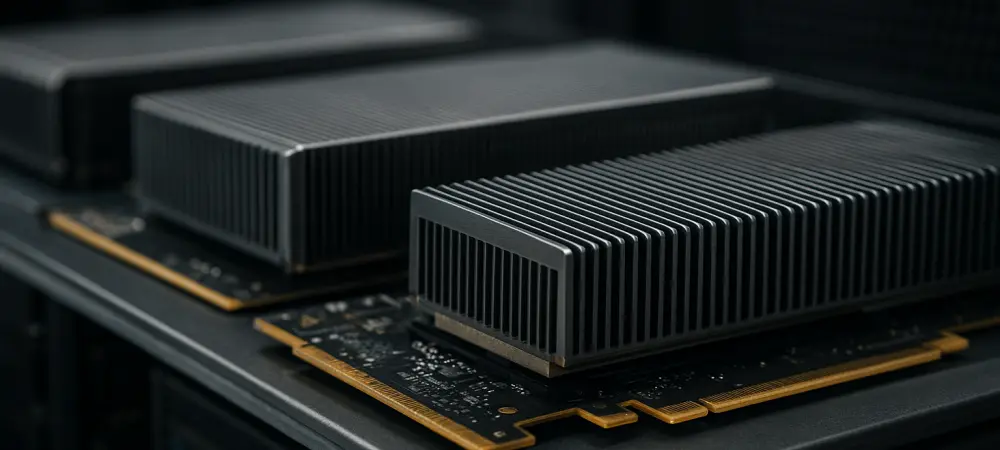
The global enterprise landscape has reached a critical tipping point where the convenience of public cloud services no longer outweighs the necessity for absolute sovereignty over proprietary data and intelligence assets. As organizations transition from speculative AI experimentation into full-scale industrial production, the focus has shifted toward the Sovereign AI paradigm. This movement centers on maintaining control over intellectual property by bringing large language models to the data rather than exporting sensitive information to external servers. The convergence of secure compute and localized data is redefining how modern businesses architect their digital foundations for the upcoming decade.
Infrastructure is no longer a passive container for software but a strategic asset that determines the speed of innovation. This analysis explores the rapid transition from fragmented hardware setups to unified, automated AI ecosystems. By examining the rise of localized model deployment and the governance of autonomous agents, one can see how the architecture of the private cloud is becoming the definitive engine for corporate intelligence.
The Industrialization: Enterprise AI Infrastructure
Market Dynamics: The Speed of Adoption
The traditional metal-to-model deployment pipeline, which once took several weeks of manual configuration, has been revolutionized by software-defined platforms that shrink the process to mere hours. This efficiency leap allows companies to respond to market shifts with unprecedented agility, bypassing the latency issues inherent in remote data centers. Consequently, there is a visible surge in private AI investments as mid-to-large enterprises seek the predictable performance and cost structures of on-premises environments.
High-performance hardware integration has become the baseline for these modern data centers. The adoption of specialized AI ReadyNodes, equipped with advanced processing units like the AMD MI350 Series, ensures that the underlying silicon can handle the massive computational demands of modern inference. This trend signifies a departure from general-purpose computing toward a specialized, high-density infrastructure designed specifically for the rigors of neural network processing.
Real-World Application: The AI Factory Model
The AI Factory provides a concrete blueprint for bridging the historical gap between raw hardware and production-ready applications. By automating the lifecycle of AI workloads, this model allows enterprises to focus on fine-tuning models rather than troubleshooting server configurations. It treats the data center as a production line where raw data enters and refined intelligence emerges through a standardized, secure process. Resource optimization is achieved through sophisticated multi-tenancy strategies that maximize GPU utilization. By using isolated namespaces and model sharing, different business units can leverage the same expensive hardware without risking data leakage or interference. Furthermore, the deployment of a Governed Model Gallery—featuring curated versions of open-source models like Gemma and Qwen—provides a secure, private alternative to public model repositories, ensuring that only vetted and compliant intelligence is used.
Perspectives: Industry Leaders and Experts
The Challenge: Reducing Complexity
Chief Product Officers across the technology sector highlight that the primary barrier to AI scaling is the friction inherent in traditional IT infrastructure. Automation is no longer an optional luxury; it is a fundamental requirement for any organization hoping to maintain a competitive edge. Experts argue that the move toward a simplified, zero-touch provisioning model is essential to empower data scientists who lack deep infrastructure expertise.
Security: The Era of Autonomy
As AI agents become more autonomous, the need for secure execution environments has become paramount. Industry experts emphasize the implementation of Secure AI Sandboxes to contain agent-generated code and prevent unintended behaviors from impacting the broader corporate network. These isolated environments provide the necessary guardrails to explore agentic workflows while maintaining a robust security posture.
Governance and compliance have also evolved into central pillars of the private cloud. The rise of centralized AI Gateways allows for strict prompt routing and token-rate limiting, which are non-negotiable for industries operating under heavy regulatory scrutiny. These gateways act as a unified control plane, ensuring that every interaction with a large language model adheres to established corporate policies and legal standards.
The Future: Outlook for Private AI Infrastructure
The Rise: Agentic AI
The next stage of evolution involves the proliferation of autonomous AI agents that require specialized, high-security execution environments to handle sensitive data. These agents will likely perform complex tasks with minimal human intervention, necessitating a private infrastructure that can support continuous, high-speed reasoning. This shift will demand even greater integration between hardware and software to minimize bottlenecks in agentic workflows.
Economic Implications: Predictable AI
The financial landscape of artificial intelligence is changing as organizations move away from the unpredictable, token-based pricing of public cloud providers. Owning the infrastructure allows for a more stable ROI calculation, especially as workloads scale from 2026 to 2028. While the initial capital expenditure for private clouds is higher, the long-term operational savings and the added value of data sovereignty create a compelling economic case for the enterprise.
However, the transition is not without its hurdles, particularly regarding the talent gap and the ongoing competition for high-end silicon. Redefining the relationship with public cloud hyperscalers will involve a hybrid approach where the sovereign core remains private, while bursting capabilities and non-sensitive tasks may still reside in the public domain. This balanced strategy ensures both security and scalability.
The transformation from fragmented technical hurdles to a unified, automated AI lifecycle management system marked a significant milestone in corporate technology. Organizations that recognized the imperative of infrastructure control gained a distinct advantage by running workloads exactly where their data resided. This transition proved that the foundation of enterprise success was built on the three pillars of security, scalability, and sovereignty. Strategic evaluations of infrastructure readiness became the standard procedure for companies aiming to survive in an intelligence-driven economy. Leaders prioritized the creation of localized ecosystems that could support both current models and future autonomous agents. By investing in private AI clouds, these organizations successfully secured their intellectual property while paving the way for sustainable, long-term growth.