

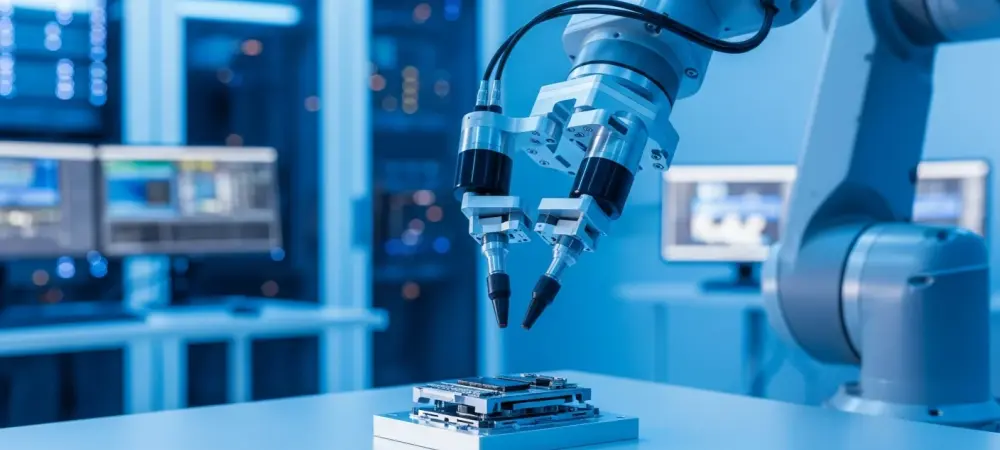
The long-standing boundary between digital computation and mechanical reality is dissolving as artificial intelligence transitions from a confined software existence into a diverse range of physical bodies. For decades, intelligence was largely trapped behind glass screens, limited to processing text and images within the digital vacuum of the cloud. However, a fundamental shift is occurring as these algorithms gain the sensory and motor capabilities necessary to interact directly with the messy, unpredictable world. This transition from generative chatbots to “Physical AI” represents the next industrial frontier, merging complex sensory perception with real-world mechanical action to solve labor shortages and optimize logistics. This analysis explores the leading innovators driving this change, the technical consensus among industry experts, and the far-reaching economic and societal implications of embodied intelligence.
Evaluating the Growth and Deployment of Physical AI
Market Acceleration and Scaled Adoption Metrics
The expansion of industrial robotics has reached a critical velocity, moving away from experimental pilots toward massive operational deployments. Amazon exemplifies this trend, having integrated over one million robot workers into its fulfillment centers to handle the mounting pressures of global commerce. These machines are no longer relegated to simple sorting tasks; instead, they are now performing complex maneuvers like unloading heavy cargo and navigating multi-level warehouse environments with increasing autonomy. This massive scale demonstrates that the infrastructure for Physical AI is maturing, shifting the conversation from technical feasibility to logistical optimization.
In parallel with industrial giants, specialized robotics firms are setting aggressive production targets that suggest a near-future saturation of automated labor. 1X Technologies has outlined plans to produce 10,000 domestic units annually, focusing on a safe, textile-covered design that allows for close human interaction. Meanwhile, Tesla’s long-term ambition for its Optimus humanoid involves million-unit annual volumes, aiming to reduce the cost of a sophisticated robot to that of a family car. This push toward mass production is supported by the “Robotics as a Service” (RaaS) model, which allows companies to lease automated labor through pay-per-hour structures. This economic shift lowers the barrier to entry, enabling smaller enterprises to adopt advanced robotics without the massive upfront capital expenditures traditionally required.
Pioneering Implementations Across Industrial Sectors
Autonomous logistics and transportation have already proven the viability of Physical AI in dense urban centers. Waymo and Baidu’s Apollo platform have transitioned from research projects into fully functional robotaxi services, completing hundreds of thousands of journeys weekly. By navigating complex city traffic without human intervention, these platforms demonstrate that AI can process high-fidelity sensory data in real time to make safety-critical decisions. This success in the transportation sector serves as a blueprint for other industries, proving that embodied intelligence can manage the risks associated with unscripted, public environments.
The manufacturing and agricultural sectors are witnessing a similar transformation through the introduction of specialized and general-purpose machines. Humanoid robots like Agility’s Digit and Figure AI’s models have begun working alongside humans in environments like BMW factories and Spanx warehouses, filling repetitive roles that are difficult to staff. These robots are designed to utilize human-centric infrastructure, such as stairs and narrow aisles, without requiring expensive facility renovations. Furthermore, specialized advancements like Apptronik’s hot-swappable battery systems ensure that these machines can maintain continuous operation. In the skies, DJI has expanded the role of drones from simple cameras to autonomous decision-makers capable of managing agricultural health and public safety through advanced processing platforms.
Expert Perspectives on the Logic of Embodied Intelligence
Strategic Transition to General-Purpose Systems
There is a growing consensus among industry leaders that the era of single-task machines is coming to an end. Experts suggest that the future of robotics lies in adaptable, general-purpose humanoid forms that can learn new tasks through observation and simulation. This shift is driven by the realization that building a unique machine for every task is economically inefficient compared to a versatile robot that can mimic human movements. To facilitate this, companies are turning toward advanced simulation environments like Nvidia’s Isaac platform. These high-fidelity digital twins allow Physical AI to undergo thousands of hours of training in a virtual space before ever touching a factory floor, ensuring they can navigate human-centric spaces safely.
The safety of these machines remains a primary concern as they move from isolated industrial cages into shared workspaces and homes. The role of “soft” robotics has emerged as a crucial solution, with experts emphasizing the need for compliant joints and padded exteriors to prevent injuries during accidental contact. By prioritizing safe human-robot coexistence, developers are ensuring that embodied intelligence is perceived as a collaborative tool rather than a hazardous obstacle. This focus on the physical interface reflects a broader strategic pivot toward making AI more approachable and integrated into the daily fabric of professional and domestic life.
Physical Interaction as the Essential Gateway to AGI
A compelling theoretical perspective suggests that the path to Artificial General Intelligence (AGI) must lead through the physical world. Many researchers argue that true machine reasoning is impossible without a grounded understanding of physical concepts like gravity, friction, and momentum. While linguistic models can predict the next word in a sentence, they lack a functional grasp of cause and effect. By granting AI a body, developers allow it to experience the consequences of its actions, creating feedback loops that move beyond mere pattern recognition. This sensory-motor experience is increasingly viewed as the final precursor to achieving a level of intelligence that can solve problems across multiple domains.
This embodied feedback enables AI to move beyond the limitations of digital-only datasets. When a robot attempts to pick up a fragile object or navigate a slippery surface, it learns about the nuances of the physical environment in a way that no text description could convey. Consequently, the interaction between software and hardware creates a more robust form of intelligence that is capable of adapting to novel situations. This evolution suggests that the “brain” of the AI is being fundamentally reshaped by its “body,” leading to a more holistic understanding of the world that aligns more closely with biological intelligence.
The Future Roadmap: Societal and Economic Implications
Economic Evolution Through Mass Production and Labor Integration
The democratization of automated labor hinges on the ability to mass-produce Physical AI at price points accessible to the broader market. As manufacturing scales, the cost of humanoid robots is expected to plummet, potentially allowing them to be integrated into households for domestic assistance or small businesses for localized logistics. This shift could fill critical labor gaps in aging societies where the workforce is shrinking, effectively decoupling economic growth from population trends. By reshaping global supply chains, Physical AI could enable more localized production, as the cost of labor becomes standardized through technology rather than geography.
However, the long-term integration of these machines into the workforce will necessitate a reevaluation of the nature of human work. As robots transition from heavy industry into offices and service roles, human employees may shift toward oversight, maintenance, and roles requiring high emotional intelligence. The transition will not be instantaneous, but the current momentum indicates a steady migration of labor from humans to machines in roles that are historically characterized by high turnover or physical strain. This economic evolution will likely lead to new career paths focused on robot-human coordination and the management of fleet operations. The transition will not be instantaneous, but the current momentum indicates a steady migration of labor from humans to machines in roles that are historically characterized by high turnover or physical strain.
Navigating the Ethical Boundaries of Autonomous Machines
The rapid deployment of autonomous machines brings significant risks, particularly regarding job displacement and the creation of new safety protocols. As Physical AI becomes a staple of the daily workforce, society must develop robust legal frameworks to handle liability when a machine makes a mistake in an unscripted environment. Determining who is responsible—the software developer, the hardware manufacturer, or the operator—remains a complex challenge that requires international cooperation. Moreover, the psychological impact of working alongside autonomous entities must be considered to ensure a smooth transition that maintains social stability and worker morale.
Ethical considerations also extend to the privacy of data collected by robots equipped with sophisticated sensory arrays. As these machines enter private homes and secure facilities, the management of the vast amounts of visual and spatial data they record will become a point of contention. Striking a balance between the technological momentum of Physical AI and the necessary societal adjustments will be the defining challenge of the coming decade. Addressing these ethical boundaries proactively will be essential to ensuring that the benefits of embodied intelligence are distributed equitably while minimizing the potential for misuse or systemic disruption.
Summary: The Imminent Integration of AI into the Physical World
The shift toward embodied intelligence required a fundamental reconfiguration of how society perceived labor and machine autonomy. Leaders recognized that preparing for this integration involved more than just technical updates; it necessitated a complete overhaul of liability frameworks and employee retraining programs. The successful commercialization of these technologies was driven by the convergence of high-fidelity simulation and mass-production techniques that brought costs within reach of the mainstream market.
As the physical and digital realms became increasingly intertwined, the role of human workers evolved from manual tasks to high-level strategic management. The “ChatGPT moment” for robotics arrived when machines demonstrated the ability to learn complex tasks through simple observation, effectively ending the era of rigid programming. This milestone allowed organizations to scale their operations with unprecedented speed, filling labor voids that previously threatened economic stability. Ultimately, the integration of AI into the physical world proved to be the catalyst for a new era of productivity, where the boundary between software reasoning and mechanical execution effectively disappeared.