

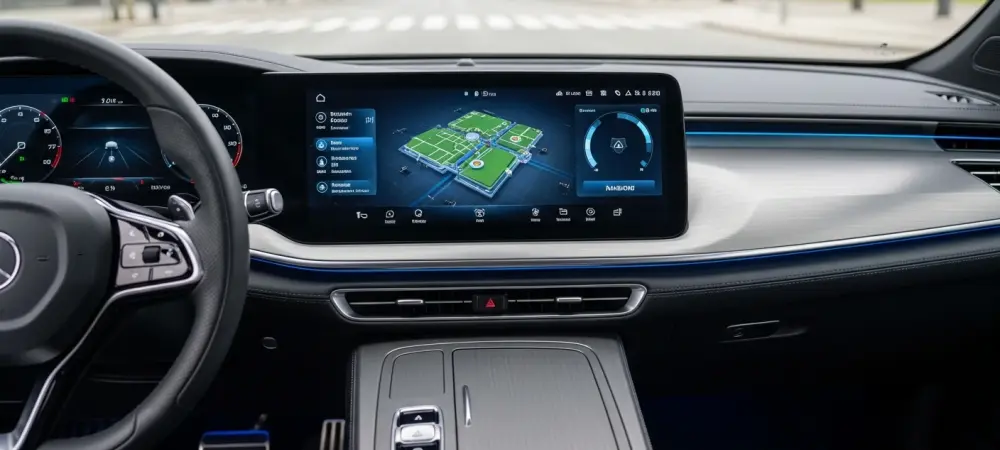
Modern vehicles are rapidly shedding their identities as mere mechanical assemblies to become sophisticated, self-learning entities capable of navigating the unpredictable nature of the physical world. This evolution centers on Physical AI, a paradigm where machines move beyond rigid, rule-based scripts to perceive and react to environments in real-time. By leveraging the strategic alliance between Qualcomm and Wayve, the industry is creating a production-ready framework designed to dismantle the economic and technical barriers that have long stalled the progress of autonomous driving. This shift highlights a broader transition toward foundation models and high-performance compute infrastructure that bridges the gap between simple driver assistance and complete vehicle autonomy.
The Shift Toward Data-Driven Autonomy
Market Adoption: The Decline of Rule-Based Systems
The traditional architecture of autonomous driving relied heavily on thousands of hand-coded rules and hyper-specific high-definition mapping. This method is proving increasingly difficult to sustain due to exorbitant labor costs and the logistical nightmare of maintaining regional map accuracy. Current industry data suggests a decisive preference for unified, data-driven foundation models that can generalize driving behaviors across diverse urban and rural environments. Automakers are now prioritizing “mapless” technologies that function effectively without the need for constant infrastructure updates or localized manual programming.
This movement toward generalized intelligence is gaining significant traction as manufacturers seek to shorten development cycles. By moving away from fragmented software supply chains, companies can minimize the risks of system incompatibility and high maintenance overhead. The goal is no longer just to follow a digital trail but to create a system that understands the physics of the road, adapting to unexpected obstacles with the same fluidity as a human driver. This transition marks a fundamental change in how the industry views vehicle intelligence and operational scalability.
Real-World Application: The Qualcomm and Wayve Framework
A prominent example of this technological leap is the integration of Wayve’s advanced AI driving layer with the Qualcomm Snapdragon Ride system-on-chips. This partnership provides a concrete application of Physical AI by allowing driving software to learn from vast datasets of real-world interactions rather than static, pre-defined instructions. This embodied approach is currently being deployed in production-ready Advanced Driver Assistance Systems that offer real-time monitoring and secure system isolation. By utilizing the energy-efficient compute architecture provided by Qualcomm, automakers can implement sophisticated neural intelligence without compromising the vehicle’s thermal management or battery range.
Furthermore, this framework allows for a seamless flow of data between the vehicle’s sensors and its central processing unit, facilitating rapid decision-making in complex scenarios. The Snapdragon Ride platform ensures that the high computational demands of deep learning models do not overwhelm the vehicle’s electrical architecture. Consequently, this synergy between specialized hardware and flexible software allows for a more responsive and reliable driving experience. It essentially turns the car into a learning machine that improves with every mile driven, rather than remaining stuck with the logic it had on the factory floor.
Expert Insights: Industry Integration and Scalability
Industry leaders, including Qualcomm’s Anshuman Saxena and Wayve’s Alex Kendall, emphasize that the path to widespread autonomy lies in pre-integrated, modular systems. They argue that the current complexity of automotive software serves as a major bottleneck, and a standardized hardware-software stack is the only way to make Level 4 autonomy economically viable for the mass market. The transition to these integrated systems allows for “software portability,” meaning a single AI model can function across various vehicle segments, from entry-level commuters to premium luxury SUVs, without requiring a ground-up redesign for each model.
This perspective reinforces the idea that the future of the automotive market depends on a delicate balance between technical standardization and brand differentiation. While the underlying technical protocols and safety architectures are becoming more uniform, individual brands can still customize the user experience and maintain their unique identity through the interface and specific driving characteristics. Experts suggest that by adopting an open but standardized architecture, automakers can focus their resources on innovation rather than troubleshooting basic connectivity or compatibility issues. This modularity ensures that investments in AI technology remain valuable across different vehicle platforms and successive model years.
The Future Outlook: Embodied AI and Autonomous Mobility
The trajectory of Physical AI suggests a transition from “hands-off” assistance to “eyes-off” fully autonomous driving. As these AI foundation models become more sophisticated, the industry expects the deployment of Level 4 robotaxi fleets that operate seamlessly in complex urban environments without localized re-engineering. However, this evolution is not without its hurdles, as the sector must still navigate rigorous safety certifications and redundant hardware requirements. The proliferation of this technology is expected to significantly reduce traffic accidents by eliminating human error, while simultaneously lowering the barrier to entry for new automotive players who can leverage these existing AI frameworks.
Over the coming years, the convergence of high-tier processing power and deep learning will likely turn the vehicle into a proactive partner in navigation. Beyond simple obstacle avoidance, these systems will manage energy consumption and optimize routes based on real-time traffic patterns and environmental conditions. While regional regulations will continue to play a role in the speed of adoption, the technological foundation is already being laid for a global standard in autonomous mobility. This shift fundamentally changes the nature of transportation, turning the cabin into a space for productivity or relaxation rather than a control room for a complex machine.
Summarizing the Automotive Intelligence Revolution
The integration of Physical AI represented a departure from static software, offering a dynamic and scalable solution for the modern automotive landscape. By moving toward data-driven foundation models and high-performance compute platforms like Snapdragon Ride, the industry addressed the long-standing issues of cost and complexity. This analysis confirmed that the collaboration between tech giants and AI innovators was essential for creating a reliable roadmap to autonomy. As automakers adopted these integrated frameworks, the focus shifted from basic digital survival to a future defined by safe and efficient transportation. This transition ultimately empowered manufacturers to deliver consistent performance while maintaining the unique identities of their respective brands.