

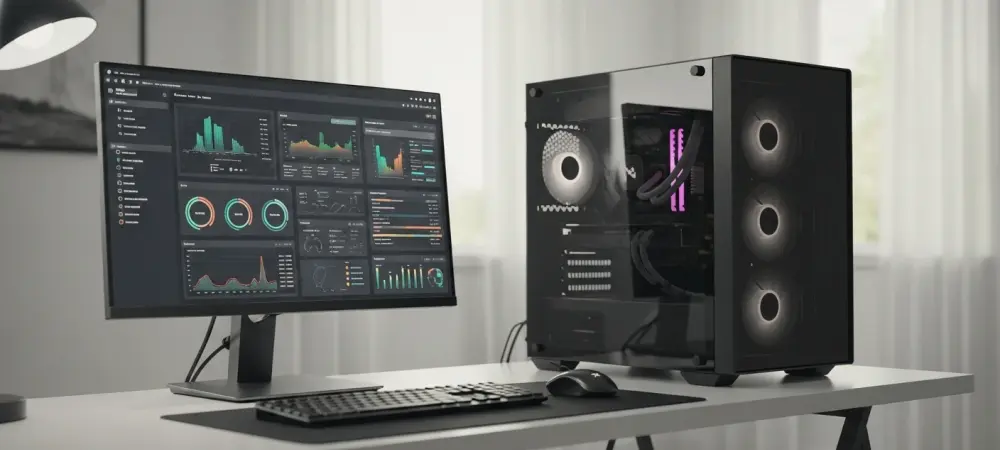
High-performance gaming is no longer reserved for those with bottomless wallets, as the latest hardware surveys reveal a democratic shift toward mid-range accessibility. The landscape of the PC ecosystem is undergoing a fundamental restructuring, moving away from the niche enthusiast market toward a stabilized, mainstream standard. This transition signifies a return to statistical normalcy, where efficiency and value outweigh the raw, unbridled power of flagship components.
The Shift Toward Mainstream Power and Market Parity
GPU Dominance and the Entry of New Competitors
NVIDIA continues to maintain a firm grip on the market through its 60-series cards, specifically the RTX 3060 and 4060, which serve as the primary benchmarks for the average user. These units offer the necessary balance of ray-tracing capabilities and frame-rate stability that modern titles demand without requiring massive financial investments. However, the monopoly is facing subtle pressure as Intel Arc graphics finally make a visible impact on hardware surveys, largely driven by integrated solutions in mobile processors. Software requirements have also dictated a plateau in memory configurations, as 16GB of RAM has solidified its position as the universal standard for stability. While higher capacities saw brief spikes in interest, consumer spending habits suggest that most gamers prioritize a reliable baseline over excessive overhead. This reflects a more pragmatic approach to hardware acquisition that mirrors the current economic climate.
Competitive Realignment in the CPU and OS Landscape
The central processor market is witnessing a historic tightening of competition, with AMD reaching a record 44.1% market share. This growth represents a significant narrowing of the gap with Intel, suggesting that the long-standing hierarchy of silicon providers is no longer a given. Meanwhile, the software environment has stabilized, as Windows 11 adoption finally eclipses the aging Windows 10, marking a definitive end to the previous generation’s dominance.
Beyond the Windows ecosystem, a surprising surge in Linux adoption has pushed the platform to a record 5.3% share. This movement is almost entirely fueled by the success of the Steam Deck and the optimization of SteamOS, proving that specialized hardware can successfully bypass traditional operating system barriers. This diversification offers a glimpse into a future where the desktop tower is merely one of many ways to access high-quality gaming.
Industry Perspectives on Component Specialization
Experts identify the combination of 60-series GPUs and 16GB of RAM as the industry “sweet spot,” where price-to-performance ratios are at their peak. This specialization allows developers to target a specific performance bracket, ensuring that games remain accessible to the widest possible audience. Consequently, the push for extreme high-end hardware has slowed as the middle market becomes the primary focus of optimization.
Strategic gains by AMD have forced a re-evaluation of Intel’s long-term dominance, specifically as the mobile-first “Core Ultra” architecture attempts to reclaim lost ground. The competition is no longer just about clock speeds, but about how efficiently these processors can handle integrated graphics and power management. Furthermore, the “Steam Deck Effect” has demonstrated that handheld portability is a viable alternative to the traditional PC, permanently altering how manufacturers approach device design.
The Future of the Gaming Ecosystem
The trajectory of the CPU market suggests that AMD may soon reach true parity with Intel, especially if mobile-integrated chips continue to redefine performance expectations. If integrated graphics continue to improve at their current rate, the necessity of a discrete desktop tower may diminish for a significant portion of the gaming population. This shift would prioritize portability and power efficiency over traditional modularity.
Forecasts also indicate that language and demographic shifts will play a larger role in global game development strategies. As the hardware market becomes more fragmented, developers will need to account for a wider variety of configurations and operating systems. While this fragmentation presents technical challenges, the benefits of increased competition and platform diversity far outweigh the complexities of a unified but stagnant market.
Conclusion: A Maturing and Diversified Market
The latest hardware trends demonstrated a clear return to statistical normalcy as AMD and Linux achieved unprecedented levels of mainstream adoption. The market moved toward a more equitable distribution of power, where accessibility became the primary driver for technological progress. These shifts reflected a broader maturation of the gaming community, which prioritized functional stability over the pursuit of high-cost extremes.
Consumers and developers must now prepare for a landscape where cross-platform compatibility and hardware efficiency are the new gold standards. Navigating this multi-platform environment will require a focus on software optimization that respects the diverse range of handheld and mid-range devices. Embracing this competitive diversity will ultimately foster a more resilient and inclusive gaming culture.