

The relentless computational hunger of artificial intelligence, now inextricably linked with a global tokenization market cresting over a trillion dollars, is fundamentally reshaping our planet’s energy and data infrastructure by pushing it quite literally into the heavens. In 2025, what was once the domain of speculative fiction is rapidly solidifying into commercial reality, marking a pivotal shift in the architecture of global computing. This migration into orbit is not a matter of choice but of necessity, driven by the voracious energy appetite of AI and the explosive growth of digital assets. This new frontier promises a sustainable, high-performance future for data infrastructure, free from terrestrial constraints. This analysis examines the confluence of technological, economic, and political factors launching data centers into Low Earth Orbit, exploring the key players, enabling technologies, and the profound implications of this emerging trend.
The Dawn of a New Computing Paradigm
The AI and Tokenization Energy Crisis
The global tokenization market, a financial revolution transforming real-world assets into digital tokens on a blockchain, is projected to reach an astounding $1.24 trillion this year. This growth is not happening in a vacuum; it is supercharged by AI-driven processes that manage, verify, and trade these assets with unprecedented speed and complexity. The synergy between these two technologies creates a compounding demand for computational power, as both AI model training and the cryptographic operations underpinning blockchain networks are notoriously energy-intensive. This insatiable demand creates a feedback loop where more sophisticated AI leads to a more complex token economy, which in turn requires even more computational resources to sustain.
This escalating energy consumption is placing an immense and unsustainable strain on terrestrial power grids, many of which are already struggling to modernize and meet existing demands. Hyperscale data centers, the physical backbone of the cloud, are now facing a critical bottleneck. Their plans for expansion are increasingly constrained not by the cost of servers or land, but by the sheer availability of massive, reliable power. Consequently, the industry has been forced to look beyond the planet’s surface for a scalable, consistent, and, crucially, carbon-free energy source capable of powering the next generation of digital infrastructure.
Inaugural Deployments in Low Earth Orbit
Answering this call is a new breed of aerospace and technology pioneers. Singapore-based Orbit AI is leading the charge with a vertically integrated vision for an orbital cloud. The company is developing “DeStarlink,” a decentralized Low Earth Orbit (LEO) satellite network designed for secure, high-bandwidth communication, and “DeStarAI,” the orbital compute infrastructure that will run on it. This design philosophy aims to create a global compute fabric that is resilient to terrestrial geopolitical controls and power grid vulnerabilities, offering a new paradigm for data sovereignty and operational continuity.
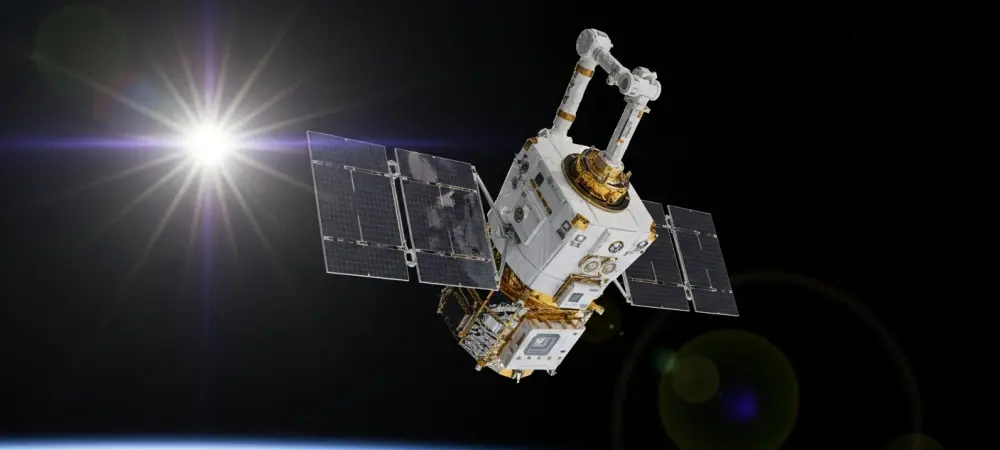
The theoretical became tangible on December 10, 2025, when PowerBank Corporation of Canada successfully launched the first “DeStarlink Genesis-1” satellite. This event marked the first concrete step toward a commercially viable orbital cloud, deploying an initial node of what is planned to be a sprawling network of space-based data centers. The launch serves as a powerful proof-of-concept, demonstrating that the complex engineering and logistical challenges of deploying and operating sophisticated compute hardware in the harsh environment of space can be overcome. This landmark project is not the work of a single entity but a testament to the power of global collaboration. The Genesis-1 initiative brings together a consortium of industry leaders, each contributing a critical piece of the puzzle. PowerBank Corporation provided the essential launch services, while Canadian firm Intellistake Technologies Corp developed the specialized blockchain protocols for secure, decentralized operation. At the core of the satellite’s processing power are high-performance AI GPUs from NVIDIA, and the entire system’s blockchain architecture was designed in consultation with the Ethereum Foundation, ensuring compatibility with one of the world’s leading smart contract platforms.
The Catalysts and Key Industry Players
A Convergence of Enabling Factors
The rapid emergence of orbital infrastructure was not a spontaneous event but the result of a powerful convergence of enabling factors. A key catalyst has been proactive policy momentum from the U.S. government. Initiatives such as the “Executive Order Removing Barriers to American Leadership in Artificial Intelligence” and the Department of Energy’s ambitious “Genesis Mission” have created a clear strategic focus. These policies have not only encouraged but actively incentivized the private sector, particularly hyperscale data center operators, to explore and develop novel energy solutions to power the nation’s AI ambitions, making orbital solar power a strategically vital area of research and investment.
Simultaneously, the underlying economics of space ventures have been fundamentally transformed. Over the past decade, satellite launch costs have plummeted to approximately one-hundredth of their shuttle-era levels, driven by reusable rocket technology pioneered by commercial space companies. This dramatic cost reduction has irrevocably altered the cost-benefit analysis for deploying assets in orbit. What was once prohibitively expensive for all but government-backed missions is now an economically feasible frontier for commercial enterprise, opening the door for large-scale infrastructure projects like orbital data centers.
This new economic reality is underpinned by critical technological breakthroughs that have made the orbital cloud technically practical. The science of space-based solar power (SBSP) has matured significantly, moving from theoretical models to functional prototypes. Perhaps the most crucial development has been the advent of metamaterial rectennas—specialized antennas that receive beamed microwave energy and convert it back into electricity. With demonstrated conversion efficiencies now exceeding 90%, these devices make the wireless transmission of power from space a highly effective and commercially viable reality, minimizing energy loss and the required land footprint for receiving stations on Earth.
Hyperscalers Race to the Stars
The world’s largest cloud providers, often called hyperscalers, are at the epicenter of the data explosion and are therefore prime movers in the race to orbit. Companies like Amazon Web Services (AWS), Microsoft Azure, and Google Cloud are facing a dual challenge: scaling their infrastructure to meet the exponential growth in AI-driven demand while simultaneously adhering to increasingly stringent corporate and regulatory environmental goals. Securing a constant, renewable power source in the tens or hundreds of megawatts required for a single data center campus is a monumental task. Orbital infrastructure offers an elegant solution, promising a limitless supply of clean energy independent of terrestrial grids and weather patterns.
In response, these tech giants are actively investing in and developing their own space-based infrastructure. AWS is leveraging its sister company, Blue Origin, to develop orbital data center modules that can be deployed and serviced by the Blue Ring spacecraft platform. Similarly, Microsoft is aggressively expanding its Azure Space platform, which aims to seamlessly integrate satellite data processing and connectivity directly into its existing cloud services, effectively extending the Azure cloud into orbit. Meanwhile, Google Cloud is pursuing proprietary research through initiatives like “Space Llama” and “Project Suncatcher,” exploring both space-based compute architectures and next-generation solar power technologies to secure a long-term strategic advantage.
Future Projections and Evolving Landscapes
The Space-Based Solar Power Revolution
Space-based solar power is the linchpin technology making the entire orbital cloud vision possible. By placing massive solar arrays in orbit, energy can be collected continuously, unhindered by nighttime, clouds, or atmospheric absorption. This results in productivity up to eight times greater than identical terrestrial panels and provides a near-24/7 power source perfectly suited for the relentless operational demands of hyperscale data centers. This technology promises to unlock a truly global and sustainable energy source, fundamentally altering the energy landscape.
Reflecting this potential, the SBSP market is poised for explosive growth. Current projections show the market expanding from an estimated $0.63 billion in 2025 to $4.19 billion by 2040. This growth is attracting a diverse array of players, igniting a global race to commercialize the technology. Government agencies like NASA and the Japan Aerospace Exploration Agency (JAXA) are leading foundational research, complemented by academic breakthroughs like Caltech’s recent successful demonstration of in-orbit wireless power beaming. Alongside them, a vibrant commercial sector is emerging, with established aerospace giants and nimble startups like Space Solar and Virtus Solis all vying to build the power plants of the future.
The Shifting Regulatory and Financial Terrain
The financial calculus for energy and cloud projects is also being reshaped by significant shifts in the U.S. regulatory landscape. New legislation has begun scaling back commercial solar tax credits for terrestrial projects, imposing strict deadlines that challenge the long development cycles of large-scale solar farms. Projects must now begin construction by mid-2026 to qualify for the standard completion window, creating uncertainty for the terrestrial solar pipeline. This tightening of incentives on the ground could, perhaps inadvertently, increase the financial attractiveness of space-based solar power as a more predictable and strategically valuable long-term alternative.
Adding another layer of complexity, new IRS regulations that took effect in January 2025 have reclassified income from cross-border cloud transactions. These transactions are now treated as “service income” rather than “property leases,” a technical distinction with major consequences for how hyperscale companies manage their global tax liabilities. This change affects foreign tax credits and withholding tax strategies, forcing a re-evaluation of where and how cloud infrastructure is deployed. This evolving tax terrain adds a new and powerful financial consideration to the strategic deployment of global orbital infrastructure, potentially favoring architectures that transcend traditional national tax jurisdictions.
Conclusion: The Next Frontier for Data
The strategic migration to orbital cloud infrastructure was a direct and necessary response to the clear terrestrial limits of energy and computation. The explosive growth of AI and tokenization throughout the year created a demand that Earth’s power grids simply could not satisfy sustainably, forcing industry leaders to look upward for a solution. The developments of 2025 were not born of a single breakthrough but from a powerful convergence of factors that reached a tipping point. Favorable government policies provided the strategic impetus, dramatic reductions in launch costs made the economics viable, and critical advancements in space-based solar and power transmission technology made it all physically possible. This confluence transformed a science-fiction concept into a tangible, emerging industry within a remarkably short period. The inaugural satellite launches and the deep investments made by cloud industry giants this year have laid the foundation for a new era.
As innovators and established players alike staked their claims in this new domain, the orbital cloud established itself as the next great frontier for technology. It has already begun a process that will redefine not only high-performance computing but also the future of sustainable energy and global connectivity, setting a new trajectory for the digital world.