

The traditional perception of Oracle as a software company focused primarily on relational databases has been completely dismantled by its emergence as a dominant force in high-performance cloud infrastructure. This transition represents one of the most significant pivots in the technology sector, as the organization has repositioned Oracle Cloud Infrastructure (OCI) from a secondary player into a foundational architect for the generative AI era. By prioritizing the physical and networking requirements of massive machine learning models, the platform has successfully differentiated itself from the broader hyperscale market. The criticality of this evolution lies in the realization that hardware diversity and networking resilience have become the new benchmarks for enterprise competition. As compute demands outpace traditional data center capabilities, the ability to offer a specialized, high-bandwidth environment determines which providers can support the next generation of automated business logic. This analysis explores how OCI is expanding its physical footprint and technical capabilities to serve as the primary engine for global AI ecosystems.
Quantifying the Shift: AI Compute and Infrastructure
Scalability Trends: Hardware Diversification
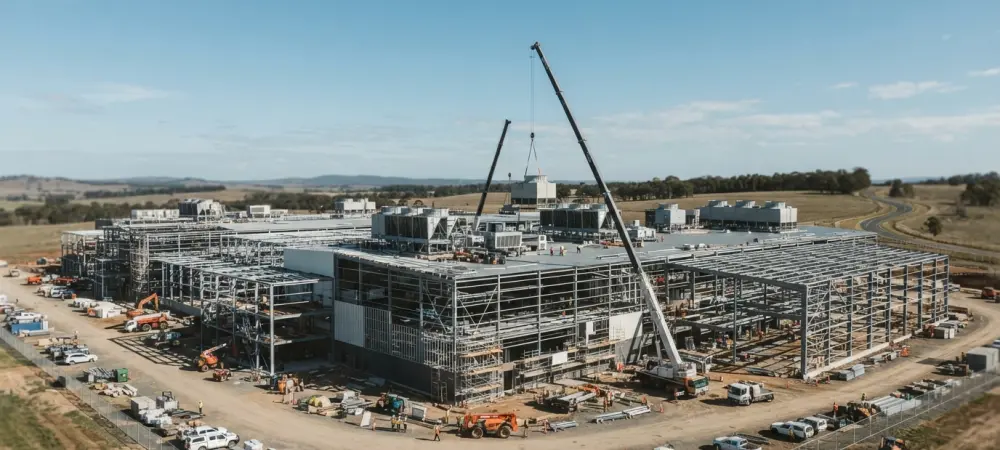
The acceleration of physical capacity has become a defining characteristic of Oracle’s recent strategy, highlighted by a staggering 850-megawatt increase in data center capacity documented during the initial stages of the 2027 fiscal year. This aggressive expansion is not merely about square footage but rather about creating the electrical and cooling density required for modern clusters. Such growth ensures that global AI workload demands are met without the typical lead-time delays that have hampered competitors struggling with facility shortages.
Moreover, the commitment to silicon agnosticism has effectively insulated customers from the risks of vendor lock-in. While the integration of Nvidia Vera Rubin NVL72 systems remains a cornerstone for high-end training, the roadmap for 2026 to 2028 includes the adoption of Google Tensor Processing Units and Cerebras inference systems. By offering a multi-vendor environment that incorporates AMD EPYC processors and Intel-based OCI X14 instances, the platform allows enterprises to select the precise compute architecture that optimizes their specific model performance and cost requirements.
Real-World Applications: Strategic Integrations
Strategic synergy between different data platforms has become a primary driver for enterprise adoption, evidenced by the first-party integration of the Snowflake AI Data Cloud on OCI. This move minimizes the expensive network egress costs that often prevent businesses from moving large datasets between different cloud providers. By keeping data and compute in close proximity within the same ecosystem, organizations can achieve a higher level of operational efficiency and faster inference times for their proprietary models.
Furthermore, the push into the public sector has gained significant momentum through the attainment of FedRAMP Class D certification. This high-security designation allows the platform to capture complex AI workloads from government agencies and regulated industries that require strict data sovereignty. These integrations demonstrate that the evolution of infrastructure is as much about navigating regulatory and economic barriers as it is about raw computational power.
Solving the AI Bottleneck: Networking and Security Innovations
The Acceleron Suite: Intelligent Traffic Management
The network has frequently acted as the primary bottleneck for large-scale AI training, where a single point of failure can stall thousands of interconnected GPUs. To address this, the Acceleron suite introduced the Oracle Collective Communications Library, which functions as an intelligent traffic management layer. This technology identifies network congestion or hardware failures in real time, rerouting data packets to ensure that massive AI clusters maintain high utilization rates even when individual components fail. Latency reduction has also seen a dramatic improvement through the deployment of Remote Direct Memory Access on front-end storage workloads. By allowing compute nodes to access storage memory directly without the interference of the operating system, the architecture has achieved a tenfold increase in performance for data-intensive training tasks. This optimization of the “plumbing” within the cloud ensures that data movement does not degrade the efficiency of the expensive silicon sitting at the heart of the cluster.
Securing the Era: AI Agents and Autonomous Code
As the industry moves toward a future where AI agents execute autonomous code, the security risks associated with untrusted scripts have multiplied. Oracle has responded by implementing hardware-based isolation within the infrastructure, creating specialized environments where AI-generated code can run without risking the integrity of the broader system. This isolation is critical for enterprises that are beginning to automate software development and business process management through large language models.
Supporting this security posture is a Zero Trust architecture that utilizes granular packet routing and policy workbanks. As automated entities become the primary users of databases, traditional identity management is no longer sufficient. The current strategy focuses on verifying every interaction at the network level, ensuring that even the most sophisticated autonomous agents are restricted to the specific data and resources necessary for their assigned tasks.
Industry Perspectives: Market Positioning
Experts analyzing the current landscape suggest that Oracle is successfully challenging the established “Big Three” cloud providers by focusing on niche but critical areas like sovereign cloud. By offering dedicated regions that operate independently of the public internet, the company provides a unique solution for nations and corporations with extreme data residency requirements. This specialization has allowed it to secure a market position that prioritizes depth and reliability over the sheer breadth of generic services.
The consensus among Chief Information Officers highlights a shift in priority from raw compute power toward full-stack reliability. Modern businesses are increasingly wary of the complexities involved in stitching together disparate cloud services. They are instead favoring integrated ecosystems where the networking, storage, and processing layers are pre-optimized for AI execution. This trend suggests that the winners of the infrastructure race will be those who can guarantee business continuity in an increasingly automated world.
Future Outlook: Evolution of Autonomous Enterprise AI
The trajectory of enterprise technology points toward a fundamental shift where automated AI agents, rather than human operators, will drive the majority of database interactions and business logic. This transition will require infrastructure that is not only powerful but also highly interoperable. The trend of supporting agnostic hardware will likely force a broader industry shift toward more flexible cloud architectures, as enterprises demand the freedom to swap components as new silicon becomes available from 2026 to 2028.
However, rapid physical expansion and the integration of diverse hardware bring significant management complexities. Maintaining a cohesive ecosystem amidst such growth requires sophisticated orchestration software that can abstract the underlying hardware differences from the end-user. The ability to manage this complexity while scaling at a record pace will be the primary challenge for infrastructure providers as they seek to support the next wave of autonomous enterprise applications.
Conclusion: Oracle’s New Identity in the AI Era
Oracle’s strategic transformation established a new standard for how legacy technology providers could adapt to the demands of the artificial intelligence age. The focus on massive scalability, coupled with pioneering networking optimizations like the Acceleron suite, allowed the organization to emerge as a critical alternative to traditional hyperscalers. By treating the challenges of AI reliability as a full-stack engineering problem, the company successfully bridged the gap between raw hardware and practical enterprise outcomes.
The push for sovereign cloud regions and high-security certifications demonstrated a keen understanding of the regulatory landscape that often hindered AI adoption in the past. This evolution proved that infrastructure resilience was the most important prerequisite for achieving meaningful business value from automated agents and autonomous code. Ultimately, the pivot toward a hardware-agnostic and network-centric model provided global enterprises with the necessary foundation to navigate a future defined by intelligent, high-intensity computational needs.