

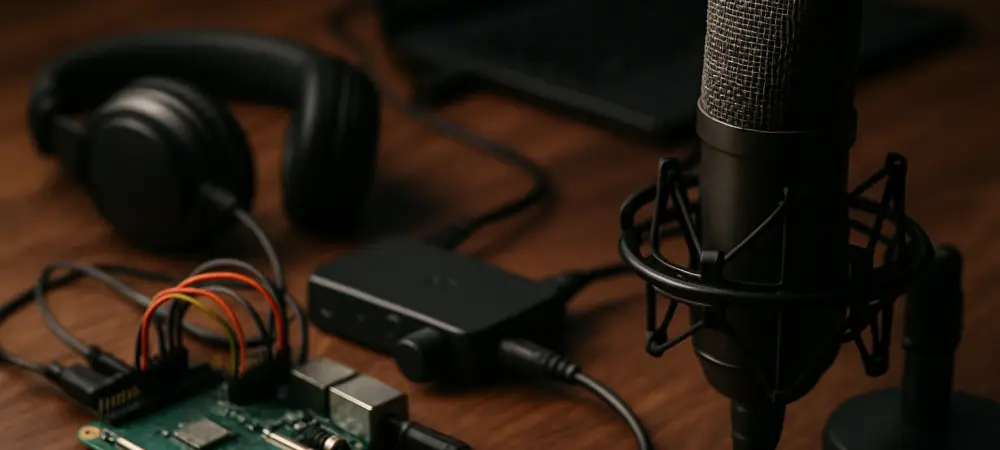
The realm of voice AI technology has undergone a transformative journey. Amidst this whirlwind of innovation stands a particular trend capturing technologists’ attention: open-source voice AI models. As digital systems increasingly prioritize voice interactions for their intuitive abilities, modern interfaces are leaning toward harnessing the natural proclivity humans possess for voice communication. However, traditional speech recognition systems often grapple with shortcomings such as reliability and multilingual adaptability. This landscape has propelled the demand for models like Mistral’s Voxtral, which aim to deliver enhanced functionalities and bridge the gap between proprietary and open-source technologies.
Current Landscape of Open-Source Voice AI
Market Data and Growth Trends
The open-source voice AI sector has shown tremendous growth over recent years. Market data reveals a steady embrace of these models across various industries. Credible studies indicate an increased adoption rate due to the cost-effectiveness and flexibility of open-source solutions. These models challenge the status quo by offering a viable alternative to costly proprietary systems, driving further interest and acceptance. With the introduction of capable models like Voxtral, a new chapter in voice technology is emerging, pushing boundaries yet maintaining affordability.
Real-World Application Examples
Open-source models are increasingly present in diverse applications, showcasing their versatile implementation. Notable examples include platforms such as ChatGPT, where spoken instructions mirror written prompts, facilitating interaction along digital avenues. Services in sectors like fast-food chains integrate solutions like SoundHound in their drive-thrus, highlighting adoption across industry borders. Additionally, transcription services such as Otter and Read.ai embed into video conferencing tools, demonstrating utility in discourse and meetings. Voxtral pushes these boundaries with its multilingual support and capacity for summarization, setting new standards for usability.
Insights from Industry Experts
Industry experts underscore the significance of open-source voice AI models in today’s technological landscape. According to thought leaders, these models bring a refreshing perspective by offering high precision without exorbitant costs, challenging proprietary alternatives. Nonetheless, they acknowledge that these advancements are not without challenges. Factors like semantic accuracy and domain-specific adaptation still present hurdles to be overcome. Yet, professionals express optimism about Mistral’s approach, asserting that models like Voxtral could redefine industry benchmarks, catering to a wider audience and fostering innovation.
Future Outlook and Implications
Looking forward, open-source voice AI models are expected to drive innovation, shaping the course of human-computer interactions. Future developments may witness heightened abilities in semantic understanding and expand across industries ranging from healthcare to finance. As these models evolve, the implications are vast; they promise enhanced engagement between businesses and consumers while revolutionizing operational strategies. While challenges such as barrier-free deployment and language adaptability linger, the trajectory looks promising. Models like Voxtral may stand as harbingers of a burgeoning era, setting the norm with accessible, high-performing solutions.
Conclusion and Call to Action
The trend toward open-source voice AI models offers a compelling narrative marked by accessibility and advanced capabilities. Throughout the discussion, high accuracy and multifunctionality emerge as crucial advancements that define this era. Mistral’s Voxtral offers a visionary alternative, bridging traditional gaps while upending cost paradigms. As industries contemplate future strategies, they should consider these transformative models as essential players in the digital evolution. Acknowledging their potential, stakeholders are encouraged to embrace such innovations, exploring pathways to integrate voice AI seamlessly into everyday operations, thus turning vision into reality.