

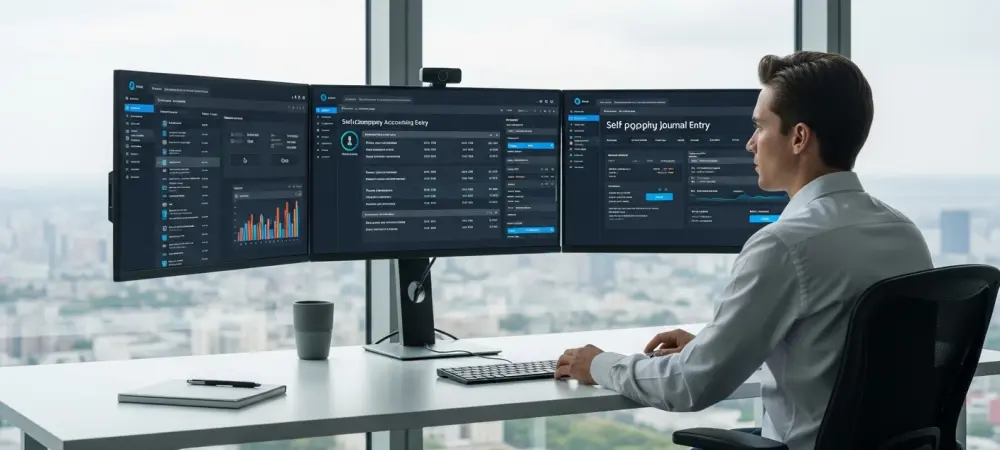
The long-standing relationship between users and their enterprise resource planning systems is being fundamentally rewritten, moving beyond passive data entry toward an active partnership with intelligent, autonomous agents. From digital assistants to these new autonomous entities, the nature of enterprise automation is undergoing a radical transformation. This analysis explores the leap from AI-powered suggestions to true, autonomous execution within ERP systems, a shift that promises to redefine business efficiency. The groundbreaking technology enabling this trend, its real-world applications, and its profound implications for the future of finance and operations will be examined.
The Dawn of the Autonomous ERP Technology and Application
Market Adoption and Key Technological Milestones
Avantiico’s journey into this new frontier began with a compelling initial proof of concept in May 2025. The deployment of a static Model Context Protocol (MCP) server, initially supporting 13 core tools, successfully demonstrated the viability of autonomous agents operating within the complex environment of Microsoft Dynamics 365. This foundational step validated the core premise: that AI could do more than just suggest; it could act.
This initial success set the stage for a period of exponential growth and expansion, culminating in a major unveiling at Microsoft Ignite 2025. The introduction of a dynamic MCP server marked a significant leap, enabling real-time interaction with thousands of ERP functions. This enhancement scaled the solution’s capabilities across the enterprise, touching Finance, Supply Chain, Human Resources, and Project Operations.
Following the momentum from Ignite, the solution entered a public preview phase, signaling strong market readiness and enterprise interest. With a planned general availability in early 2026, a clear adoption roadmap has been established. This rapid progression from concept to near-market product underscores the maturity of the technology and the urgent demand for more intelligent automation solutions.
Real World Implementation Avantiicos AI Agents in Practice
The practical power of this technology is most evident in its synergy with specialized solutions like Avantiico’s Advanced Multi-Company Solution (AMCS). The integration of MCP-powered agents allows users to bypass complex manual navigation and execute sophisticated, cross-company tasks using simple conversational commands. This fusion turns the ERP into a responsive partner rather than a rigid tool.
This shift toward conversational workflow execution is changing daily operations. For example, users can now prompt the system to perform cross-company data inquiries or initiate automated journal imports with a simple instruction. These commands trigger sophisticated, multi-step ERP processes that previously required extensive training and manual effort, effectively translating natural language into complex executed actions.
Ultimately, this technology is transforming how teams interact with their core business systems. By removing the technical barrier between intent and action, it empowers employees to focus on strategic goals. They can now translate business needs directly into system outcomes without requiring an intermediary or deep technical knowledge of the ERP’s architecture.
Industry Insights The Strategic Shift to Intelligent Automation
Industry leaders are emphasizing the critical importance of an open, standards-based architecture like the Model Context Protocol. This approach is not merely a technical preference; it is a strategic decision that ensures future-proof interoperability. By aligning with evolving AI ecosystems, including Microsoft Copilot Studio and Azure OpenAI, it prevents vendor lock-in and allows organizations to continuously integrate best-in-class AI capabilities.
Moreover, analysts note that this trend represents a crucial evolution in automation strategy. The focus is shifting from automating simple, repetitive tasks to orchestrating complex, end-to-end business workflows. This move from tactical efficiency to strategic orchestration unlocks unprecedented levels of productivity and delivers far greater value, impacting core business processes rather than just peripheral activities.
This innovation is also redefining the fundamental role of the ERP system itself. Thought leaders argue that the ERP is being elevated from a passive system of record to a proactive, intelligent business partner. An ERP equipped with autonomous agents becomes capable of understanding and executing strategic commands, actively participating in the execution of business objectives.
The Future of Enterprise Operations Projections and Implications
The future of this trend points directly toward hyper-automation, a state where intelligent AI agents can understand and handle nearly any ERP process thrown at them. The anticipated benefits are profound, including dramatically reduced manual effort, accelerated decision-making, and the democratization of complex ERP functionalities. This will empower non-technical users to leverage the full power of the enterprise system.
However, the widespread adoption of autonomous agents also introduces significant challenges that organizations must address. Key considerations include establishing robust data governance frameworks, designing new security protocols for AI-driven actions, and investing in upskilling the workforce. Employees will need to learn how to manage and collaborate effectively with these intelligent systems, shifting their roles from doers to overseers.
The impact of this trend is set to ripple across all industries, compelling organizations to fundamentally rethink their operational models. Companies that successfully integrate autonomous agents into their core processes will gain a significant competitive advantage. This edge will manifest through superior operational agility, enhanced accuracy, and more efficient resource optimization, setting a new benchmark for performance.
Conclusion Embracing the New Paradigm of ERP Automation
The emergence of MCP-enabled AI agents marked a pivotal moment, transforming ERP systems from passive data repositories into active participants in business operations. The innovation pioneered by Avantiico demonstrated a clear and viable path from simple AI assistance to full, autonomous execution within enterprise environments. This confirmed that the technology was not just theoretical but practical and ready for adoption.
This next generation of ERP automation was far more than an incremental improvement; it represented a fundamental change in the human-to-system relationship. By allowing strategic intent to be executed at the speed of conversation, it collapsed the distance between decision and action, creating a more fluid and responsive operational model. The barriers of technical complexity were effectively removed, making the system an extension of the business user’s will.
To remain competitive in this evolving landscape, business leaders were compelled to look beyond traditional automation. The imperative was to formulate new strategies for integrating intelligent, autonomous agents into their core operational frameworks. This preparation was essential for an era where business intent seamlessly became business action, defining a new standard for organizational agility and efficiency.