

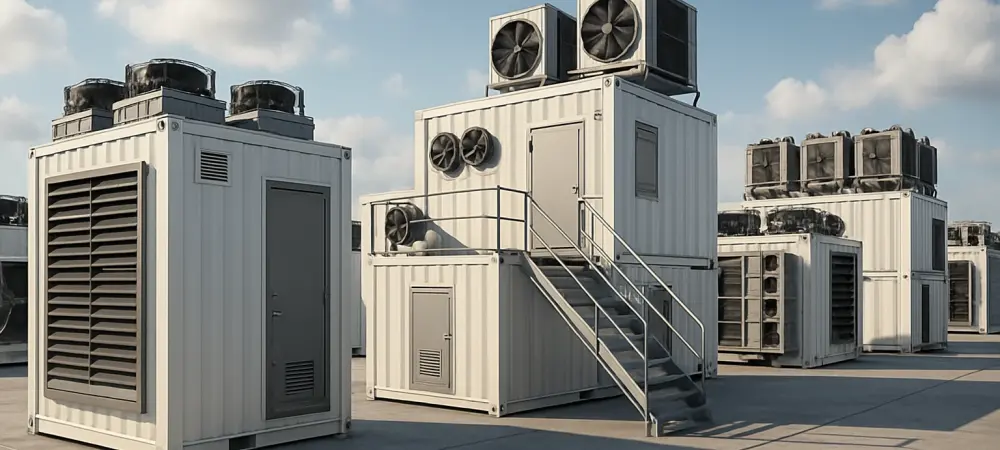
Imagine a once-bustling soap factory in Warrington, UK, its walls echoing with the hum of industrial production, now standing on the cusp of a dramatic reinvention as a cutting-edge modular AI data center. This remarkable shift from crafting household essentials to powering the digital frontier captures a growing movement in technology and urban renewal. The transformation of such historic sites into hubs of innovation hints at a future where the past and present collide to fuel progress. This narrative of change highlights an emerging trend: modular AI data centers are becoming vital pillars of the tech landscape, supporting artificial intelligence, high-performance computing, and sustainable economic growth.
The Surge of Modular AI Data Centers
Escalating Demand and Industry Shifts
The global appetite for AI-driven data processing and storage is skyrocketing, pushing modular data centers into the spotlight for their unmatched scalability and efficiency. Industry insights from reports by firms like Gartner suggest that the adoption of such facilities is growing at a staggering pace, with projections estimating a significant uptick in deployment over the coming years to meet the needs of hyperscalers and research institutions. These centers offer a nimble solution, adapting swiftly to the ever-increasing data demands of modern enterprises. Their design allows for rapid expansion, a critical edge in an era where digital infrastructure must keep up with exponential technological advancements.
Beyond their technical appeal, there’s a captivating trend of repurposing old industrial sites into tech powerhouses. This approach not only breathes new life into forgotten structures but also serves as a blueprint for urban and economic revitalization. By transforming relics of the industrial age into engines of the digital economy, cities can bridge historical significance with futuristic ambition. This movement underscores a broader shift toward sustainable redevelopment, where the bones of the past support the innovations of tomorrow.
Spotlight on Transformation: Platform @Bank Quay
A prime example of this trend unfolds in Warrington, UK, where the former Unilever soap factory at Bank Quay is undergoing a striking metamorphosis. Acquired by Dante FS Group through its subsidiary Platform Data Centre UK, the site—spanning up to 260,000 square feet—is being reimagined as a high-density modular AI data center named Platform @Bank Quay. After the factory’s closure several years ago, an extensive 18-month demolition process has paved the way for redevelopment, with planning permission slated for submission by the end of this year.
This project is not merely about erecting a data facility; it’s about crafting tailored infrastructure to support hyperscalers and research bodies, addressing the UK’s pressing needs in AI and computing power. While specifics on capacity and operational timelines remain under wraps, the emphasis on high-density design signals a substantial investment in cutting-edge technology. Moreover, the potential integration of locally sourced hydrogen energy via the HyNet program points to a commitment to sustainability, aligning with global pushes for greener tech solutions.
Voices from the Field and Community
Industry and local leaders alike see this shift as emblematic of a larger transition from traditional manufacturing to digital dominance. Steve Park, interim chief executive of Warrington Borough Council, has articulated the symbolic weight of moving from chemical engineering to leadership in the digital economy, a change that could redefine the region’s identity. This perspective reflects a shared optimism about how such projects can anchor communities in the modern era while honoring their industrial roots. Dante FS Group envisions Platform @Bank Quay as more than infrastructure—it’s a catalyst for technological innovation and economic renewal. Their strategy to engage local supply chains wherever possible aims to ensure that benefits ripple through the community, fostering job creation and growth. However, industry observers note potential challenges, such as balancing the preservation of historical sites with the demands of modern construction. Navigating regulatory landscapes and community expectations will be crucial to realizing this vision without friction.
Looking Ahead: Implications and Innovations
Projects like Platform @Bank Quay could set a powerful precedent for converting industrial legacies into tech hubs across the globe. Such initiatives promise not just economic boosts through job opportunities but also a redefinition of urban spaces as centers of innovation. As these modular facilities proliferate, they may reshape how cities approach development, blending history with high tech in ways that inspire further investment and interest.
Anticipated advancements in modular data center design—including enhanced energy efficiency and scalability—offer exciting possibilities for the industry. The focus on sustainable practices, such as tapping into alternative energy sources, aligns with broader environmental goals. Yet, hurdles remain, from regulatory complexities to ensuring equitable community gains. There’s also the risk of over-concentration of tech infrastructure in certain regions, which could exacerbate regional disparities if not addressed through strategic planning.
Reflecting on a Digital Legacy
Looking back, the journey of transforming Warrington’s historic soap factory into a modular AI data center marked a pivotal chapter in blending industrial heritage with digital ambition. It stood as a testament to how adaptive reuse could drive economic vitality while meeting the demands of a tech-hungry world. As similar projects emerged, they underscored a critical need for innovative thinking in urban planning. Moving forward, stakeholders should prioritize policies that support sustainable tech growth, ensuring local communities benefit from such transformations. Embracing partnerships and green technologies will be key to scaling these efforts, turning more forgotten sites into beacons of progress.