

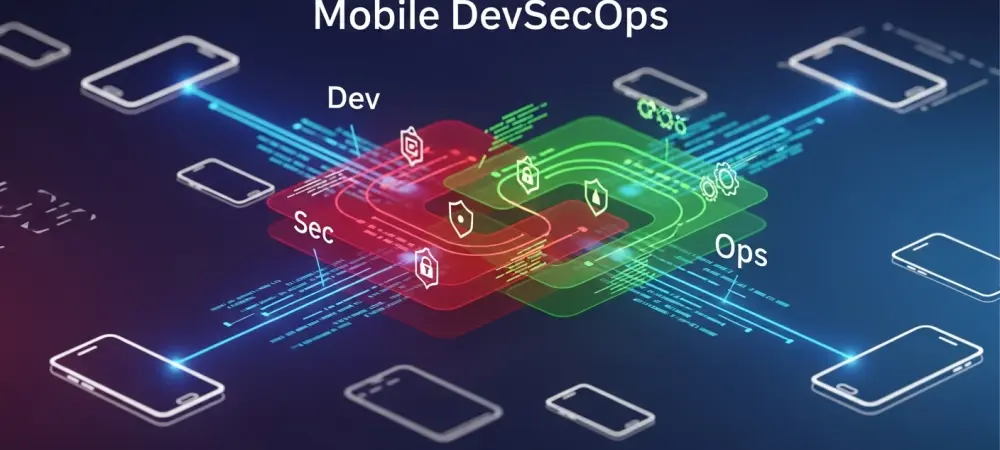
The illusion of a controlled security perimeter evaporates the moment a mobile application binary is downloaded onto a device owned by a sophisticated adversary. Unlike traditional web applications that reside safely behind corporate firewalls on company-managed servers, mobile apps are effectively messengers sent into enemy territory. In this environment, the user is often the primary threat actor, possessing the tools and the time to dissect, manipulate, and exploit the code at their leisure. This fundamental shift from a “fortress” model to a “hostile runtime” reality has created significant security blind spots within the standard DevSecOps pipeline, leaving many organizations vulnerable despite their best efforts to secure the backend.
Navigating these shadows requires an acknowledgment that traditional security assumptions are failing. With mobile devices currently serving as the origin point for nearly half of all documented organizational breaches, the industry is witnessing a critical disconnect between where users spend their time and where security budgets are allocated. The following analysis explores the technical nuances of these blind spots, ranging from the rise of man-at-the-end attacks to the hidden risks of artificial intelligence in code generation, providing a roadmap for achieving true runtime resilience in an increasingly mobile-centric world.
The Shift Toward Mobile-First Threat Landscapes
Market Evolution and Adoption Statistics
Current industry data highlights a startling disparity in the digital economy: while over 80% of total digital time is now spent within mobile applications, security spending for the mobile tier continues to lag significantly behind its web-based counterparts. This investment gap creates a fertile ground for exploitation. Reports from leading cybersecurity firms indicate a sharp increase in the prevalence of “repackaged” applications, where unauthorized versions of popular software appear on alternative marketplaces within hours of an official release. These clones often look identical to the original but contain malicious wrappers designed to exfiltrate user credentials or intercept sensitive data.
The evolution of development tools has further complicated this landscape. Projections suggest that between 2026 and 2028, nearly 75% of enterprise engineers will rely heavily on AI-driven coding assistants. This shift is creating a massive influx of “insecure by default” code that current DevSecOps pipelines are not adequately equipped to filter. Many existing scanning tools are tuned to detect server-side vulnerabilities like SQL injection but often miss mobile-specific flaws, such as improper deep-link handling or insecure local storage, which are frequently introduced by AI models trained on outdated or generalized datasets.
Real-World Applications and High-Stakes Scenarios
Fintech and digital banking sectors are currently at the forefront of this battle, as they move away from basic software-level encryption toward hardware-backed protections. Leading financial institutions have recognized that storing transaction signing keys in the standard application memory is no longer sufficient. Instead, they are increasingly utilizing “Secure Enclaves” or Trusted Execution Environments (TEEs) provided by modern mobile hardware. This shift ensures that even if the mobile operating system itself is compromised, the most sensitive cryptographic material remains physically isolated from the reach of a malicious actor or a compromised kernel.
The gaming industry and premium subscription services are also fighting a continuous war against the “cracked” app economy. These organizations are struggling to defend against dynamic instrumentation tools like Frida, which allow technically savvy users to bypass in-app purchase logic or skip subscription checks in real-time. Furthermore, recent regulatory changes, such as the Digital Markets Act (DMA) in the European Union, have introduced new complexities like iOS sideloading. Companies are now forced to implement sophisticated runtime certificate fingerprinting to ensure their applications have not been re-signed or tampered with by third parties before being installed on a user’s device.
Expert Insights on the Failure of Traditional Models
Industry leaders and security architects are increasingly vocal about the limitations of Static Application Security Testing (SAST) in the mobile domain. While SAST remains a valuable tool for identifying logical errors during the build phase, it is no longer considered a “silver bullet.” The primary criticism is that static analysis assumes a binary will remain unobserved. In the mobile world, however, an attacker has total access to the binary and can use disassemblers to map out the entire logic of the application. This makes passive protections like code obfuscation merely a speed bump rather than a true security barrier.
A recurring theme in security circles is the “Key Under the Doormat” fallacy, which refers to the practice of using software-only encryption on a device where the user has administrative or root access. Security experts emphasize that if the encryption keys are stored anywhere within the application’s file system or standard RAM, they are effectively public property for a determined attacker. True security must be anchored in the hardware, as a compromised kernel can bypass almost any protection layer that exists solely within the software stack.
Furthermore, thought leaders in the DevSecOps space have identified a phenomenon known as “Logic Entropy.” This occurs when AI-generated code snippets introduce legacy vulnerabilities back into modern, high-security environments. For example, an AI assistant might suggest a deprecated version of Transport Layer Security (TLS) or a hardcoded initialization vector for a cryptographic function because it was trained on older, less secure repositories. This entropy undermines the integrity of the development cycle, as these subtle flaws often pass through standard automated checks that are not specifically looking for mobile-specific regressions or AI-driven logic errors.
The Future of Mobile DevSecOps: From Bug-Hunting to Runtime Resilience
Future development cycles will likely see the mandatory integration of Runtime Application Self-Protection (RASP) as a standard component of the mobile stack. Unlike traditional firewalls that sit outside the application, RASP is embedded within the app itself, allowing it to detect and respond to threats in real-time. This includes identifying when an attacker is attempting to use hooking frameworks or memory tampering tools. By incorporating RASP, an application can take proactive measures, such as terminating the session or wiping local cache, the moment it detects that the environment has become hostile or that its own code is being manipulated.
There is also a significant movement toward making hardware the definitive root of trust for all mobile interactions. This involves a shift toward mandatory hardware-backed attestation, where the operating system must cryptographically “vouch” for the integrity of both the device and the application binary. Technologies like the Android Play Integrity API are becoming essential, as they allow the backend server to verify that the app is running on a genuine, non-rooted device before granting access to sensitive APIs. This hardware-anchored approach effectively neutralizes many common emulator-based attacks and automated bot activities that plague modern mobile services.
To counter the growing risks of AI-generated vulnerabilities, DevOps teams are moving toward more rigorous AI governance and Software Bill of Materials (SBOM) enforcement. This includes the implementation of custom linting rules designed specifically to catch the “vibe coding” errors often produced by AI assistants. By maintaining an accurate and automated SBOM, organizations can ensure that every library and code snippet—regardless of whether it was written by a human or an AI—is continuously validated against global vulnerability databases. This level of oversight is becoming a prerequisite for maintaining security in an era of rapid, automated development.
While these advanced protections often introduce what is known as a “performance tax,” the general consensus among engineers is that this cost is a necessary trade-off. The minor impact on CPU usage or app startup time is negligible when compared to the catastrophic financial and reputational damage of a large-scale data breach. As mobile hardware continues to become more powerful, the overhead associated with RASP and hardware-backed encryption will become even less noticeable to the end-user, making high-level security a standard feature rather than an optional luxury for premium applications.
Summary and Strategic Outlook
The analysis of the current mobile threat landscape revealed that modern security requires a comprehensive, three-pronged defense strategy. It was determined that mitigating man-at-the-end attacks through dynamic protections, anchoring cryptographic secrets in physical hardware, and governing the use of AI in the development pipeline were the most critical steps for any organization. The findings suggested that the old “fortress” mentality, which served the industry well during the era of server-side dominance, was no longer applicable to the decentralized and inherently vulnerable world of mobile applications.
Security professionals recognized that the goal was no longer to create an unbreakable binary, but rather to make the cost and effort of an exploit prohibitively high for the adversary. The strategic outlook for the coming years emphasized a move toward total runtime resilience, where the application was expected to defend itself in real-time without relying on the safety of the underlying operating system. This proactive stance involved the adoption of hardware-anchored trust and automated governance to counteract the complexities introduced by new regulations and AI-driven development.
Ultimately, the transition toward a more resilient DevSecOps model was seen as an essential evolution for protecting the digital economy. Organizations that successfully integrated these hardware-backed and runtime-aware protections positioned themselves to handle the challenges of a mobile-first world. The move away from traditional static models toward a more dynamic, self-defending architecture proved to be the most effective way to close the security blind spots that had previously left mobile applications exposed to a new generation of sophisticated threats.