

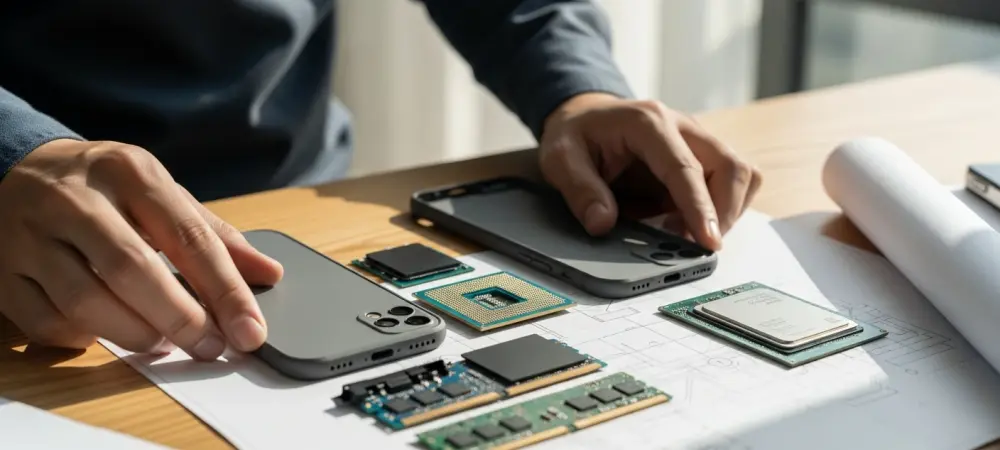
The long-held assumption that every new generation of mobile technology must inevitably surpass its predecessor in every physical metric is currently facing a sharp and unexpected confrontation with economic reality. While consumers have grown accustomed to a relentless march toward premium materials and faster screens, the mid-range segment is witnessing a strategic retreat that prioritizes internal computing power over external sophistication. This shift represents a fundamental change in how manufacturers balance the rising costs of advanced components against the rigid price expectations of the mass market. The primary catalyst for this transition is the intensifying “memory crisis” that has fundamentally altered the financial architecture of modern devices. As artificial intelligence integration becomes a mandatory feature for staying competitive, the demand for high-speed RAM and high-capacity storage has surged, driving up procurement costs to unprecedented levels. Consequently, the portion of the Bill of Materials dedicated solely to memory has expanded so significantly that it now threatens the viability of the popular $400 to $435 price bracket.
This analysis explores the data driving these production shifts, identifies the specific hardware features being sacrificed to maintain profit margins, and examines the professional consensus on this forced compromise. By looking at the trajectory of the market through 2028, it becomes clear that the industry is prioritizing “brain over beauty” in a desperate bid to remain solvent during an era of high-tech inflation.
Market Dynamics and the Memory Crisis
Statistical Shifts in Production Costs
Recent data from Counterpoint Research indicates that the financial burden of memory components has reached a critical tipping point for manufacturers. For several years, RAM and storage were relatively stable expenses, but the current landscape shows these parts consuming a dominant share of the total production budget. This spike is largely driven by the global supply chain’s pivot toward AI-optimized hardware, which requires significantly more bandwidth and power than traditional mobile tasks.
The result is a zero-sum game for device architects who must work within a fixed retail price. To include the high-performance memory necessary for modern software, brands are forced to strip away other luxuries. This economic pressure is most visible in the mid-range sector, where margins are razor-thin. If a manufacturer refuses to downgrade secondary hardware, the retail price would likely climb beyond what the average consumer is willing to pay for a non-flagship device.
Real-World Applications of Hardware Regressions
We are already seeing the practical consequences of these financial constraints in the design blueprints for the next generation of mid-range staples. Successors to popular models like the Samsung Galaxy A56, Oppo Reno 15, and OnePlus Ace 6T are projected to feature surprising “rollbacks” to technologies that were previously considered obsolete. Instead of the sleek 120 Hz OLED panels that became standard, some manufacturers are reverting to 90 Hz displays with waterdrop notches.
Beyond the screen, the physical build of these devices is becoming more utilitarian. Premium metal frames and glass backs are being replaced by high-grade plastics, which offer durability at a fraction of the cost. Furthermore, the sophisticated in-display ultrasonic sensors are being swapped for more affordable short-focus fingerprint modules or side-mounted scanners. These changes signal a broader move toward “functionalism” where the device’s external polish is sacrificed to protect its internal performance capabilities.
Industry Perspectives on the Forced Compromise
Professional observers and industry insiders, such as the prominent leaker Digital Chat Station, suggest that these regressions are not a sign of laziness but a desperate survival strategy. In a saturated market where brand loyalty is fickle, failing to provide enough RAM for AI tasks is seen as a greater risk than using a plastic frame. Manufacturers are betting that users will forgive a slightly thicker bezel or a less premium feel if the phone remains fast and capable of running the latest software.
Moreover, the consensus among hardware analysts is that this trend reflects a new hierarchy of needs in the mobile world. As software becomes more demanding, the “inner life” of the smartphone—its processor and memory—takes precedence over its aesthetic “skin.” This shift marks the end of the era of the “pseudo-flagship,” where mid-range phones mimicked the look and feel of high-end models while trailing significantly in raw power.
Future Outlook: A New Standard for Mid-Range Devices
The long-term implications of this hardware pivot suggest that the definition of a “good” phone is being rewritten for the late 2020s. While some enthusiasts may lament the loss of premium materials, there is an unexpected silver lining in the return of legacy features. One of the most discussed potential regressions is the re-introduction of the hybrid SIM/microSD slot. For years, brands removed expandable storage to force consumers into more expensive high-capacity tiers; now, returning this feature allows brands to sell lower-capacity base models while giving users a low-cost way to expand their storage.
Maintaining consumer trust during this period of visible downgrades will remain a significant challenge for marketing departments. Brands will need to emphasize the “pragmatic value” of their devices, focusing on battery life, software longevity, and core performance rather than purely aesthetic benchmarks. The evolution of the market through 2028 will likely see a clear bifurcation between luxury devices that maintain premium builds and a new class of “performance-first” mid-rangers that embrace plastic and older screen technologies to stay affordable.
Summary and Final Assessment
The shift toward hardware regressions in the mid-range segment was the inevitable result of a collision between rising component costs and stagnant consumer budgets. Manufacturers chose to prioritize the invisible internal components that drive modern AI experiences over the visible luxuries that once defined the segment’s appeal. While the return of plastic frames and waterdrop notches felt like a step backward for design enthusiasts, it preserved the accessibility of high-performance computing for the general public.
The industry moved toward a more honest relationship with the consumer, where the trade-offs of the “memory crisis” were laid bare in the physical design of the hardware. This period proved that practical features like expandable storage could regain their relevance when economic necessity outweighed the desire for a minimalist aesthetic. Ultimately, these compromises established a new baseline for mobile value, ensuring that the mid-range market remained functional and relevant even as the cost of innovation continued to climb.