

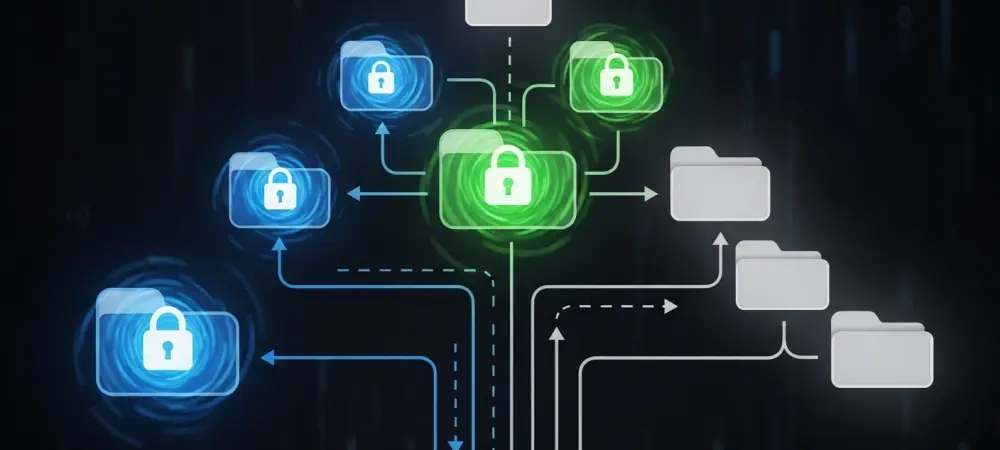
The digital architecture of the modern world relies on a foundation of trust that is currently undergoing a massive structural renovation. As the Linux kernel reaches the milestone of version 7.0, the operating system is finally shedding layers of legacy code that have protected user data for decades but no longer meet the rigorous demands of contemporary hardware. This shift is not merely a routine update; it represents a fundamental change in how the open-source community approaches data at rest. By moving away from historical “stacked” encryption methods and toward native, integrated frameworks, the Linux ecosystem is ensuring that security remains a core feature rather than a taxing afterthought.
The Shift from Stacked to Integrated Linux Security
The transition from legacy encryption layers to native kernel frameworks marks a pivotal moment in open-source security. For years, developers relied on adding security as an external layer, much like putting a specialized envelope around a letter before mailing it. While this worked for a time, the evolution of cyber threats and the dramatic increase in hardware performance have made these older methods a liability. The Linux kernel is now systematically shedding what developers call “dead wood”—unmaintained and inefficient code—to favor a more streamlined and robust protection model that operates within the filesystem itself.
As we move deeper into the lifecycle of version 7.0, the strategic roadmap for Linux security focuses on reducing the distance between the data and the cryptographic engine. This evolution ensures that encryption is no longer a separate process that competes for system resources but a native function of the storage pipeline. The industry is witnessing the sunset of eCryptfs, a long-standing utility that once defined home directory protection, in favor of fscrypt. This move toward integration is designed to provide a more secure environment that can handle the massive throughput of modern data centers without sacrificing the privacy of individual users.
The Decline of Legacy Stacked Cryptography
Market Trends: The Deprecation of eCryptfs
Recent data gathered from the Linux kernel mailing lists confirms a multi-year strategy to finalize the removal of eCryptfs. While it served as a reliable workhorse for nearly twenty years, the adoption statistics across major distributions like Ubuntu and Fedora show a definitive pivot. These powerhouses of the Linux world have already transitioned from the old model of encrypting specific home directories to a comprehensive full-disk encryption (FDE) approach. This shift is driven by the reality that modern users demand security for their entire system, not just a single folder, making the granular but slower stacked approach obsolete.
Technical reports from the field indicate that the “stacked” filesystem approach—layering encryption on top of existing storage—is no longer viable for modern high-speed NVMe and SSD hardware. When data must be processed by two different filesystem layers, it creates a “double-handling” effect that causes significant latency. On high-speed storage devices, this bottleneck becomes a glaring performance drain that frustrates users and reduces the lifespan of the hardware. Consequently, the market has naturally gravitated toward solutions that allow the hardware to do what it does best: move data quickly and securely in a single pass.
Real-World Applications: The Move to Modern Standards
Android serves as the primary success story for this transition, utilizing fscrypt to secure user data across billions of devices globally. By integrating encryption directly into the filesystem, mobile devices can provide per-file security that ensures one user’s data remains inaccessible to another, even on a shared device, all with minimal impact on battery life or application speed. This massive deployment has acted as a proving ground for the technology, demonstrating that integrated security can scale to billions of endpoints while maintaining a level of stability that stacked systems could never achieve.
Enterprise-grade storage solutions are also abandoning per-file encryption in favor of LUKS (Linux Unified Key Setup) for partition-level security. Many companies in the cloud and embedded sectors are currently migrating their legacy systems to fscrypt to take advantage of hardware-based AES-256-XTS acceleration. This modern standard allows the CPU to offload the heavy lifting of encryption to specialized circuits within the processor. For a data center managing petabytes of information, this transition translates into massive energy savings and improved response times for end-users, solidifying fscrypt as the professional choice for the current era.
Industry Perspectives on Kernel Housekeeping
Prominent maintainers, including Eric Biggers, emphasize that removing unmaintained code like eCryptfs is essential for reducing the kernel’s overall attack surface. Every line of code that stays in the kernel requires constant monitoring for new vulnerabilities; if the code is rarely used and no longer improved, it becomes a dark corner where bugs can hide. By aggressively pruning these obsolete subsystems, the development community can focus its limited resources on perfecting the tools that actually power today’s infrastructure, ensuring that the core of the operating system remains lean and defensible.
Security researchers highlight that legacy deterministic filename encryption and metadata leakage in older tools represent unacceptable risks in the modern threat landscape. In the past, simply hiding the content of a file was enough, but today’s attackers can learn a great deal just by seeing the size of a file or the length of its name. Older tools often failed to mask these details effectively. Modern frameworks address these concerns by using more sophisticated cryptographic “padding” and randomized naming conventions, closing the side-channel gaps that once allowed sophisticated actors to map out the contents of an encrypted drive without ever cracking the actual password.
Thought leaders in the Linux community argue that the famous “no regressions” policy must be balanced with the need to modernize. While the community prides itself on never breaking a user’s workflow, keeping ancient technology alive indefinitely hinders the progress of the entire platform. The consensus is that providing a clear, multi-year warning before removal is the most responsible way to handle this evolution. This balance allows for long-term stability while ensuring that Linux does not become a museum of 1990s-era security flaws, but rather a forward-looking platform capable of meeting the next decade’s challenges.
The Future of Linux Filesystem Security
Future developments in this space will likely focus on authenticated encryption and a deeper integration between the filesystem and hardware security modules (HSMs). We are moving toward a world where the keys to the data are never even stored in the system’s main memory, but instead reside in specialized, tamper-proof chips. This transition promises significant benefits, including almost zero CPU overhead for encryption tasks and improved stability for complex input/output operations. As these technologies become standard, the “security tax” that users once paid in the form of slower computers will effectively vanish.
Significant challenges remain for legacy enterprise environments and specialized embedded devices that must undergo complex migrations. Moving away from a system like eCryptfs is not as simple as flipping a switch; it often requires reformatting storage and rethinking how backup systems interact with encrypted data. For industries like aerospace or medical technology, where systems may stay in service for decades, these migrations represent a significant engineering hurdle. However, the move is unavoidable, as the security benefits of the new architecture far outweigh the temporary pain of a hardware-refresh cycle. The evolution suggests a future where encryption is not an optional “plugin” or a secondary layer, but a native, transparent component of every Linux-based data structure. We are approaching a point where the distinction between “encrypted” and “unencrypted” storage will disappear because everything will be secured by default. This “invisible security” model ensures that even non-technical users are protected from data theft without having to understand the underlying complexities of cryptographic headers or key management. In this environment, the filesystem itself becomes the ultimate guardian of privacy.
Summary of the Cryptographic Evolution
The comprehensive analysis of the transition from the twenty-year-old eCryptfs model to the high-performance fscrypt framework demonstrated that the Linux kernel prioritizes structural integrity over maintaining the status quo. This evolution was driven by the necessity of matching modern hardware speeds while closing historical security vulnerabilities that had become too risky to ignore. By shifting from a stacked approach to an integrated one, the community successfully reduced the kernel’s complexity and improved the overall defensive posture of the operating system.
System administrators and developers took proactive steps to prepare their infrastructure for the removal of legacy layers, ensuring that the milestone of version 7.0 was reached without widespread disruption. The migration strategies focused on adopting LUKS for full-disk protection and fscrypt for nuanced, file-based security, which provided a more resilient foundation for the next generation of computing. Ultimately, the retirement of obsolete cryptographic tools allowed the Linux ecosystem to emerge leaner and more capable, proving that a disciplined approach to software maintenance is the most effective way to safeguard the future of open-source technology.