

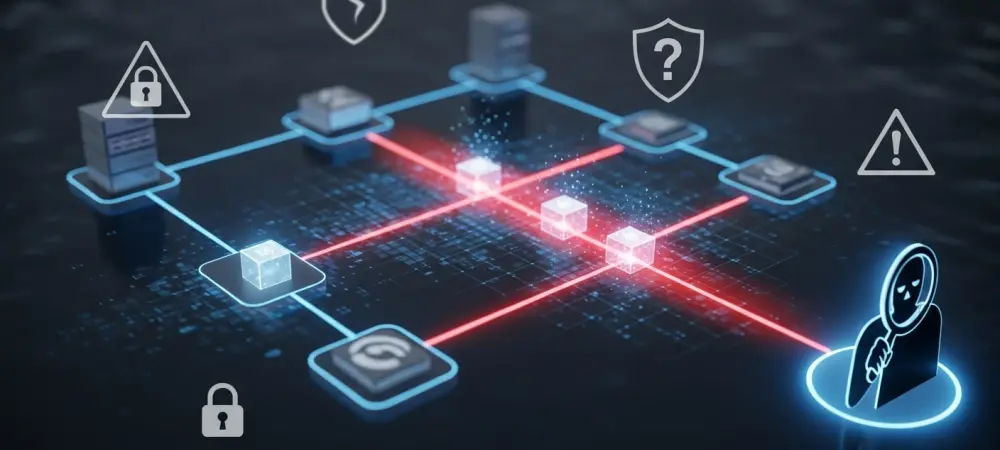
The digital backdoors designed for justice are becoming the primary gateways for adversaries, turning essential surveillance tools into significant national security liabilities. As the FBI investigates a major breach of its Foreign Intelligence Surveillance Act (FISA) processing systems, the paradox of lawful intercept—where access granted to law enforcement creates a permanent vulnerability—has moved from a theoretical risk to an urgent crisis. This breach represents a multi-faceted threat to national security, diplomatic relations, and legal standards. It highlights the persistent threat posed by actors like the Chinese-linked “Salt Typhoon,” which was recently discovered to have infiltrated major U.S. telecommunications carriers to access similar law enforcement interception tools.
The Growing Vulnerability of State Surveillance Infrastructure
Adoption Trends: The Expansion of the Attack Surface
The reliance on centralized digital platforms for managing FISA warrants and wiretap authorizations has increased significantly. While these systems were designed to streamline the administration of “lawful access” requests globally, the consolidation of intelligence data into networked environments has created high-value targets for advanced persistent threats (APTs). This shift toward cloud-based or integrated databases has inadvertently simplified the reconnaissance process for state-sponsored hackers.
Furthermore, the interconnected nature of these platforms means that a single point of failure can compromise a vast array of intelligence operations. Data reflecting the rise in global intercept requests shows a corresponding growth in the attack surface. As agencies prioritize efficiency and rapid data sharing, the security protocols governing these central nodes have struggled to keep pace with the sophisticated tactics of modern adversaries who view these databases as the ultimate prize.
Real-World Breaches: The Shift in Adversarial Tactics
The recent intrusion into the FBI’s FISA network has profound implications for operational tradecraft and informant safety. Historically, adversaries targeted general data; however, state-sponsored actors have pivoted toward the specific targeting of “intercept management systems.” By infiltrating these networks, foreign intelligence services can identify who is under investigation, allowing them to pull back assets or feed disinformation to law enforcement.
The “Salt Typhoon” campaign serves as a stark case study of this systematic infiltration. By exploiting the same access points used by law enforcement within telecommunications carriers, these actors gained a bird’s-eye view of U.S. surveillance efforts. This tactical shift signifies that the tools built to protect the state are now being used to blind it, transforming a domestic security asset into a foreign intelligence windfall.
Industry Perspectives on the Lawful Intercept Paradox
Cybersecurity researchers have long warned about the “backdoor vulnerability,” arguing that building access for one party inherently weakens the cryptographic integrity for everyone. When a master key is created for law enforcement, it inevitably becomes a target for every other motivated actor on the planet. This technical reality creates a persistent state of insecurity where the privacy of the general public is linked to the often-fragile security of government databases.
National security experts are now grappling with the risk of “counter-intelligence coups” resulting from exfiltrated surveillance logs. From a legal and civil liberties standpoint, these breaches undermine the judicial integrity of the FISA court. If unauthorized parties can access protected communications, the constitutional safeguards intended to prevent abuse become meaningless, leaving non-targets and sensitive informants equally exposed to foreign retaliation.
The Future of Surveillance Security and Intelligence Integrity
The path forward requires a transition toward “hardened segmentation” and zero-trust architectures to isolate intercept telemetry from standard federal networks. By treating surveillance systems as isolated environments rather than extensions of broader IT infrastructure, agencies can limit the “dwell time” of intruders. This approach focuses on minimizing the damage of an inevitable breach by ensuring that access to one segment does not grant control over the entire intelligence apparatus.
Moreover, the evolution of surveillance technology may move toward decentralized or end-to-end encrypted frameworks that limit the existence of “master keys” altogether. This development presents a dual-edged challenge: while it enhances the security of the system against foreign infiltration, it also complicates the rapid response capabilities of law enforcement. Balancing these needs will force a total re-evaluation of how signals intelligence is gathered and protected on a global scale.
To reconcile access with absolute security, policy makers and technologists took several decisive actions. They prioritized the development of ephemeral access keys that expire immediately after a warrant is executed, reducing the long-term value of stolen credentials. Additionally, international protocols were established to mandate more rigorous, independent security audits of any infrastructure that houses lawful intercept tools. These steps ensured that the mandates of national security did not inadvertently facilitate a collapse of the very digital infrastructure they sought to defend.