

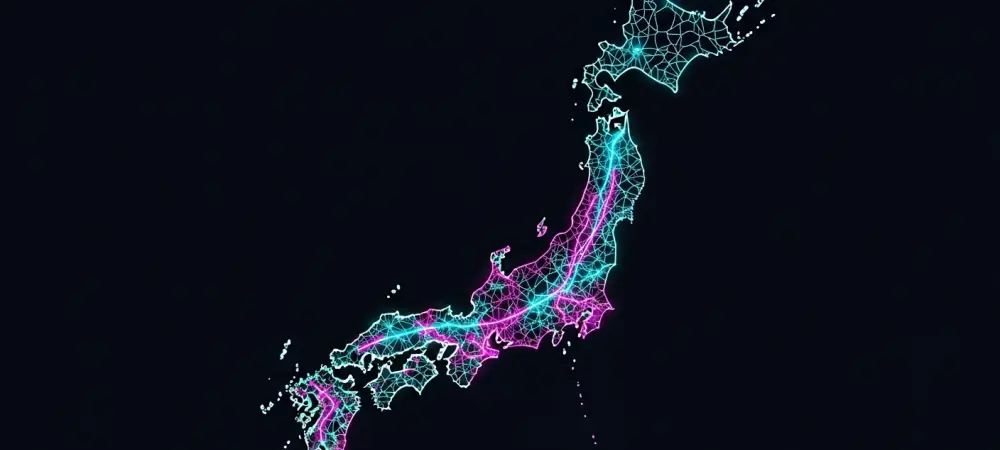
Japan’s official 5G statistics paint a picture of near-perfect national connectivity, but for millions of users, the daily experience reveals a far more fractured and inconsistent digital landscape. As a global technology pioneer, the nation has achieved near-universal 5G population coverage. Yet this impressive figure masks a more complex story of strategic priorities, performance trade-offs, and significant regional disparities that challenge the very definition of a successful rollout.
This analysis is crucial for understanding the real-world obstacles of a national 5G deployment, offering vital insights into the gap between network availability on paper and its practical performance on the ground. The Japanese experience serves as a powerful case study for other nations navigating their own transitions to next-generation connectivity. This article dissects Japan’s 5G landscape, examining performance metrics across major operators, exploring the strategic urban-rural divide, and projecting the future evolution of the nation’s networks.
The Current State of Play: Performance and Coverage Metrics
National Coverage vs Practical User Experience
Japan reports an impressive 98.4% 5G population coverage, a figure that suggests widespread and consistent access to next-generation speeds. However, this statistic primarily reflects where a 5G signal can be found, not how often users are actually connected to it. The more telling metric is “5G Availability,” which measures the percentage of time a user with a 5G-capable device spends actively connected to a 5G network.
This distinction reveals a significant gap between theoretical access and practical reality. Among the nation’s leading operators, NTT DOCOMO currently provides the highest 5G Availability at 38.4%, meaning its customers are connected to 5G just over a third of the time. In contrast, SoftBank trails at 26.5%, highlighting a market where having a 5G phone in a covered area is no guarantee of a consistent 5G connection.
The Operator Speed and Consistency Showdown
When evaluating overall network performance across all mobile technologies, including 3G and 4G, SoftBank emerges as the front-runner. The operator delivers the fastest overall median download speed at 62.05 Mbps, indicating a robust and high-performing legacy network that effectively supports users when 5G is unavailable.
However, the picture changes dramatically when isolating 5G performance alone. Here, new entrant Rakuten Mobile leads the pack with a blistering median download speed of 128.39 Mbps. This suggests a strategy focused on delivering an exceptionally fast but geographically concentrated 5G experience. Meanwhile, NTT DOCOMO distinguishes itself not with top speeds but with superior network consistency, ensuring its users receive a reliable baseline speed more often than its competitors, which is critical for applications that demand stability over raw throughput.
A Tale of Two Japans: The Urban Rural 5G Divide
The Strategy of Urban Concentration
The disparity in 5G Availability is not accidental but the result of a deliberate strategy by operators to prioritize infrastructure investment in densely populated and economically vital prefectures. By concentrating their resources in major metropolitan hubs, carriers can serve the largest number of customers and capitalize on high demand for data-intensive services, maximizing their return on investment.
This urban-first approach is starkly illustrated by comparing different regions. Osaka Prefecture, a major economic and population center, demonstrates this focus with a high 5G Availability of 35.2%. In contrast, less populated regions like Yamanashi Prefecture see a 5G Availability of just 9.1%. This data showcases the underserved status of many rural areas, where the promise of 5G connectivity remains largely unfulfilled.
The Congestion Paradox
Interestingly, some of the fastest 5G speeds in Japan are found not in the well-served urban centers but in regions with the lowest 5G Availability. This counterintuitive trend creates a “congestion paradox,” where service scarcity can lead to superior performance for the few who can access it. Yamagata Prefecture provides a prime example, recording the fastest median 5G speed in the nation at an impressive 181 Mbps. This phenomenon is attributed to extremely low network congestion. With fewer users competing for a share of the network’s bandwidth, each connection can achieve speeds closer to the theoretical maximum. While this benefits a small number of users, it also underscores the network’s underutilization in these areas.
Future Outlook: Challenges and Opportunities for Japanese 5G
The next phase of Japan’s 5G evolution will be defined by the effort to close the significant service quality gap between urban and rural regions. The focus must shift from simply expanding the coverage map to ensuring that all areas receive a consistent and high-quality user experience.
Achieving a more balanced nationwide deployment can unlock transformative economic opportunities, particularly for underserved communities. Reliable, high-speed connectivity is a prerequisite for advancing modern agriculture, enabling effective telemedicine services, and supporting robust remote work infrastructure. These innovations could revitalize rural economies and improve the quality of life outside of major cities. The primary obstacle, however, remains the economic viability of expanding high-performance infrastructure into less profitable rural areas. Without strategic government incentives or innovative deployment models, this challenge could deepen the existing digital divide. How Japan navigates this crucial phase will serve as a global case study for other nations aiming to achieve equitable next-generation connectivity for all their citizens.
Conclusion: Redefining Success in the 5G Era
The analysis of Japan’s 5G rollout revealed a story of profound contrasts. High nationwide coverage statistics masked significant disparities in service availability, speed, and consistency, all driven by a clear and strategic urban-first deployment. This approach created a bifurcated experience, where metropolitan users benefited from advancing technology while rural residents were often left behind. It became clear that while Rakuten’s raw speed and NTT DOCOMO’s consistency demonstrated technical prowess, the true measure of national success was the ability to provide equitable and reliable 5G access for all citizens. The ultimate goal extended beyond impressive benchmark figures to encompass the broader societal and economic benefits of ubiquitous connectivity. The critical path forward for Japanese operators and policymakers involved a fundamental shift in focus from coverage maps to tangible user experience. This meant prioritizing investment and innovation to ensure the transformative power of 5G became a reality for the entire nation, not just its bustling metropolitan hubs.