

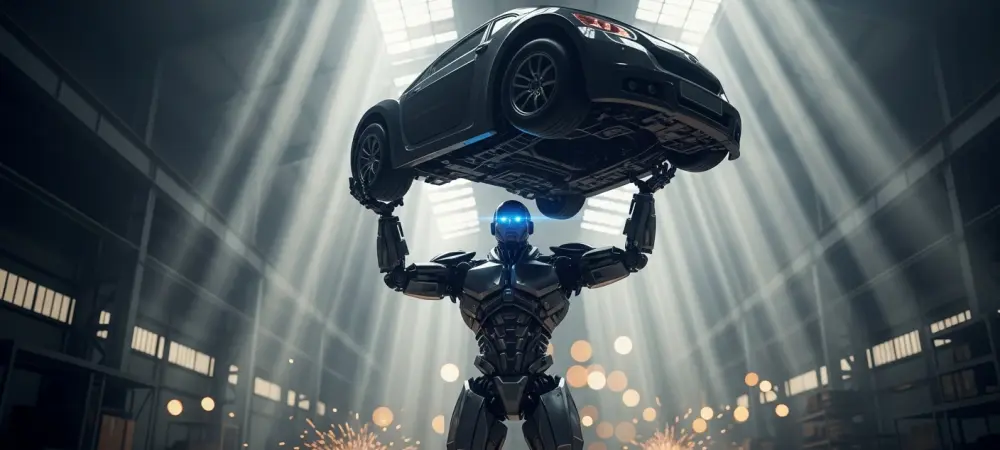
What once seemed confined to the pages of science fiction is now becoming a tangible reality on the factory floor, with humanoid robots emerging as a transformative force in industrial automation. This shift from concept to application is not a distant future but a present-day strategic imperative, best illustrated through the landmark partnership between motion technology giant Schaeffler and cognitive robotics developer Neura Robotics. This collaboration provides a clear lens through which to analyze the technology, strategic drivers, and future implications of a trend poised to redefine manufacturing.
The Emerging Landscape of Industrial Humanoids
Charting the Growth and Investment
The commitment from major industrial players serves as a powerful indicator of a trend reaching its tipping point. Schaeffler has publicly set a strategic goal to deploy a “four-digit number”—several thousand—of humanoid robots across its global operations by 2035. This long-term adoption strategy signifies not just a belief in the technology’s potential but also a substantial capital investment trend that is likely to be emulated by competitors.
However, this is not a bet on a single solution. Schaeffler’s approach involves cultivating a multi-partner ecosystem, engaging with both Neura Robotics and Agility Robotics for its humanoid needs. This strategy indicates a recognition that the market is maturing, with multiple firms offering competitive solutions. It also fosters innovation and de-risks the company’s long-term automation plans by avoiding dependency on a single vendor.
Real World Application in the Schaeffler Neura Partnership
At the heart of this trend is the fusion of specialized hardware and intelligent software. The Schaeffler-Neura partnership is a prime example of this synergy, as the two companies are jointly developing and supplying key components. Schaeffler contributes its deep expertise in high-torque planetary gear actuators—the sophisticated joints that allow for powerful and precise movement—while Neura provides its advanced cognitive robotics platform.
This collaboration enables the humanoid robots to learn and master complex industrial tasks through sophisticated AI models. By capturing and analyzing production data, the system continuously improves its performance, adapting to new challenges. Consequently, the enhanced capabilities provided by Schaeffler’s robust actuators allow the robots to handle heavier loads with greater precision, expanding their application scope from simple logistics to intricate assembly and operational duties.
The Strategic Vision of Industry Pioneers
Schaeffler’s initiative is a component of a much broader vision to create the “factory of the future.” This holistic strategy integrates humanoid robots alongside other advanced tools, such as generative AI platforms like the Siemens Industrial Copilot, to automate and optimize entire engineering and operational workflows. This comprehensive approach signals a move away from piecemeal automation toward a fully interconnected, intelligent production environment. The partnership model itself reveals a key industry insight: combining the core strengths of different market players is the most efficient path to scalable innovation. Established manufacturers like Schaeffler bring decades of hardware expertise and industrial credibility, while agile startups like Neura Robotics offer cutting-edge software and AI. This symbiotic relationship accelerates development and deployment far more effectively than either could achieve alone. Ultimately, this heavy investment in humanoid robotics reflects a calculated decision by industry leaders to future-proof their operations, proactively addressing labor shortages, boosting operational flexibility, and securing a competitive advantage through superior automation.
The Future of Work with Projections and Hurdles
The trajectory of this trend points toward a future where robots are not just programmed machines but cognitive partners. These systems will be capable of learning and adapting to dynamic production environments in real time, paving the way for hyper-flexible manufacturing lines that can quickly pivot to meet changing consumer demands.
The foreseeable benefits of widespread adoption are significant. They include substantial gains in productivity, improved worker safety by delegating hazardous or ergonomically challenging tasks to robots, and the ability to maintain 24/7 operations with unwavering quality and consistency. However, the path to this future is not without its obstacles. The primary challenges include the high initial capital investment required for deployment, the technical complexity of integrating humanoids into legacy workflows, and the critical need to establish robust safety protocols to govern human-robot collaboration. Furthermore, a significant effort will be required to upskill the existing workforce, preparing employees to manage, maintain, and work alongside these advanced robotic systems.
Conclusion A New Era in Manufacturing
The strategic alliance between Schaeffler and Neura Robotics exemplified a pivotal trend in industrial automation. The partnership revealed how the convergence of advanced hardware, cognitive AI, and forward-thinking investment brought humanoid robots from the realm of possibility into mainstream manufacturing.
Schaeffler’s ambitious deployment plan was a clear indicator that the era of the industrial humanoid robot had begun. This movement redefined the nature of factory work and drove unprecedented levels of efficiency and innovation across the global manufacturing sector.