

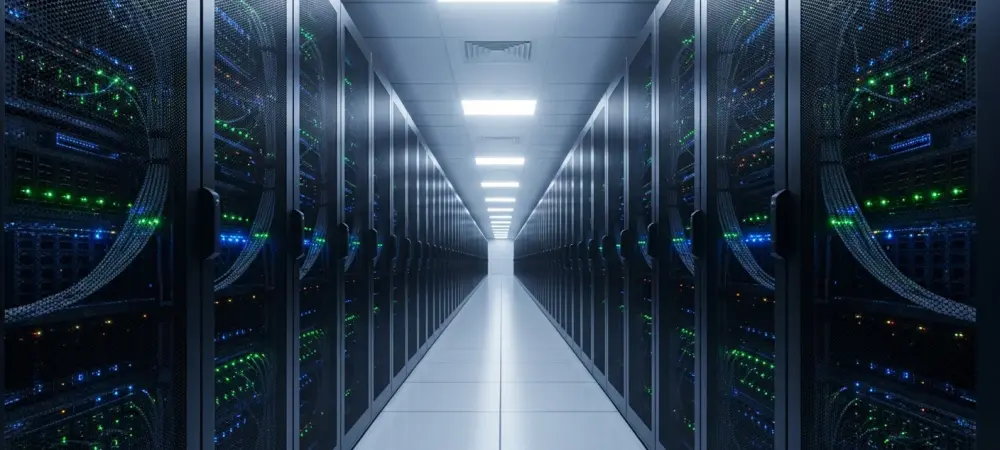
The voracious appetite of artificial intelligence for computational resources is not just a technological challenge but a physical one, demanding a global construction boom of specialized facilities on a scale rarely seen. While the focus often falls on the algorithms and models, the AI revolution is fundamentally a hardware revolution. Without a massive, ongoing build-out of hyperscale data centers designed to handle immense power and cooling requirements, the progress driving today’s digital transformation would grind to a halt. This analysis will examine the scale and velocity of this critical trend, using recent landmark expansions by industry leader NTT to explore the key market drivers and project the future trajectory of AI infrastructure.
The Evidence: Unprecedented Global Expansion
The abstract concept of AI growth translates into concrete demand for physical space and power, a demand that data center providers are racing to meet. Recent activities in both established and emerging markets provide clear evidence of a historic expansion cycle. These are not speculative builds but direct responses to secured capacity agreements with the world’s largest technology firms, who are themselves scrambling to secure the foundational infrastructure needed for their next generation of services. The scale of these deals and the strategic nature of new campus developments underscore the urgency and magnitude of the current build-out.
North American Market Heats Up with 130MW Hyperscale Lease
A powerful indicator of the current market velocity is NTT Global Data Centers’ recent agreements to lease a staggering 130MW of capacity to leading, albeit undisclosed, hyperscale cloud providers. This massive commitment is not concentrated in a single location but is distributed across the company’s U.S. campuses in key strategic markets, including Chicago, Dallas, Phoenix, and Virginia. The geographic breadth of this demand highlights that the need for AI-ready infrastructure is a national-level priority, not a regional phenomenon.
These agreements represent more than just a significant transaction; they are a clear vote of confidence from the world’s largest cloud companies. Hyperscalers are entrusting established infrastructure partners like NTT to provide the scale, reliability, and operational excellence required to fuel their AI-driven growth. Securing such substantial capacity in diverse, high-demand zones is a strategic move to ensure they can deliver the low-latency, high-performance computing that AI applications require, solidifying the physical backbone of their digital empires.
A Case Study in Strategic Growth: The Bengaluru 4 Campus
Beyond securing leases in existing markets, the trend is equally defined by the construction of new, purpose-built facilities designed for the future. NTT’s new Bengaluru 4 data center campus in India serves as a real-world example of this forward-looking strategy. Representing a $288 million investment, the campus is engineered to deliver a formidable 100MW of power and a 67.2MW IT load, demonstrating the immense scale required to support modern workloads.
Critically, the design of the Bengaluru 4 campus anticipates the technological trajectory of AI hardware. It is specifically equipped to support advanced liquid cooling technologies, a crucial capability for managing the extreme heat generated by the high-density computing racks that power next-generation AI and machine learning models. This strategic inclusion positions the campus not just for today’s needs but as a vital hub capable of handling the increasingly intensive computational demands that will define the market in the years to come.
Industry Insights: Why AI is Driving the Data Center Boom
The primary catalyst behind this global infrastructure expansion is the accelerating adoption of artificial intelligence across all sectors. According to Doug Adams, CEO and President of NTT Global Data Centers, this trend is compelling clients to aggressively seek out advanced facilities capable of supporting their most compute-intensive workloads. The demand is no longer a forecast but a present-day reality pushing the limits of existing capacity and compelling a new wave of development.
This surge requires a specialized response. As Adams notes, meeting these unprecedented demands involves more than simply building larger facilities. It requires deep expertise in hyperscale design and, crucially, innovation in cooling technologies. Major technology companies are leaning on partners who can deliver not only the immense power and space required but also the sophisticated engineering needed to operate dense AI clusters efficiently and reliably, ensuring their multi-billion dollar AI investments have a stable foundation upon which to run.
The Future Outlook: A Multi-Billion Dollar Infrastructure Roadmap
The current wave of construction is not a short-term reaction but the beginning of a sustained, long-term infrastructure roadmap. NTT’s global growth strategy provides a clear view of this trajectory, with a committed investment of $10 billion in data center infrastructure planned through 2027. This financial dedication signals a long-term vision for a world where AI-driven demand will continue to grow exponentially.
This investment is translating into tangible assets that will form the bedrock of future digital innovation. The company recently acquired land in seven markets, including emerging data center hubs in Oregon and Arizona, which holds the potential for a colossal 1GW of future capacity. Such large-scale developments are fundamental to enabling the next wave of digital transformation, providing the physical space where breakthroughs in AI, scientific research, and enterprise computing will occur.
Conclusion: Building the Foundation for the AI Era
The explosive demand for artificial intelligence fueled a historic and truly global expansion of hyperscale data center infrastructure. This was evidenced by major lease agreements in North America and strategic, forward-looking investments in new campuses like the one in Bengaluru. These developments confirmed that reliable, scalable, and AI-ready data centers have become an essential utility for the modern digital economy, as critical as the power grid itself. The global race to build the world’s AI capacity was a foundational effort, the results of which will define the technological landscape for decades to come.