

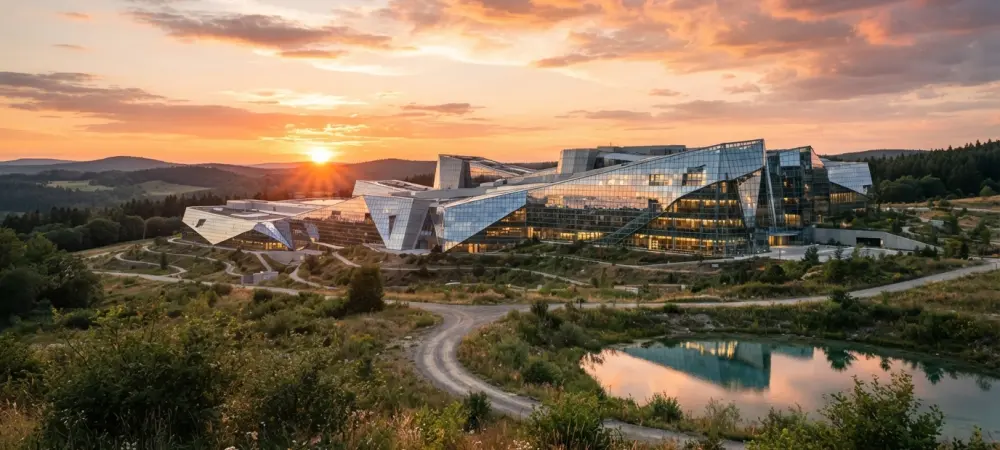
The global landscape of digital infrastructure is undergoing a radical metamorphosis as generative artificial intelligence transforms traditional data centers into specialized, high-performance compute factories. This shift represents an industrial revolution driven by the sudden and unprecedented demand for specialized processing units. As models grow in complexity, the underlying architecture must pivot away from generic storage toward intense computational environments.
The evolution of these facilities marks a departure from traditional megawatt-scale hosting toward a new era of gigawatt-scale operations. Modern developments, such as the massive Lambda expansion in Alabama, serve as the primary lens through which the industry now analyzes growth. These multi-billion-dollar campuses are no longer just support structures but are the critical engines fueling the next decade of algorithmic advancement.
The Surge in High-Density Infrastructure
Market Trajectory and Capital Inflow
Current market trajectory indicates a massive consolidation of capital toward gigawatt-scale campuses, where single sites now command investments exceeding tens of billions of dollars. This financial commitment reflects a strategic pivot toward GPU-intensive environments required by firms like Microsoft and Anthropic to maintain a competitive edge. Projects like the $33.1 billion “Project Red Clay” demonstrate that the race for compute power is about securing the foundations for future digital services.
Real-World Deployment: The Alabama Mega-Campus
The Lambda development in Burkville features a four-building layout spanning 2.88 million square feet, optimized for high-density AI workloads. Engineered to manage power requirements starting at 1GW with potential scaling to 1.5GW, the site sustains the high-thermal loads associated with thousands of interconnected GPUs. This highlights a transition where specialized AI cloud providers take over projects from infrastructure developers to ensure hardware-specific optimization.
Expert Perspectives on the Hyperscale Evolution
Industry analysts view the development of 1GW+ sites as a fundamental requirement for sustaining the next generation of model training. Consequently, the sector is moving toward centralized hubs that benefit from economies of scale and direct utility integration. Furthermore, a “Good Neighbor” philosophy is essential; community benefits agreements, like the $10 million commitment in Alabama, are now vital for securing regulatory approval and long-term viability.
Future Implications for Energy and the Environment
A critical challenge facing these expansions is integrating massive loads into existing grids, often requiring developers to finance utility infrastructure upgrades directly. Environmental stewardship is also evolving, with a shift toward sustainable closed-loop cooling to mitigate water scarcity concerns. Looking toward 2030, the race for compute sovereignty will drive expansion into non-traditional hubs, providing tax revenue and infrastructure upgrades to rural regions.
Conclusion: The New Blueprint for Digital Growth
The hyperscale expansion in Alabama set a new standard for integrating industrial projects with regional power grids and local communities. It demonstrated that aggressive technological growth required a balance of massive capital expenditure and environmental responsibility. Leaders in the sector recognized that successful scaling depended as much on engineering prowess as it did on transparent communication with residents. The Alabama project served as a definitive signal that the AI era will be built on a scale previously unseen in the history of global infrastructure.