

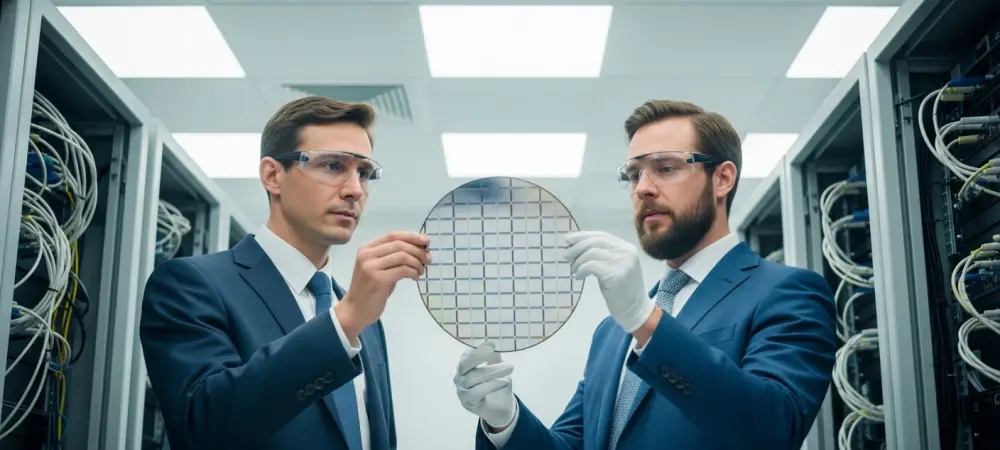
Intel’s sudden decision to revive Hyper-Threading for its 2028 data center processors reveals a significant recalibration in how silicon giants balance sheer core counts against architectural efficiency. This strategic shift follows a period where the company seemed intent on abandoning the technology, prioritizing physical core density over logical thread doubling. As the industry moves toward 2028, the realization that cloud workloads still crave high thread counts has forced a major rethink of the Xeon roadmap to maintain market relevance.
The Strategic Pivot: Reintroducing SMT to the Data Center
Evolutionary Trends: Management and Core Density
The transition between 2026 and 2028 represents a critical era for data center architecture. While designs like the Xeon 7 Diamond Rapids focused on massive core counts to deliver raw power, the upcoming shift back to multi-threading acknowledges a performance gap in enterprise environments. High-density virtualization relies on the ability to manage concurrent tasks efficiently, making the return of this technology a practical necessity.
Real-World Application: The Coral Rapids Framework
Within this landscape, the Xeon 8 Coral Rapids family serves as the primary vehicle for reintroducing Simultaneous Multi-Threading. This architecture addresses the limitations of single-threaded configurations in multi-tenant cloud scenarios where resource sharing is paramount. By matching the multi-threaded throughput of competitors like AMD, Intel seeks to provide a versatile solution for complex workloads that do not scale linearly with physical cores.
Industry Perspectives on Architecture Reversals
Architects observe that while physical cores are the foundation of computing, SMT provides an efficiency buffer for legacy software. Leadership insights suggest a balanced approach is required to handle diverse server demands. However, re-integrating this technology remains a challenge as engineers must manage the thermal and power profiles that come with intensified thread density in modern rack configurations.
The Future Roadmap: Balancing Efficiency and Raw Throughput
Looking toward 2028, this shift will likely influence how hybrid designs evolve across the semiconductor market. Speculation continues regarding whether this return to form will reach consumer CPUs or remain an enterprise feature. As AI workloads dominate the narrative, the challenge lies in determining if legacy techniques can support the next generation of neural processing or if they serve merely as a bridge toward new paradigms.
Final Assessment: Navigating the Multi-Threaded Era
The industry realized that the pursuit of pure core counts could not replace the versatile utility of Hyper-Threading. Intel’s tactical adjustment signaled a maturation of the market where architectural flexibility was prioritized. Organizations began preparing for a decade where scalability was defined by how effectively cores handled the fragmented reality of cloud computing. This pivot established a foundation for future silicon that valued efficiency as much as raw speed.