

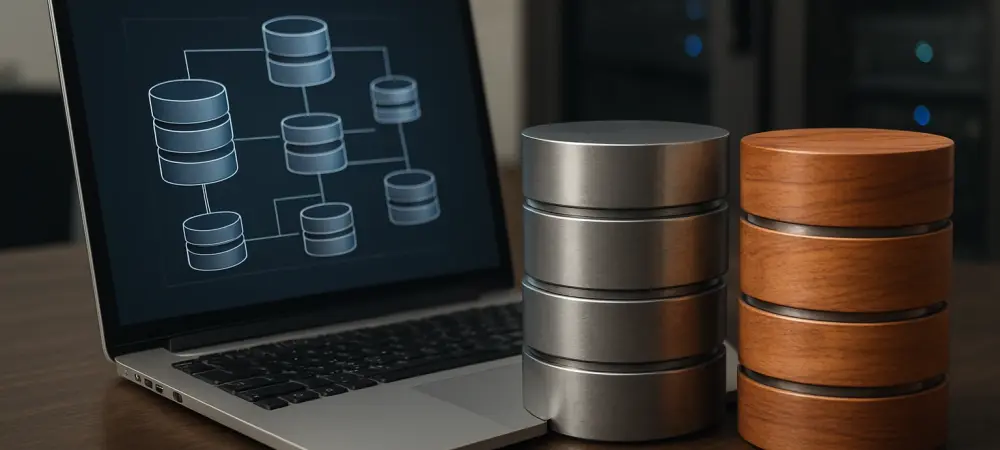
In today’s fast-paced digital landscape, enterprises grapple with a monumental challenge: managing the dual demands of transactional workloads for day-to-day operations and analytical workloads for strategic insights, often requiring separate systems that lead to inefficiencies and delayed decision-making. This persistent divide has driven a surge in hybrid database innovations, solutions that seamlessly integrate online transaction processing (OLTP) and online analytical processing (OLAP) capabilities into a single platform. Such advancements promise to simplify data management, eliminate cumbersome data transfers, and empower real-time decision-making in a data-driven era. This analysis delves into the growing trend of hybrid database systems, spotlighting a recent update to Google Spanner as a pivotal case study, while exploring broader industry movements, potential impacts, and the future trajectory of these transformative technologies.
The Rise of Hybrid Database Solutions
Market Growth and Adoption Trends
The demand for hybrid database systems, which unify transactional and analytical processing, has seen a remarkable uptick as enterprises seek to streamline their data operations. Industry reports, such as those from Gartner, indicate that the market for unified data platforms is projected to grow significantly from this year through 2027, driven by the need for real-time insights and operational efficiency. This shift reflects a broader recognition that maintaining separate OLTP and OLAP systems often results in data staleness and high costs due to complex data integration processes.
A key driver behind this adoption is the inefficiency of traditional setups, where data must be moved between systems via extract, transform, load (ETL) pipelines, introducing delays and operational overhead. Enterprises across sectors, from finance to retail, are increasingly turning toward hybrid solutions to mitigate these issues, enabling a single system to handle diverse workloads without compromising speed or accuracy. This trend underscores a fundamental pivot in how businesses approach data infrastructure.
The growing preference for hybrid databases also ties into the broader cloud adoption wave, as organizations leverage scalable, managed services to consolidate their data environments. As more companies prioritize agility, the market for these solutions continues to expand, positioning hybrid systems as a cornerstone of modern data strategies.
Real-World Applications and Case Studies
One of the most notable examples of hybrid database innovation is the recent update to Google Spanner, which introduced a columnar engine to bridge OLTP and OLAP workloads within a single platform. This enhancement allows Spanner to support both row-oriented storage for transactional efficiency and columnar storage for optimized analytical queries, reducing input-output operations and enhancing data compression. The integration of vectorized execution further boosts performance by processing data in batches, improving CPU and memory utilization.
Beyond Google’s advancements, Spanner’s update includes seamless connectivity with BigQuery, enabling complex analytics on live transactional data without straining primary systems. This synergy offers enterprises a unified environment to handle diverse data needs, minimizing the traditional barriers between operational and analytical tasks. Such capabilities highlight how hybrid systems can transform real-time data processing for businesses.
The competitive landscape also showcases similar efforts, with players like AWS combining features across Aurora and Redshift, Microsoft integrating analytical tools in Azure Cosmos DB, and Snowflake expanding its analytics platform to accommodate transactional workloads. These developments illustrate a collective industry push toward versatile database architectures, providing organizations with varied options to address their unique requirements and reinforcing the relevance of hybrid solutions in today’s market.
Industry Perspectives on Hybrid Innovations
The convergence of transactional and analytical processing has garnered significant attention from database experts and thought leaders, who view it as a critical evolution in data management. Many emphasize the reduction in operational complexity as a primary benefit, noting that hybrid systems eliminate the need for separate infrastructures and intricate data pipelines, thus lowering costs and maintenance efforts. This unified approach is often hailed as a game-changer for enabling immediate insights from fresh data.
However, challenges remain a topic of discussion, particularly around maintaining performance consistency across mixed workloads. Experts caution that balancing the high-frequency updates of OLTP with the resource-intensive queries of OLAP within one system requires sophisticated optimization techniques, an area still under refinement. Commentary from industry forums suggests that while hybrid databases offer immense potential, achieving seamless scalability and workload isolation is a persistent hurdle for widespread adoption.
Additionally, thought leaders point out that hybrid innovations are reshaping enterprise data strategies by fostering a culture of agility and responsiveness. The ability to derive actionable intelligence without delays is seen as a competitive advantage, especially in dynamic sectors like e-commerce and healthcare. These perspectives collectively highlight both the transformative promise and the nuanced complexities of integrating diverse data processing needs into a singular, efficient framework.
Future Outlook for Hybrid Database Technology
Looking ahead, hybrid database technology is poised for further evolution, with advancements expected in storage mechanisms, processing efficiency, and deeper cloud integration. Innovations in adaptive storage, where systems dynamically switch between row and columnar formats based on workload demands, could enhance flexibility and performance. Such developments aim to address current limitations and push the boundaries of what unified platforms can achieve. The anticipated benefits of these advancements include accelerated decision-making processes and significant cost reductions, as enterprises reduce reliance on multiple systems and streamline operations. However, challenges like ensuring data consistency across varied tasks and scaling to handle massive data volumes without performance degradation remain critical areas of focus. Industry observers also note the risk of vendor lock-in, which could limit flexibility for organizations adopting proprietary hybrid solutions.
Broader implications extend to industries heavily reliant on data analytics, such as finance, logistics, and marketing, where hybrid databases could redefine operational models by enabling instantaneous, data-driven strategies. Optimistic scenarios envision widespread adoption fueled by maturing technologies, while potential hurdles, including technical constraints and integration complexities, may temper the pace of implementation. The trajectory of hybrid systems will likely depend on balancing innovation with practical, scalable solutions tailored to diverse enterprise needs.
Conclusion: The Path Ahead for Hybrid Databases
Reflecting on the journey of hybrid database systems, their rise marks a pivotal response to the inefficiencies of fragmented data management, with Google Spanner’s columnar engine standing out as a landmark innovation that unites transactional and analytical capabilities. The competitive landscape, populated by major players like AWS, Microsoft, and Snowflake, underscores a shared commitment to hybrid solutions that tackle modern enterprise challenges. This era of transformation highlights a clear shift toward operational efficiency and real-time analytics. Moving forward, businesses should prioritize evaluating hybrid database options to align with their specific workloads and strategic goals, leveraging trial phases and vendor consultations to mitigate risks like vendor dependency. Investing in staff training to handle these sophisticated systems emerges as a crucial step to maximize benefits. By proactively exploring these integrated platforms, organizations position themselves to thrive in an increasingly data-centric world, capitalizing on the momentum of database technology advancements.