

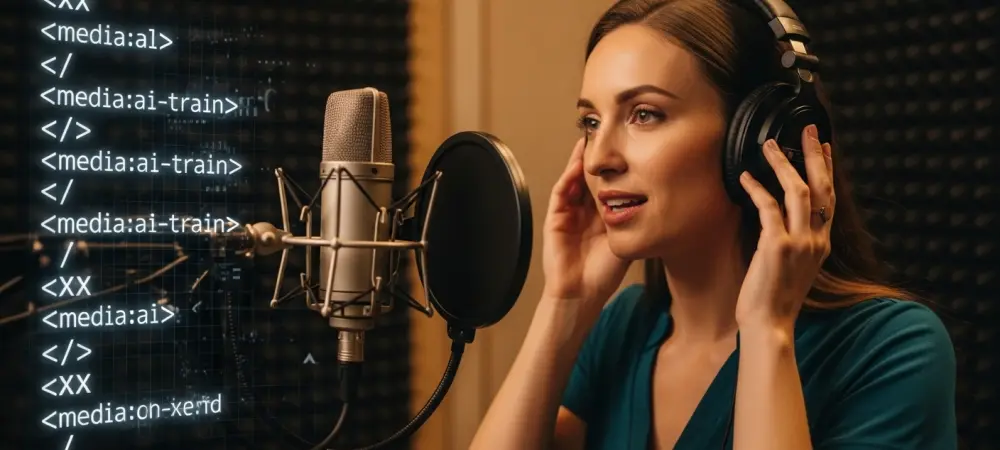
The velocity at which generative software can now replicate the nuanced cadence of a human voice or the unique micro-expressions of a face has transformed personal identity from a biological certainty into a harvestable digital asset. As synthetic replicas become indistinguishable from their biological counterparts, the global community faces a critical tipping point regarding individual autonomy and economic survival. This shift has necessitated a move toward technical protocols designed to reclaim human agency, focusing on the movement to transform the abstract concept of consent into a machine-readable reality that algorithms cannot simply ignore.
The Rise of Identity Protection Protocols
Market Adoption: The Growth of Technical Consent
The transition from the initial Really Simple Licensing (RSL) protocols of the previous year to the current RSL Media Human Consent Standard represents a fundamental shift in how digital rights are asserted. This evolution was not born out of a desire for technical complexity but from an urgent need to stop the wholesale displacement of voice actors and creative professionals. As automated systems began to dominate the dubbing and narration markets, the demand for a “traffic-light” registry system intensified, providing a clear signal to scrapers about what is off-limits. Recent data indicates that unauthorized AI scraping has reached unprecedented levels, leading to a surge in the adoption of International Standard Rights Declaration identifiers. These digital tags act as a barrier against the predatory expansion of data harvesting. By embedding these identifiers into the metadata of creative works, individuals are finally moving away from the “wild west” era of AI training. The focus is no longer just on whether a machine can learn from a human, but whether it has the explicit, verified permission to do so.
Real-World Applications: Machine-Readable Rights
The RSL-MEDIA 1.0 initiative stands as a primary case study in how labor advocacy can successfully merge with software engineering. This protocol is not just a policy statement; it is a functional toolset that allows creators to define the boundaries of their digital existence. By integrating specific XML elements like “media:ai-train” and “media:ai-generate” directly into web infrastructures, the industry is creating a standardized language that tells an AI crawler exactly where the “no trespassing” signs are located.
Furthermore, the implementation of “default prohibition” models has become a vital safeguard for particularly vulnerable groups. There is now a concerted effort to automate the protection of minors’ likenesses, ensuring that the faces of children are not processed into synthetic datasets by default. This proactive engineering approach moves beyond simple legal warnings and creates a technical environment where privacy is the baseline setting rather than an optional feature that must be manually requested.
Expert Perspectives: The Identity Crisis
Industry Leaders: Technical Standards Over Slow Legislation
Creative visionaries such as Steven Soderbergh and Cate Blanchett have recently emphasized that waiting for legislative bodies to catch up with AI is a losing strategy. They argue that technical standards must precede slow-moving lawmaking to prevent the irreversible loss of professional identity. The consensus among these leaders is that if the tools for protection are not as sophisticated as the tools for replication, the creative community will be left behind in a landscape they helped build.
Legal experts and union representatives have identified an “Enforcement Gap” that the current Robots Exclusion Protocol simply cannot bridge. While traditional web standards were designed for a more cooperative internet, modern AI development requires more robust and verifiable frameworks. Experts suggest that without a machine-readable layer of engagement, the legal right to one’s own image remains a theoretical concept that is easily bypassed by high-speed data ingestion.
Democratizing Rights: Beyond Celebrity Protection
The movement toward identity protection is increasingly focused on the needs of private citizens rather than just global icons. Tech executives like Nikki Hexum have pointed out that a teacher, a nurse, or a local musician deserves the same level of control over their voice and face as a Hollywood star. By making rights management tools free and accessible, the goal is to prevent a future where only the wealthy can afford to keep their identity from being weaponized or commercialized by third-party platforms.
This democratization of rights management is essential for maintaining social trust. As people realize their personal videos and audio clips could be used to train deepfake models, the demand for “sovereign identity” tools has skyrocketed. This trend reflects a broader cultural shift where the public is no longer willing to be the “free product” in the business models of large tech conglomerates, leading to a more confrontational but necessary relationship between users and software developers.
The Future: Synthetic Ethics and Identity
Long-Term Impact: The Network Effect of Registries
The effectiveness of these new rights registries will ultimately depend on the “network effect” of mass adoption. If a significant majority of creators and citizens utilize a unified standard, it fundamentally changes the legal landscape of “fair use.” When a machine-readable “no” is present across the majority of the web, AI companies can no longer claim ignorance or argue that their data collection is a harmless industry standard.
However, the path forward is complicated by a crowded market of competing protocols such as TDMRep and ai.txt. A fragmented ecosystem could allow tech companies to cherry-pick the standards that favor their interests. The outcome will likely lead to a dual-path reality: either a future where AI enhances human expression through verified, ethical licensing, or a fractured landscape where identity theft remains a persistent threat for those who lack the technical savvy to navigate complex registry systems.
From Reaction to Proaction: Permanent Terms of Engagement
We are witnessing a permanent shift in the architecture of the internet from reactive litigation to proactive, machine-readable terms of engagement. The era of suing a company after they have already ingested your entire career’s work is being replaced by a system where the terms are set before the first byte is ever read. This change represents a maturation of the digital economy, where the “human element” is treated as a guarded technical specification rather than a raw resource.
The survival of the creative class depends on this transition being successful and universal. If these protocols become a permanent fixture of the web, the relationship between human creators and artificial intelligence can move toward a symbiotic model. In this scenario, the AI acts as a tool that respects the boundaries of its human subjects, ensuring that the biological origins of creativity are honored rather than exploited for corporate gain.
The Path Forward: Summary of Actions
The strategic importance of transforming biological identity into a guarded technical specification cannot be overstated. It was essential that the human voice and face remained expressions of individual autonomy rather than mere data points for corporate extraction. The movement toward a standardized registry system provided a necessary framework for this protection, allowing for a more transparent digital ecosystem.
The development of these consent frameworks established a blueprint for how individuals can maintain agency in an automated world. It became clear that the integration of XML-based identifiers and cryptographic signatures offered a practical solution to a philosophical crisis. Moving forward, developers and creators had to prioritize the adoption of these verifiable systems to ensure that human presence remained at the forefront of technological advancement. By establishing these machine-readable boundaries, the industry took a definitive step toward an ethical future where synthetic generation is governed by the people it seeks to replicate.