

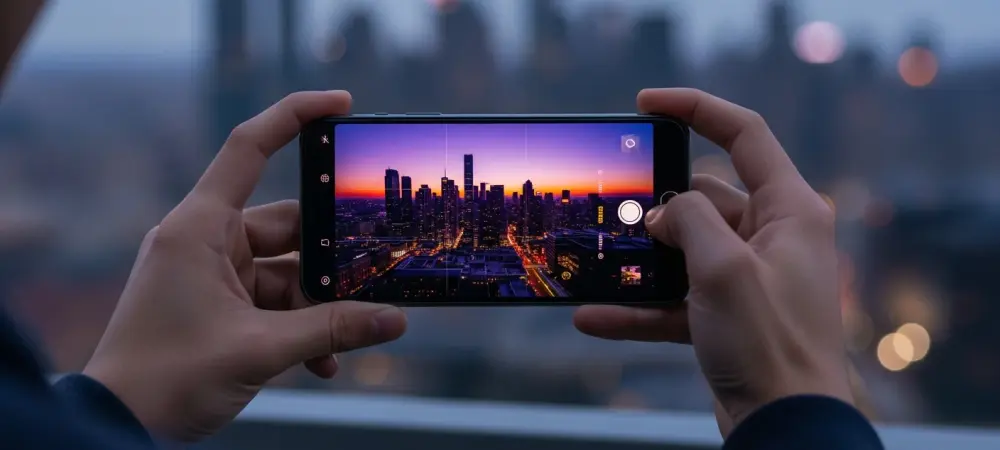
Modern pocket technology has successfully dismantled the boundary between casual snapshots and professional studio photography, rendering bulky external equipment increasingly obsolete for the average creator. This transformation centers on the aggressive integration of ultra-high-resolution sensors within the current flagship market. As manufacturers prioritize optical excellence, the move toward massive pixel counts has become a primary differentiator for high-end devices. This shift represents a broader convergence where raw computational speed meets sophisticated glass, fundamentally changing how users interact with digital imagery.
The Surge of Ultra-High Resolution Hardware
Market Adoption and the Race for Megapixel Supremacy
The transition toward 200MP sensors is no longer a niche experiment but a standard expectation for premium hardware. Market trends indicate that consumers increasingly seek “all-in-one” devices capable of replacing dedicated cameras for travel and professional social media content. Consequently, major manufacturers are locked in a relentless pursuit of resolution supremacy to capture market share. This competition drives rapid innovation in sensor architecture and light-gathering capabilities across the industry.
Real-World Applications: The iQoo 16 and the New Photography Standard
Current industry leaks surrounding the iQoo 16 illustrate this evolution through its transition from a 50MP Sony IMX921 to a massive 200MP primary sensor. This upgrade, paired with a 50MP periscope telephoto lens, signals a pivot toward challenging traditional camera-centric rivals. By integrating such powerful optics into a performance-first chassis, brands are successfully broadening their appeal. This strategy ensures that high-speed processing and elite photography no longer exist in separate silos.
Expert Perspectives on the High-Resolution Pivot
Industry analysts often debate the “megapixel myth,” yet the practical benefits of advanced pixel binning cannot be ignored in low-light environments. Managing the massive data throughput of a 200MP capture requires immense processing power, typically provided by next-generation chipsets like the Snapdragon 8 Elite series. Experts suggest that maintaining high-fidelity 2K displays is essential to complement these sensors, allowing users to perceive the captured detail. The technical challenge remains balancing file sizes with the storage demands of ultra-high-resolution content.
The Future Landscape of Mobile Optical Technology
Looking ahead, the intersection of high-resolution hardware and AI-driven image processing will likely disrupt the entry-level DSLR market entirely. As sensor technology matures, the reliance on physical lens depth decreases in favor of sophisticated computational bokeh and zoom algorithms. However, this progress places significant strain on local storage and cloud infrastructure, necessitating faster memory standards. The industry must now address the diminishing returns of resolution versus the escalating costs of these premium components to maintain consumer interest.
Conclusion: Bridging the Gap Between Performance and Optics
The iQoo 16’s hardware shift demonstrated a clear commitment to merging elite gaming performance with professional-grade optics. Manufacturers recognized that modern users demanded a singular device that mastered every possible task without compromise. This period of rapid innovation established a new standard where high-resolution imaging became the cornerstone of the flagship experience. Moving forward, the industry prioritized the development of more efficient compression algorithms and smarter AI integration to handle the burgeoning data loads of ultra-high-definition photography.