

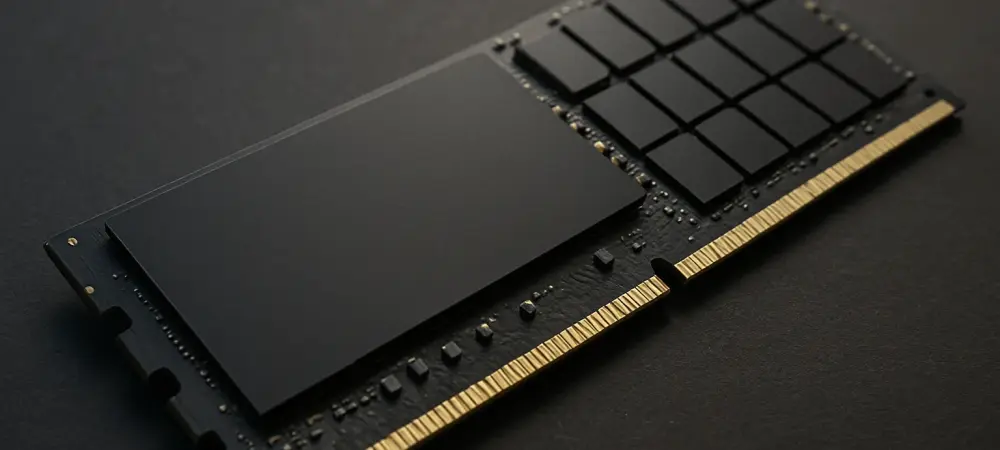
Imagine a world where artificial intelligence models train in mere hours instead of days, and complex 3D renderings materialize in real-time, all from a single workstation. This is no longer a distant vision but a reality driven by the explosive growth of data-intensive workloads and the pressing need for cutting-edge memory solutions. DDR5 memory has emerged as a cornerstone of next-gen computing, enabling unprecedented performance for professionals across industries. Innovations like V-Color’s recent launch of high-capacity DDR5 kits are setting new benchmarks, with capacities reaching up to 2 TB in 8-channel systems. This analysis dives into the advancements propelling DDR5 technology, explores its real-world applications, gathers expert perspectives, forecasts future potential, and distills essential insights for staying ahead in this dynamic landscape.
The Rise of High-Capacity DDR5 Memory
Market Growth and Adoption Trends
The demand for high-capacity memory is surging, fueled by the rapid expansion of AI, creative industries, and technical computing sectors. Industry reports project that DDR5 adoption will see a significant uptick, with market share expected to grow substantially from 2025 to 2027 as more systems transition to this standard. This growth reflects a broader trend of integrating DDR5 into professional workstations to handle increasingly complex tasks, with companies like V-Color leading the charge by offering kits that support up to 2 TB in 8-channel configurations, catering to the most demanding environments.
Beyond raw numbers, the shift toward DDR5 is evident in its penetration into high-performance computing markets. Enterprises are prioritizing memory solutions that can keep pace with escalating data requirements, particularly in fields requiring massive bandwidth. The push for higher capacities and faster speeds underscores a market ready to embrace DDR5 as a foundational technology, reshaping how industries approach computational challenges with scalable, efficient solutions.
This momentum is further amplified by the compatibility of DDR5 with emerging hardware platforms, ensuring broader accessibility for professionals. As adoption rates climb, the focus on integrating such memory into mainstream systems highlights a pivotal moment for the industry, where performance ceilings are continuously being redefined to meet modern needs.
Real-World Impact and Implementations
In practical settings, DDR5 memory is already transforming workflows, with V-Color’s OC RDIMM DDR5 series tailored for AMD Ryzen Threadripper PRO 9000 WX-Series processors standing out as a prime example. This technology empowers local AI model training by providing the necessary bandwidth to process vast datasets without reliance on external resources. Such capabilities are critical for organizations aiming to maintain data privacy while achieving rapid results in machine learning projects.
Additionally, the impact extends to creative and technical domains like 3D rendering and real-time ray tracing, where high-speed memory reduces bottlenecks during intensive tasks. V-Color’s kits, validated on platforms such as the Gigabyte AI Top Motherboard with speeds up to 8200 MT/s in a 192 GB setup, enable artists and engineers to execute complex visualizations seamlessly. This performance is a game-changer for post-production studios striving for efficiency under tight deadlines.
Scientific simulations also benefit immensely, as DDR5 supports the computational power required for intricate calculations and modeling. From climate research to molecular dynamics, the ability to handle large memory loads with stability ensures that researchers can push boundaries without hardware limitations. These diverse applications illustrate how DDR5 is not just an upgrade but a fundamental enabler of innovation across multiple fields.
Industry Perspectives on DDR5 Advancements
The significance of high-capacity DDR5 memory in overcoming modern computing bottlenecks is a recurring theme among technology leaders and analysts. Many emphasize that solutions like V-Color’s OC RDIMM series, with overclocking flexibility and tight latencies, are redefining professional workflows by allowing users to fine-tune performance for specific needs. This adaptability is seen as a critical factor in addressing the unique demands of data-heavy applications.
A notable trend highlighted by experts is the industry’s move toward on-premises AI processing, driven by concerns over data privacy and the high costs of cloud-based solutions. V-Color’s design philosophy aligns with this shift, prioritizing memory configurations that support robust local processing capabilities. Such perspectives underscore a growing consensus that self-sufficient computing environments are becoming essential for enterprises aiming to balance security and efficiency.
Furthermore, industry voices point to the broader implications of DDR5 advancements for scalability in professional settings. The ability to deploy memory kits with capacities up to 2 TB signals a future where workstations can rival data center performance, a development hailed as transformative for sectors reliant on real-time data analysis. This convergence of innovation and practicality continues to shape expectations for what memory technology can achieve.
Future Outlook for DDR5 Memory Technology
Looking ahead, DDR5 memory is poised for remarkable evolution, with anticipated advancements in speed, capacity, and compatibility with next-generation CPU architectures. Higher transfer rates and larger memory kits are expected to further enhance performance for AI-driven tasks and virtualization, enabling even more sophisticated applications. This trajectory promises to empower industries ranging from creative studios to scientific research with tools to tackle increasingly complex challenges.
However, challenges such as thermal management and cost barriers remain critical considerations for widespread adoption. As capacities grow, ensuring stability under heavy loads becomes paramount, requiring ongoing innovation in cooling solutions and power efficiency. Additionally, the price point of cutting-edge DDR5 kits may initially limit accessibility for smaller organizations, necessitating a balance between pioneering technology and practical scalability over the coming years.
The implications of these developments are vast, potentially reshaping how industries allocate resources for computing infrastructure. As DDR5 becomes more integrated into mainstream systems, its ability to support emerging workloads will likely drive a reimagining of workflow efficiency, from film editing suites to advanced laboratories. Navigating this landscape will involve continuous adaptation to ensure that performance gains translate into tangible benefits across diverse use cases.
Key Takeaways and Next Steps
Reflecting on the journey of DDR5 memory, the surge in demand became a defining force, with V-Color’s pioneering OC RDIMM series setting a high bar through capacities up to 2 TB and speeds reaching 8200 MT/s. These advancements aligned seamlessly with modern workloads, unlocking new possibilities for AI, creative, and technical computing. The emphasis on memory innovation proved vital in pushing the boundaries of next-gen computing potential. As a forward-looking step, stakeholders across industries are encouraged to explore DDR5 solutions available through platforms such as V-Color’s website, Amazon, and Newegg. Engaging with these cutting-edge technologies offers a pathway to stay competitive in a rapidly evolving landscape. The focus shifts to anticipating how future iterations of DDR5 could further democratize high-performance computing for a wider audience.
Ultimately, the conversation around DDR5 sparks a broader dialogue on integrating advanced memory into everyday professional tools. By investing in scalable, reliable solutions, businesses and individuals position themselves to capitalize on emerging opportunities, ensuring they remain agile amidst technological shifts. This proactive approach becomes the cornerstone for harnessing the full spectrum of what next-gen memory has to offer.