

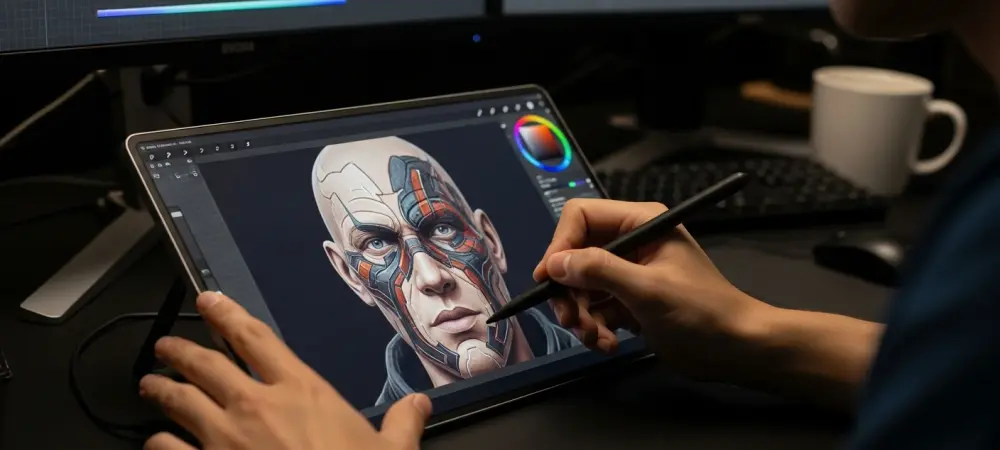
No video game in history has carried the weight of expectation quite like Grand Theft Auto 6, a title so monumental that every facet of its creation is examined as a bellwether for the entire entertainment industry. Amid this intense scrutiny, the controversial role of artificial intelligence has emerged as a central flashpoint. Rockstar Games’ official stance on generative AI is not just an internal policy; it is a pivotal moment in a larger, industry-wide debate. This analysis dissects Take-Two Interactive’s strategic decision to embrace AI for operational efficiency while deliberately walling it off from the creative heart of GTA 6, exploring the far-reaching implications of this high-profile case study.
A Deliberate Dichotomy AI as a Tool Not a Creator
The Data Driven Divide at Take Two
Take-Two Interactive has drawn a clear and unambiguous line in the sand regarding its most valuable intellectual property. CEO Strauss Zelnick issued a definitive statement confirming that generative AI has played “zero part” in crafting the core creative assets of Grand Theft Auto 6. This public declaration separates the company from others rushing to integrate AI into content pipelines.
In contrast, this creative firewall does not signal a rejection of technology. Take-Two is actively leveraging AI and machine learning in over one hundred pilot programs across its operations. These initiatives are aimed squarely at optimizing backend processes, such as accelerating quality assurance testing, streamlining internal workflows, and enhancing business analytics. This establishes a clear boundary: AI is a valuable tool for improving efficiency, but it is kept firmly away from the art of game creation.
GTA 6 as the Benchmark for Human Craftsmanship
The development of GTA 6 serves as a concrete example of this philosophy in action. Every meticulously designed environment, memorable character, line of dialogue, and narrative arc is the product of human developers. This is a conscious and strategic choice, rooted in a deep-seated commitment to preserving the artistic integrity that defines the franchise.
Rockstar Games operates on the belief that its signature quality cannot be authentically replicated by automated systems. The series is renowned for its nuanced satirical commentary on contemporary culture, its intentional and dense world-building, and the countless specific cultural references that give its universe depth and personality. The studio maintains that such deliberate and resonant artistry can only be achieved through the passion, intellect, and lived experience of its human creative teams.
Expert Insight The Executive Stance on Artistic Integrity
The chief architect of this strategy is Take-Two CEO Strauss Zelnick, whose public commentary provides a crucial window into the company’s thinking. His statements consistently frame the exclusion of generative AI from the creative process not as a technological limitation but as a non-negotiable commitment to quality. He positions human authorship as the indispensable ingredient for creating the kind of blockbuster entertainment that justifies premium pricing and commands global attention.
This executive stance reflects a core philosophy deeply embedded within Rockstar Games: that human creativity is irreplaceable for building the deeply immersive and culturally resonant experiences that are the hallmark of the Grand Theft Auto franchise. This belief is more than just a preference; it is a brand promise. The studio is betting that players can feel the difference between a handcrafted world and one generated by an algorithm, and that this difference is what ultimately elevates their games from products to cultural phenomena.
Future Trajectory Setting a Precedent in a Shifting Landscape
Rockstar’s conservative approach is poised to have a significant ripple effect across the future of AAA game development. It has the potential to establish a new industry standard where flagship titles are marketed on the promise of being “human-made,” creating a powerful point of differentiation from competitors that lean heavily on AI for content generation. This positions artistry as a premium feature, a seal of quality in an increasingly automated landscape.
This model, however, is not without its challenges. Handcrafting worlds on the scale of GTA 6 demands enormous resources, leading to higher costs and significantly longer development cycles. These drawbacks must be weighed against the immense benefits of enhanced brand trust and the perception of superior quality. Ultimately, Rockstar is making a calculated gamble that the loyalty and anticipation built through this method will yield a greater return than the efficiencies gained through AI creation.
Conclusion Redefining Innovation in the AI Era
The case of Grand Theft Auto 6 demonstrated that Rockstar and Take-Two were not anti-AI but were instead proponents of a highly segmented and deliberate approach. They successfully used the technology to enhance operational efficiency while fiercely protecting the sanctity of the creative process. This strategic bifurcation allowed them to reap the benefits of automation without compromising their artistic soul.
This decision became a defining statement on the value of human artistry in an industry that was rapidly moving toward automation. By championing the “human-made” label for its most important title, Rockstar set a powerful precedent, challenging the notion that technological innovation must come at the expense of creative integrity. As GTA 6 launched to unprecedented success, its triumph may have ultimately proved that in the age of artificial intelligence, the most valuable and sought-after commodity was authentic human creativity.