

Finland is quietly orchestrating a nationwide data center push that braids prime land, rigorous planning, and energy-first design into a scalable roadmap for hyperscale, AI, and high-availability compute. Demand for low-latency capacity and renewable-backed power is stretching traditional Western European hubs, and Finland is moving to fill the gap with coordinated projects across the capital ring, the southeast interior, and the north.
The momentum matters because it signals a structural shift rather than a one-off build cycle. Operators and investors are aligning land control with planning discipline and power certainty, creating a repeatable template that shortens time to capacity while raising community and environmental standards.
Market Momentum and Growth Signals Across Finland
Quantitative Trendlines and Siting Patterns
Distributed growth is becoming visible on the map. Brunswick Real Estate has applied to reserve roughly 7.3 hectares in Heikinlaakso on Helsinki’s northern edge, positioning tall, business-zoned builds near core networks. In Lappeenranta, Neoen is advancing zoning for an 80MW facility beside its 56.4MW Yllikkälä battery, while Oulu’s Trevian consolidation combines Rusko and Leväsuo and adds about 60,000 square meters of fresh development land.
Planning steps are deliberate and public. The Helsinki reservation is moving through the Urban Environment Committee with resident input and City Board oversight this year, while Lappeenranta’s zoning amendments have been launched and detailed design will follow. Trevian, for its part, has structured an investment vehicle—Oulu Trevian Datacenter I Ky—to assemble sites and ready capital for phasing.
Real-World Project Snapshots
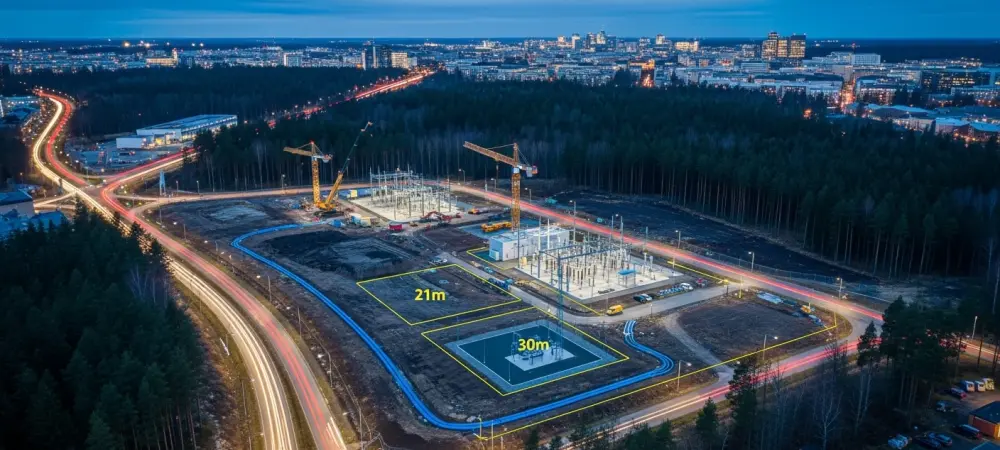
Brunswick’s Heikinlaakso tract spans a wooded, business-zoned area where building heights envisioned at 21–30 meters imply hyperscale or large enterprise potential near metro fiber. Governance requires operator identification during planning, reflecting diligence on power impact and traffic; Brunswick’s Nordic track record with Prime DC, QTS, and a Digital Realty–tenanted asset boosts credibility on delivery.
Neoen’s Lappeenranta move leans into an energy backbone already in place. The Yllikkälä Power Reserve Two battery, commissioned last year, offers grid support to data center loads, while nearby players—Scale42 and Polarnode’s 100–350MW campus courting Nebius—point to a cluster effect that can attract anchor tenants and supply partners over time.
Trevian’s Oulu strategy reuses former Nokia sites to blend redundancy, usability, and scalability across a combined footprint. Technical specs remain to be disclosed, but brownfield readiness and management-owned governance, backed by €1.2 billion in AUM, position the platform for modular deployment as approvals and tenant commitments materialize.
Stakeholder Perspectives and Strategic Context
Planning and Policy Viewpoints
Municipalities are aligning clarity with consent. Helsinki’s request for operator disclosure ties approvals to load dynamics, traffic, and land-use fit, signaling a desire to integrate compute into urban fabric rather than treat it as a standalone utility. Timelines are paced but transparent. Formal committee reviews and resident engagement stretch schedules, yet they also build social license and reduce late-stage surprises—a trade most institutional backers accept when siting long-lived infrastructure.
Energy and Sustainability Insights
Battery adjacency in Yllikkälä shows how firming variable renewables can meet stringent SLAs without leaning solely on grid contingencies. It also creates options for demand response and ancillary services that improve project economics.
Corporate PPAs, including Neoen’s deals with Equinix in multiple countries, help derisk power price volatility while supporting decarbonization targets for operators and tenants. Heat reuse potential remains a Nordic strength, with district heating integration an increasingly standard diligence item.
Investor and Operator Lens
Site control comes first. Development reservations, land banking, and consolidation are de-risking preconstruction while providing optionality for phasing and operator selection. This is particularly valuable where grid queues and supply chains remain tight. Partnership pathways are already hinted. Brunswick’s history with Prime DC and QTS suggests future operator alliances, while Oulu’s brownfield context favors speed once designs and power allocations are set. The prize is faster commissioning without compromising resilience.
Outlook: Scenarios, Benefits, Challenges, and Industry Implications
Near-Term Milestones and Catalysts
Key decisions in Helsinki on the Heikinlaakso reservation, followed by Lappeenranta’s zoning approvals and initial design reveals, will set cadence for capital deployment. Oulu’s technical release and phasing plan should indicate how quickly brownfield capacity can hit the market.
Across sites, operator announcements and anchor tenant signings will convert optionality into revenue-tied schedules. That, in turn, will trigger fiber buildouts, substation works, and procurement lock-ins.
Infrastructure Enablers and Constraints
Power availability and grid connections remain the gating factor, with storage and demand response increasingly part of the design brief. Where capacity allocation is tight, PPA-backed projects will hold an edge.
Connectivity is a close second. Long-haul routes into Helsinki’s core, metro diversity, and cross-border links shape latency and resilience, while sustainability criteria—renewables sourcing, heat reuse, water stewardship, and embodied carbon—now influence underwriting as much as site access.
Competitive Dynamics and Clustering
Lappeenranta’s multi-operator environment compounds advantages as vendors and talent co-locate, lowering costs and improving time to troubleshoot. Such ecosystems tend to self-reinforce once anchor loads land.
Heikinlaakso offers metropolitan adjacency without downtown friction, balancing low latency with scale. Oulu, built on industrial heritage, provides resilient capacity in the north, with brownfield reuse making delivery timelines more predictable.
Risks, Unknowns, and Mitigations
Permitting duration and sequencing can stretch plans; early and frequent engagement with residents and agencies mitigates contention. Power-price volatility and curtailment risks are tempered by PPAs, storage, and flexible load strategies.
Operator ambiguity and design uncertainty improve with phased builds and standardized MEP blocks, while supply chain and construction inflation are addressed through early contractor involvement and multi-sourcing agreements.
Conclusion and Actionable Next Steps
Key Takeaways
Finland’s data center expansion proved coordinated, energy-aware, and regionally diversified, with Helsinki, Lappeenranta, and Oulu advancing in parallel. Planning rigor added time yet improved fit, and energy pairing—via PPAs and storage—emerged as a decisive differentiator alongside land readiness.
Watchlist and Call to Action
Investors prioritized land and power lock-in, structured PPA or storage adjacencies, and prepared for phased capital draws. Operators and tenants targeted clusters with proven power and fiber while benchmarking latency, redundancy, and sustainability KPIs. Policymakers streamlined predictable approvals and enabled grid upgrades and heat reuse incentives, cementing a durable advantage for Finland’s next wave of compute.