

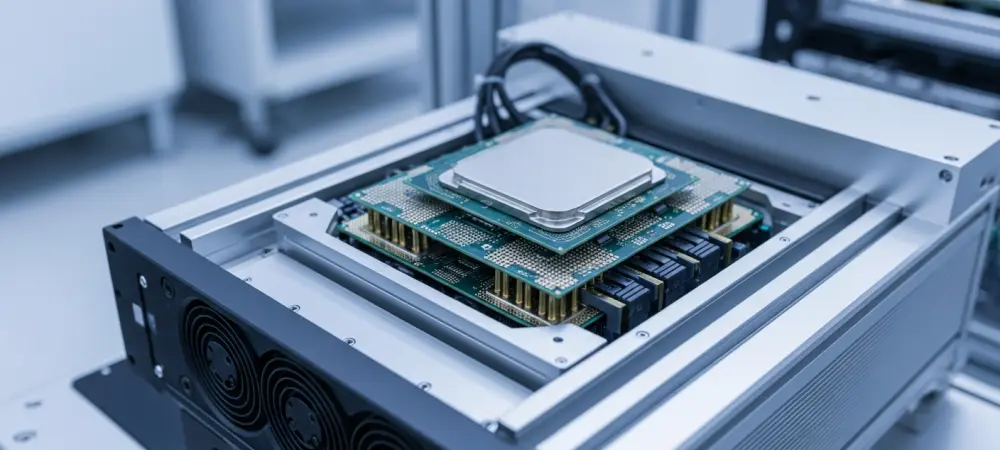
Modern global corporations are currently pouring billions of dollars into high-performance silicon clusters while simultaneously admitting that they have no clear mechanism for measuring the actual business value generated by these massive investments. As these global enterprises accelerate their pursuit of artificial intelligence, a paradoxical compute gap has emerged where aggressive capital investment is largely decoupled from operational oversight. This divide represents a critical friction point in the modern economy because organizations are securing massive graphics processing unit clusters to fuel their ambitions, yet they frequently lack the internal mechanisms to measure utilization, efficiency, or true return on investment. This article explores the widening distance between expenditure and economic visibility, providing a roadmap for how leaders can transition from high-cost experimentation to sustainable, data-driven production.
The current situation is one of intense physical acquisition without a corresponding growth in management maturity. While the news cycles are dominated by the sheer volume of chips being shipped, the internal reality for most Chief Information Officers involves a struggle to justify the mounting electricity and cloud bills associated with these assets. The gap is not merely a technical shortage of hardware but a systemic deficit in the software and operational layers required to make sense of that hardware. Consequently, the industry is entering a phase of introspection where the primary question is no longer how many chips an organization can acquire, but rather how many of those chips are actually contributing to the bottom line.
The Data Behind the Divide: Growth and Adoption Trends
Benchmarking Enterprise Maturity and Utilization Metrics
Current research indicates a significant maturity gap in the market where only twenty-one percent of enterprises are operating artificial intelligence at scale, while a staggering seventy-six percent remain stalled in experimental or limited production phases. This discrepancy suggests that while the desire to implement advanced models is nearly universal, the path to reliable deployment remains fraught with technical and organizational hurdles. Many firms find themselves trapped in a cycle of continuous proofs of concept, where the initial excitement of a pilot project fails to translate into a robust, enterprise-wide application. This stagnation creates a backlog of unused potential, where the infrastructure is ready but the operational workflows are not yet mature enough to sustain a high-volume environment. Despite the frantic scramble to secure hardware, eighty-three percent of organizations report GPU utilization rates of fifty percent or less, with nearly half of the market operating at a staggering twenty-five percent capacity or lower. This inefficiency crisis is one of the most expensive secrets in the technology sector today. Large-scale clusters sit idle for hours or even days as teams wait for data to be cleaned or for models to be tuned. This underutilization represents a massive waste of capital, as these high-demand components depreciate rapidly while consuming significant amounts of power. The inability to keep these “engines” running at peak performance highlights a fundamental lack of orchestration and scheduling sophistication within the typical enterprise IT stack.
Financial blind spots are also becoming a significant concern for the modern C-suite as the scale of investment grows. While thirty-five percent of buyers cite Total Cost of Ownership as a primary factor in infrastructure selection, fewer than forty-four percent of firms possess the instrumentation to rigorously track AI-related return on investment. This means that a majority of the current spending is happening without a clear feedback loop. Without the ability to correlate specific compute tasks with specific business outcomes, companies are essentially operating in the dark. This lack of visibility makes it nearly impossible to optimize spend or to make informed decisions about when to scale up or when to move workloads to more cost-effective environments.
Real-World Applications: From General Hyperscalers to Specialized Stacks
Mid-year data shows that the enterprise AI stack remains anchored in traditional ecosystems, with Google Cloud serving forty-eight percent of the market, followed by Microsoft Azure at twenty-nine percent and AWS at twenty-two percent. These incumbent providers have maintained their stronghold largely because they offer a path of least resistance for organizations already deep within their respective clouds. Integration with existing data lakes and security protocols is often viewed as more valuable than the raw performance of the underlying chips. However, this reliance on general-purpose providers is beginning to show signs of strain as the specific demands of large-scale model training and inference exceed the capabilities of traditional virtualized environments. In response to these limitations, organizations are increasingly moving beyond general-purpose providers; forty-five percent of enterprises are currently evaluating specialized neoclouds to achieve better performance-to-cost ratios for intensive workloads. These specialized providers are designed from the ground up to handle the unique thermal and networking requirements of dense GPU clusters. By stripping away the overhead of general-purpose cloud services, they can often provide higher throughput and lower latency for the same price point. This shift represents a growing sophistication among buyers who are no longer satisfied with “one size fits all” solutions and are looking for infrastructure that is as specialized as the models they are building. Hardware diversification is another key trend as high-growth companies begin to pilot alternative accelerators to bypass supply constraints and premium pricing. Technologies such as AWS Trainium and Google TPUs are seeing increased adoption among firms that have the internal expertise to optimize their code for non-standard architectures. This movement is driven by a desire to avoid vendor lock-in and to find more efficient ways to handle specific types of workloads. Moreover, the emergence of these alternative chips is introducing a new level of competition into a market that has been dominated by a single player for years. As software frameworks become more chip-agnostic, the choice of hardware will increasingly be a purely economic decision rather than a technical one.
Expert Perspectives on the Operational Visibility Crisis
The Paradox of Ambition Outpacing Management
Industry leaders observe that the current capital expenditure cycle is driven largely by a land grab mentality rather than lean operations, leading to massive economic waste in idle silicon. The sentiment among many veteran technology executives is that companies are flying blind, prioritizing the acquisition of resources over the development of the skills needed to manage them. This aggressive expansion is often fueled by the fear of falling behind competitors, which leads to a focus on the quantity of resources rather than the quality of their utilization. Experts warn that this “brute force” approach to innovation is unsustainable in the long term, as the costs associated with inefficiency will eventually outpace the benefits of the technology itself.
Moreover, the true value in AI infrastructure lies in how seamlessly it integrates with existing data lakes and enterprise security protocols. Headline pricing is often a red herring that distracts from the true complexities of enterprise deployment. Experts argue that an inexpensive GPU cluster is of little value if it takes six months to connect it to the company’s proprietary data or if it introduces significant security vulnerabilities. The integration anchor is what keeps many firms tethered to major cloud providers, even when specialized alternatives offer better raw performance. Consequently, the focus of the next wave of infrastructure management will likely be on building better bridges between the compute layer and the data layer. Thought leaders warn that as the initial hype cools, a CFO reckoning is inevitable for organizations that cannot provide a granular accounting of their compute spend. The period of “unlimited” innovation budgets is coming to an end, and finance departments are beginning to apply the same level of scrutiny to AI projects as they do to any other capital-intensive initiative. The visibility gap is therefore not just a technical problem, but a strategic risk. Companies that cannot demonstrate a clear link between their infrastructure costs and their business value may find their projects defunded or scaled back just as they are beginning to show promise. The ability to audit and optimize spend will become a competitive advantage in the near future.
Technical Sentiment on Shifting Infrastructure Constraints
While raw compute power was the initial focus of the industry, experts are now highlighting memory bandwidth and KV-cache capacity as the critical hurdles for high-throughput inference. The bottleneck has shifted from the speed at which a chip can perform calculations to the speed at which it can move data into and out of memory. This shift is particularly relevant for the next generation of large language models that require massive amounts of context to provide accurate and relevant answers. As models grow more complex, the limitations of traditional memory architectures are becoming more apparent, leading to a surge of interest in new types of high-bandwidth memory and specialized interconnects. Professionals in the field emphasize that the compute gap is essentially a shortage of operational intelligence rather than a shortage of physical chips. The software layers required to schedule and maximize GPU workloads effectively are still in their infancy compared to the sophisticated tools used in traditional cloud computing. Without these tools, engineers are forced to manually manage resources, which is both inefficient and prone to error. The orchestration deficit means that even the most advanced hardware cannot reach its full potential. Therefore, the most significant breakthroughs in the coming years may not come from faster chips, but from better software that can automatically allocate resources where they are needed most.
Furthermore, the complexity of managing these systems is creating a talent gap that is just as significant as the hardware gap. Operating a large-scale GPU cluster requires a unique blend of skills that includes low-level systems programming, networking, and a deep understanding of machine learning frameworks. There are currently far more clusters being built than there are qualified people to run them. This talent shortage is driving up the cost of operations and making it even more difficult for organizations to achieve the utilization rates they desire. In response, many firms are turning to managed services and automated platforms that promise to simplify the operational burden of high-performance computing.
Future Horizons: Navigating the Impending Switching Wave
Projections for Specialized Neoclouds and Decentralized Compute
A massive provider churn is imminent as enterprises realize that their current infrastructure may not be optimized for the next phase of their AI journey. Data suggests that sixty-four percent of enterprises are planning to add or change infrastructure providers within the next year to find more optimized environments. This switching wave will likely be driven by a search for better cost-efficiency and specialized capabilities that the general-purpose hyperscalers currently struggle to provide. As the market matures, the relationship between enterprises and their cloud providers will become more transactional and less tied to long-term legacy contracts. This volatility will create opportunities for new entrants to capture significant market share by offering purpose-built solutions.
As regulatory scrutiny intensifies on a global scale, there will be a growing move toward region-specific and sovereign clouds to ensure data residency and compliance for sensitive models. Many industries, particularly healthcare and finance, are finding it difficult to reconcile their data privacy requirements with the centralized nature of traditional cloud providers. Sovereign clouds offer a way to keep data within specific geographic borders and under the control of local jurisdictions, which is becoming a prerequisite for doing business in many parts of the world. This trend will lead to a more fragmented and decentralized infrastructure landscape, where geographic proximity and legal compliance are just as important as technical performance.
The next phase of development will also see a surge in adoption for next-generation architectures that promise to bridge the efficiency gap through superior energy and compute density. Systems like Nvidia Blackwell are expected to set new benchmarks for performance, but their impact will only be felt if organizations can actually harness that power effectively. The introduction of these new architectures will likely accelerate the retirement of older, less efficient hardware, leading to a massive refresh cycle across global data centers. This will be a period of intense competition between hardware manufacturers to prove that their latest designs can deliver the best results not just in benchmarks, but in real-world production environments.
Long-Term Implications for Global Industry Stacks
Future enterprise structures will likely include specialized roles focused entirely on the unit economics of AI, moving the technology from a black box expense to a managed asset. The emergence of the “AI Economist” or “GPU FinOps” professional will be a direct response to the visibility crisis that currently plagues the market. These roles will be responsible for balancing the technical needs of data science teams with the financial constraints of the organization, ensuring that every dollar spent on compute is generating a measurable return. This shift will represent the final stage of the professionalization of AI operations, where the technology is treated with the same level of rigor as any other core business function. The successful organizations of the late 2020s will be those that transition their focus from simply acquiring compute to mastering the orchestration and financial auditing of those resources. The “winners” will not necessarily be the companies with the most GPUs, but those who can do the most with the GPUs they have. This shift in focus from quantity to quality will drive a wave of innovation in orchestration software and automated management tools. Companies that invest in these areas today will be much better positioned to weather the coming economic scrutiny and to scale their AI initiatives in a sustainable way. The ability to operate at a high level of efficiency will become the ultimate differentiator in an increasingly crowded and competitive market.
In contrast, companies that fail to address the visibility gap risk being trapped in a cycle of diminishing returns, where infrastructure costs eventually cannibalize the profits generated by innovation. The risk of high-cost stagnation is real, particularly for firms that have over-extended themselves during the current period of unbridled expansion. Without the ability to optimize their spend, these organizations will find it increasingly difficult to compete with leaner, more efficient rivals. The gap between the “compute rich” and the “compute efficient” will become one of the defining characteristics of the global economy, as the ability to transform silicon into intelligence becomes the primary driver of value creation in almost every industry.
Strategic Summary: Bridging the Intelligence Gap
The transition from a state of raw infrastructure acquisition to one of refined operational control required a fundamental reassessment of enterprise priorities. Leaders identified that the current eighty-three percent underutilization rate was not merely a technical glitch but a failure of organizational design that demanded immediate attention before further capital was committed to hardware expansions. It became clear that the most successful firms were those that stopped chasing the latest chip release and instead focused on building the instrumentation and orchestration layers necessary to see inside their existing clusters. By prioritizing financial auditing as much as technical performance, these organizations moved away from speculative experimentation and toward a model of predictable business value.
The analysis suggested that the imminent switching wave served as a catalyst for a broader re-platforming effort across the global industry. Enterprises began to design for portability, avoiding the deep vendor lock-in that had characterized previous eras of cloud computing by embracing specialized neoclouds and alternative hardware architectures. This shift allowed them to match specific workloads with the most efficient environments, significantly lowering the total cost of ownership while improving overall system reliability. The move toward sovereign and region-specific clouds also addressed growing regulatory concerns, ensuring that the next generation of intelligence was built on a foundation of compliance and data residency.
Ultimately, the era was defined by a shift in focus from the raw speed of individual chips to the seamless integration of those chips into the broader data ecosystem. Bridging the intelligence gap meant transforming the role of technology from a separate, high-cost department into an integrated, managed asset with clear fiduciary responsibility. The rise of specialized economic roles within the IT stack ensured that every compute cycle was accounted for and every model was evaluated against its actual impact on the bottom line. Organizations that successfully mastered these operational complexities were the ones that survived the inevitable economic reckoning, proving that the true power of artificial intelligence was found not in the silicon itself, but in the intelligence of the systems used to manage it.