

The relentless expansion of artificial intelligence has transitioned from a race for algorithmic superiority to a desperate scramble for physical megawatts, forcing a radical reimagining of how data centers consume power. Artificial intelligence has reached a critical juncture where its growth is no longer limited by code complexity, but by the physical capacity of the power grid. As data centers evolve to support massive AI models, the networking infrastructure connecting these systems must transform from a passive consumer of electricity into a dynamic, energy-aware asset. This shift explores the transformation toward energy-efficient networking, examining how high-fidelity telemetry, advanced power distribution, and innovative cooling are redefining the modern data center.
The Escalating Energy Demands of the AI Era
Data-Driven Projections and Infrastructure Bottlenecks
Recent analysis from the National Electrical Manufacturers Association’s 2025 Year in Review indicates a staggering shift in the technological landscape, showing a 300% projected spike in energy consumption by 2050. This surge is primarily driven by the intensification of machine learning workloads, which require significantly more juice than traditional cloud applications. In this context, the physical limits of switchboards and local electrical grids have become the primary constraints for expansion, often superseding the availability of the silicon chips themselves.
The global benchmark for data center capacity is rapidly approaching 200 gigawatts by 2030, a figure that highlights the urgency of the current infrastructure crisis. As organizations attempt to scale their computational power, they are discovering that the traditional utility model is no longer sufficient. The grid simply cannot keep pace with the power-hungry nature of generative models. Therefore, the network must evolve to manage power as a granular resource, ensuring that every watt is accounted for and utilized with maximum precision to avoid overloading fragile local infrastructures.
Real-World Shifts in Site Selection and Resource Management
The geographic distribution of AI deployment has undergone a fundamental transformation, where proximity to high-capacity power lines and stable water supplies has replaced hardware proximity as the lead bottleneck. Site selection is no longer just about taxes or fiber connectivity; it is a strategic calculation of grid resilience and resource availability. In many regions, the timeline for securing a new electrical connection now stretches into years, forcing companies to seek out locations where they can integrate directly into high-density, energy-constrained environments without destabilizing the community power supply. Products like the Cisco Silicon One G300 switch exemplify this shift, designed specifically to provide high-bandwidth connectivity while maintaining a strict energy budget. By optimizing the silicon itself for power efficiency, these devices allow operators to pack more throughput into existing racks without necessitating costly electrical upgrades. Moreover, the feasibility of new AI-native facilities is increasingly dictated by granular physical characteristics, such as the local water supply required for advanced cooling systems. This reality has turned data center architects into energy and resource specialists who must balance compute demands with environmental reality.
Industry Perspectives on the Energy Networking Framework
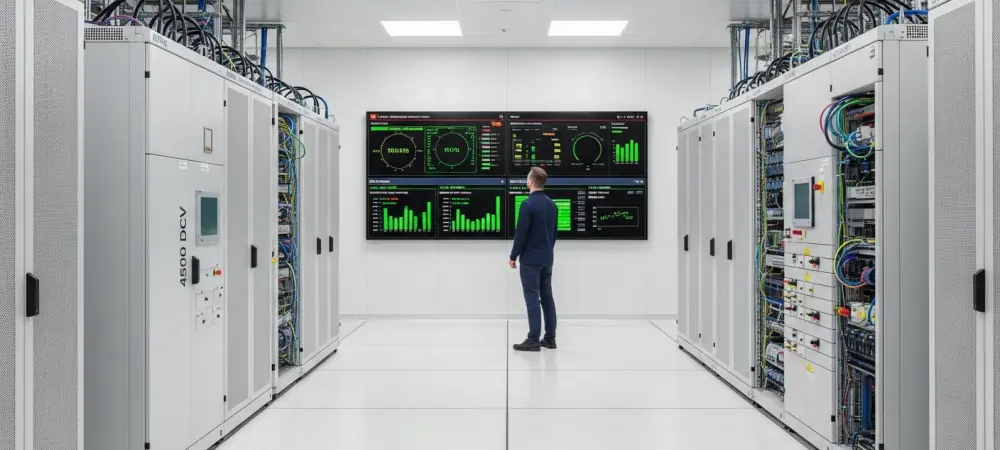
Developing a sustainable path forward requires a unified architecture, a sentiment echoed by Denise Lee, Cisco’s Vice President of Engineering Sustainability. Her three-pillar framework—energy visibility, power distribution, and thermal management—has become the standard for modern energy-aware networking. The industry consensus is shifting toward treating energy as a manageable resource within the networking stack rather than a fixed utility. This perspective allows engineers to move beyond reactive power monitoring toward a proactive, software-defined approach to electricity consumption. The “energy visibility” pillar is perhaps the most critical for immediate operational improvements, utilizing centralized telemetry and cloud-based dashboards to provide a real-time view of the facility. These tools allow operators to track carbon intensity and greenhouse gas emissions with unprecedented accuracy, moving beyond simple monthly bills to second-by-second data. By integrating this visibility into the same platforms used for network performance, organizations can correlate traffic spikes with energy surges. This holistic view enables a more sophisticated management of AI workloads, allowing them to be shifted or throttled based on the availability of green energy or the current thermal load of the building.
Operational Breakthroughs in Power and Cooling
Implementation of Fault Managed Power (FMP) at Scale
The transition from traditional AC power distribution to 450-volt DC Fault Managed Power systems represents a significant leap in data center efficiency. Traditional power systems often suffer from significant losses during the conversion process from the grid to the server rack. FMP minimizes these losses by delivering high-voltage DC power directly to the equipment through intelligent systems that monitor for faults in real-time. This technology is not only more efficient but also significantly safer, as the system can disconnect power in milliseconds if a human touch or a short circuit is detected. The practical application of FMP at Workday provides a compelling case study for this transition, where the company saw installation timelines for new infrastructure drop from weeks to just hours. By utilizing the modular nature of FMP, they were able to deploy power to smart building components and edge sites with minimal specialized labor. This rapid deployment capability is essential for organizations that need to scale their AI capacity quickly to meet market demands. Furthermore, the efficiency gains from FMP contribute directly to a lower total cost of ownership by reducing the heat generated during the power delivery process itself.
Redefining Thermal Management through Liquid Cooling
As hardware density increases, the limitations of traditional air-cooling have become painfully apparent, leading to a surge in direct-to-chip, rear-door heat exchangers, and immersion cooling technologies. Liquid cooling is significantly more effective at removing heat from high-performance GPUs than air, allowing servers to run at higher clock speeds without thermal throttling. This transition is no longer a luxury but a necessity for the latest generation of AI hardware, which generates heat levels that simply cannot be mitigated by fans alone.
This shift creates a “double knock-on effect” where efficient cooling reduces total energy overhead while simultaneously enabling higher compute density within the same physical footprint. By integrating cooling controls directly into the network hardware stack, facilities can minimize “non-useful” energy consumption—the power spent moving air rather than processing data. This integration allows for a more dynamic cooling response, where the flow of coolant can be adjusted in real-time based on the specific needs of the network traffic. Consequently, the boundary between the cooling system and the compute infrastructure is disappearing, creating a unified, highly efficient ecosystem.
Future Implications: The Economics of Efficiency
The financial impact of energy-centric networking is poised to reshape the economics of the entire technology sector, with the potential to reduce data center waste from 65% to a mere 22%. In current models, more than half of the energy entering a facility never reaches a processor, disappearing into inefficient cooling and distribution systems. By reclaiming this lost power through FMP and liquid cooling, organizations can significantly lower their operational expenses. This reclaimed energy can then be redirected toward additional compute power, effectively allowing a company to double its computational capacity within the same power footprint.
Organizations that successfully integrate full FMP and liquid cooling are finding they can achieve a level of density that was previously impossible. This capability is crucial for those facing the difficult choice between retrofitting aging facilities or investing in expensive greenfield, energy-optimized data centers. While retrofitting presents significant engineering challenges, the potential ROI from energy savings often justifies the initial capital expenditure. Furthermore, as global sustainability targets become more stringent, the role of the network engineer is evolving to include energy management as a core competency. Professionals who can master the intersection of data flow and energy flow will be the most valuable assets in the coming decade.
Conclusion: Orchestrating a Sustainable AI Infrastructure
The strategic shift from static power consumption to dynamic Energy Networking Systems defined the critical transition needed to sustain the AI expansion. By integrating high-fidelity visibility with advanced distribution and thermal management, organizations successfully bypassed the physical bottlenecks that once threatened to stall their progress. This transition proved that the network was not just a conduit for data, but the central nervous system for energy efficiency. Organizations that moved quickly to implement these architectures realized significant reductions in both operational costs and carbon footprints, setting a new standard for industrial sustainability.
The industry eventually moved beyond theoretical modeling and embraced proof-of-value deployments to validate these complex energy-efficient architectures. These projects demonstrated that doubling compute capacity without increasing the power draw was an achievable reality rather than a distant goal. As the infrastructure matured, the focus shifted toward optimizing the entire lifecycle of the data center, ensuring that sustainability was baked into every switch and cable. The successful orchestration of these systems ultimately ensured that the growth of artificial intelligence remained unhindered by the very physical resources that once seemed to be its greatest limitation.