

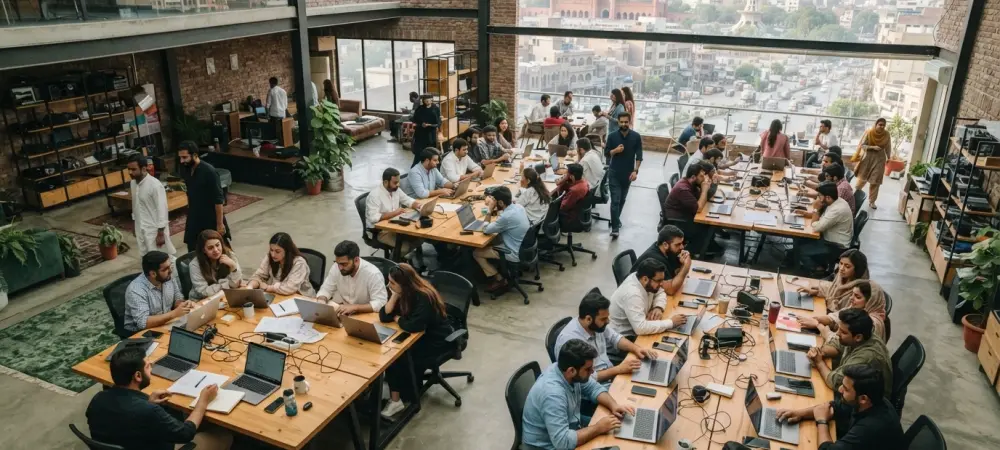
A profound shift in technological accessibility is currently occurring as the ability to leverage high-level machine intelligence evolves from a luxury for the global elite into a fundamental human right that is essential for modern survival. As artificial intelligence begins to dictate the trajectory of global economies, Pakistan stands at a critical crossroads where democratizing access to these tools is no longer optional but essential for national survival and professional parity. This shift moves the focus from mere consumption to active creation, ensuring that the local workforce is not left behind in an increasingly automated world.
This analysis explores the systemic move toward local innovation and the introduction of == “AI tokens per capita” as a primary development metric for the region.== Grassroots efforts are currently integrating machine learning into the industrial and educational bedrock, allowing the nation to build a self-sustaining ecosystem. By prioritizing access for every citizen regardless of their zip code, the movement aims to foster an environment where technology serves as an equalizer rather than a divider.
Mapping the Evolution of AI Adoption in the Region
The Shift From Awareness to Deep Integration Metrics
The transition from surface-level familiarity to deep technical utilization has become the new benchmark for measuring national progress. Dr. Mustafa Sultan’s concept of “AI tokens per capita” provides a tangible way to evaluate how intensely a population utilizes artificial intelligence tools in their daily professional tasks. This metric suggests that real development is found in the volume of machine-generated intelligence consumed and produced by individuals, rather than just the number of software licenses purchased.
Educational institutions like the National University of Technology (NUTECH) are pivoting toward hands-on curricula to bridge the gap between theoretical data science and market-ready engineering. This pedagogical evolution focuses on equipping students with the ability to build and deploy their own models. Consequently, the local tech sector is seeing a growth trend that favors homegrown solution-building, reducing the heavy reliance on expensive foreign-licensed software.
Practical Implementations and Sector-Specific Case Studies
Practical applications are moving out of the laboratory and into essential sectors such as construction, infrastructure, and small business management. A specialized tool known as “Civil Copilot,” designed by GenDen-AI and Structures AI, has already begun streamlining field operations for civil engineers and the Military Corps of Engineers. This tool exemplifies how specialized AI can handle complex calculations and data management in the field, allowing human experts to focus on critical decision-making.
Local startups are also leveraging these technologies to reduce operational costs and enhance data-driven choices for underserved business owners. By moving machine learning into the hands of small enterprise managers, the movement provides tools for those who previously lacked the capital for advanced analytics. These implementations demonstrate that the democratization of intelligence is not just a theoretical goal but a practical economic strategy.
Expert Perspectives on Navigating the Technological Divide
Dr. Mustafa Sultan emphasizes the ethical imperative to treat intelligence access as a fundamental human right. Professional consensus suggests that geographical and income-based disparities in technology act as the single greatest barrier to economic mobility in the region. Without proactive democratization, the divide between those who can leverage AI and those who cannot will likely determine future social hierarchies.
The philosophy presented in The Next Wave of AI highlights that democratization is essentially an “access story” that will redefine global power dynamics. When individuals in emerging markets gain the same level of intellectual assistance as those in developed nations, the playing field begins to level. This shift allows for a more meritocratic global economy where the quality of ideas, rather than the location of the innovator, dictates success.
Forecasting Pakistan’s Role in the Global AI Economy
There is significant potential for a transition from a consumer nation into a global innovation hub that exports specialized machine learning solutions. As AI literacy spreads, the long-term implications of “The Age of Abundance” suggest that widespread access can prevent the marginalization of underserved communities. Sustaining this momentum requires a dedicated focus on infrastructure and policy to ensure that the technological shift remains inclusive.
The challenges of infrastructure must be addressed to keep the nation globally competitive against established tech giants. While the risk of a widening digital divide persists, the proactive integration of these tools into the national economy offers a path toward unprecedented growth. Successfully navigating this shift will enable the workforce to compete in high-value international markets while solving domestic problems with localized data.
Synthesis of the Democratization Movement
The multi-faceted strategy of integrating academic instruction, industrial application, and social advocacy successfully secured a foundation for a technological future. This movement empowered a new generation of engineers and entrepreneurs to build proprietary tools rather than remaining dependent on external technology imports. Policymakers and educators prioritized accessibility as a vital cornerstone of national development, which effectively mitigated the risk of exclusion for rural and low-income populations.
Future considerations involved the expansion of high-speed digital infrastructure to support decentralized computing across all provinces. Investment in local data sovereignty emerged as a necessary solution to protect national interests while fostering an open-source culture of collaboration. These deliberate steps ensured that the technological movement evolved into a permanent feature of the economic landscape, providing a scalable model for other emerging nations to follow.