

The digital architecture that powers every modern interaction functions as a massive radiator, venting gigawatts of thermal energy into the atmosphere as an ignored byproduct of our hyper-connected existence. For decades, the heat generated by the servers that manage our global data has been treated as a costly liability, requiring sophisticated refrigeration systems and immense amounts of water to dissipate. However, a significant paradigm shift is currently unfolding as the industry reimagines this thermal output not as waste, but as a high-value energy goldmine. In an era where energy scarcity and environmental sustainability are at the forefront of corporate strategy, the ability to harvest and repurpose data center heat is becoming a cornerstone of modern infrastructure. This transformation marks the end of the data center as a passive consumer of electricity and the beginning of its role as an active participant in the circular energy economy.
The modern context of this shift is driven by a combination of technological necessity and aggressive global sustainability mandates. As compute-heavy applications like artificial intelligence and real-time data processing expand, the cooling requirements for hardware are reaching their physical limits. Simultaneously, municipal governments and regulatory bodies are placing increased pressure on large-scale energy users to demonstrate circularity in their operations. This article explores the trajectory of this thermal revolution, examining the technical innovations that make heat recovery possible and the real-world applications that are already providing warmth to thousands of homes and businesses. By analyzing expert perspectives and future technological frontiers, the following sections provide a comprehensive roadmap for an industry transitioning from thermal waste to thermal utility.
The Evolution of Thermal Efficiency and Adoption
Market Trajectory and Growth Drivers
The current market trajectory for data centers is being dictated by the rapid ascent of high-density computing workloads. Traditional air-cooling methods, which dominated the landscape for years, are no longer sufficient to manage the intense thermal output of modern hardware. In the current technological landscape, rack densities are frequently exceeding 60 kilowatts, a threshold that makes the move toward high-density liquid cooling systems almost mandatory. This transition is a critical growth driver for heat recovery because liquid is an exponentially more efficient thermal conductor than air. When heat is captured through liquid cooling, it remains concentrated and at a higher temperature, making it far more viable for secondary use than the diffuse warmth found in air-cooled aisles.
Beyond the physical limitations of cooling, adoption is being propelled by the rise of global Environmental, Social, and Governance (ESG) mandates. Corporations are no longer satisfied with simply purchasing renewable energy credits to offset their carbon footprint; they are seeking tangible, local reductions in energy waste. Regulatory pressures, particularly in European and North American urban centers, are beginning to favor data center developments that incorporate heat-sharing capabilities into their initial designs. This shift is turning thermal efficiency into a competitive advantage, as facilities that can offer waste heat to local grids often receive faster permitting and better community support. Consequently, the integration of heat recovery systems is evolving from a niche environmental experiment into a standardized component of large-scale data center architecture.
Real-World Applications of Circular Energy
The Nordic region has long served as the primary testing ground for large-scale heat recovery, exemplified by the Nordic district heating model. The atNorth DEN01 facility near Copenhagen stands as a landmark implementation of this concept, where the data center is integrated directly into the municipal heating network. By capturing thermal energy from its servers, the facility provides enough low-carbon heat to support approximately 8,000 local homes. This is made possible by a partnership with local utility providers who operate the district heating infrastructure, demonstrating that the success of these projects depends as much on civil engineering as it does on computer science. This model proves that data centers can function as reliable, year-round heat sources for urban populations.
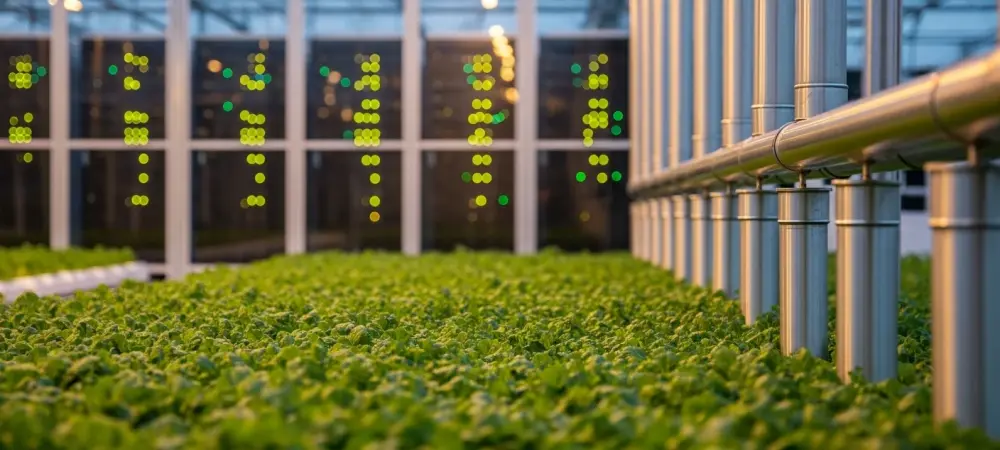
On a more localized scale, institutional campus integration is showing how individual organizations can optimize their own energy loops. At the Milwaukee School of Engineering (MSOE), the waste heat generated by a specialized supercomputer is diverted to provide the primary heating for an entire academic building. Similarly, the National Renewable Energy Laboratory (NREL) in Colorado uses an energy recovery water loop to heat office and lab spaces with the thermal output from its high-performance computing systems. These projects highlight the versatility of the technology, showing it is effective for both massive municipal grids and smaller, self-contained building systems. Furthermore, the agricultural sector is beginning to benefit from these synergies, as low-grade heat is diverted to greenhouses to support local food security, particularly in colder climates where year-round cultivation was previously cost-prohibitive.
Industry Perspectives on the Heat Recovery Paradigm
The Technical Bridge: Elevating Thermal Quality
A persistent challenge in the adoption of heat recovery has been the relatively low temperature of server exhaust, which typically hovers around 100 degrees Fahrenheit. This “low-grade” heat is often insufficient for industrial processes or traditional district heating networks that require temperatures of 150 degrees Fahrenheit or higher. Gary Hilberg and other industry leaders have pointed out that the technical bridge to solving this problem lies in the application of advanced heat pump technology. These systems act as thermal amplifiers, utilizing a refrigeration cycle to “boost” the captured heat to the required intensity. While this process requires a small additional input of electricity, the resulting high-grade thermal energy is far more valuable and easier to distribute through existing municipal infrastructure.
The necessity of this technological bridge cannot be overstated, as it allows data centers to interface with legacy systems that were not originally designed for low-temperature inputs. Moreover, the development of more efficient refrigerants and high-temperature heat pumps is reducing the energy penalty associated with this thermal elevation. As these systems become more efficient, the economic argument for heat recovery becomes even stronger, allowing operators to sell their thermal output to utilities at a profit. This transformation of a waste product into a revenue-generating commodity is fundamentally changing the financial models that underpin new data center construction and expansion projects.
The Social License to Operate
In many urban areas, data centers are increasingly viewed with skepticism by residents who worry about their impact on the local power grid and water supply. Industry experts argue that heat recovery is becoming a vital component of the “social license to operate,” a term used to describe the community approval necessary for large-scale industrial projects. When a data center provides free or discounted heat to a local hospital, school, or residential neighborhood, it shifts the public perception from that of a resource drain to a community asset. This political necessity is driving developers to include heat recovery in their proposals as a way to mitigate opposition and foster positive relationships with local stakeholders.
Furthermore, this social license is closely tied to the concept of urban resilience. By providing a decentralized source of heat, data centers can help cities reduce their reliance on centralized fossil fuel plants, thereby contributing to broader carbon reduction goals. Community planners are beginning to view data centers as essential nodes in a modern, sustainable urban grid. This perspective shift is particularly evident in cities with ambitious climate action plans, where the inclusion of heat recovery technology is becoming a prerequisite for any new large-scale energy consumer. In this context, thermal efficiency is as much a matter of public relations and political strategy as it is a matter of engineering.
Strategic Siting and Urban Intentionality
The effectiveness of any heat recovery project is heavily dependent on the physical distance between the heat producer and the heat consumer. Urban planners and data center architects are emphasizing the importance of “intentionality” in siting, suggesting that the era of building data centers in remote, isolated areas may be coming to an end for certain types of facilities. To maximize thermal efficiency, new data centers are being strategically located near existing heat consumers, such as industrial parks, large apartment complexes, or municipal swimming pools. This proximity reduces the cost and energy loss associated with transporting thermal energy over long distances, making the entire system more economically viable.
Conversely, the lack of existing district heating infrastructure in many parts of North America remains a significant hurdle. This has led to the emergence of “thermal-ready” designs, where data centers are built with the necessary internal plumbing to support heat recovery in the future, even if the external connections are not yet available. This forward-thinking approach ensures that as cities upgrade their infrastructure, data centers will be ready to plug into the grid immediately. The trend toward intentional siting reflects a more holistic view of data center design, where the facility is treated as one part of a larger, interconnected urban ecosystem rather than a standalone silo of technology.
The Future Frontier of Waste Heat Innovation
Technological Advancements and Challenges
The next generation of waste heat innovation is focused on pushing the boundaries of temperature and storage. Engineers are currently developing advanced heat pumps capable of reaching 180 degrees Fahrenheit, which would open the door for data center heat to be used in a much wider range of industrial applications, such as food processing or chemical manufacturing. However, these advancements come with their own set of challenges, particularly regarding the high capital expenditure required for retrofitting older, air-cooled facilities. While greenfield developments can integrate these systems from the ground up, the complexity of modifying existing infrastructure remains a significant barrier for many operators who are hesitant to disrupt their current cooling configurations.
Another critical area of innovation is the development of Thermal Energy Storage (TES) and Synthetic Phase Change Materials (SPCMs). These technologies are designed to solve the “intermittency” problem, where the heat generated by a data center does not always align with the timing of community demand. By using phase change materials that can store massive amounts of thermal energy in a compact footprint, facilities can “save” their waste heat during the day and release it at night when heating demand peaks. This capability transforms the data center into a thermal battery, providing a level of flexibility that was previously impossible. Although these materials are still being refined, their potential to stabilize urban energy grids is a major focus for future research and development.
Long-Term Industry Implications
In the long term, the widespread adoption of heat recovery will likely redefine how the industry measures success and efficiency. The traditional Power Usage Effectiveness (PUE) metric, which focuses solely on the ratio of total facility power to IT equipment power, is increasingly seen as an incomplete picture of a facility’s environmental impact. A more holistic view is emerging, one that accounts for energy recovery and the total carbon displacement achieved by the facility. As this transition occurs, we may see the rise of new metrics that reward data centers for the amount of heat they successfully return to the grid, further incentivizing the adoption of circular energy practices.
Ultimately, the potential for data centers to evolve into “thermal utilities” could fundamentally alter the relationship between the technology sector and the energy industry. Instead of being viewed as a burden on the grid, data centers could become essential providers of base-load thermal energy, playing a central role in the decarbonization of our cities. This evolution would signify a total integration of digital and physical infrastructure, where the act of processing information directly contributes to the warmth and well-being of the surrounding community. This shift represents the final step in the transition from a linear “take-make-waste” model to a truly circular digital economy.
Summary and Final Outlook
The data center industry successfully navigated the initial hurdles of thermal waste management by transitioning from a model of passive consumption to one of active thermal provision. This shift was largely facilitated by the maturation of liquid cooling technologies and the strategic implementation of heat pump systems, which allowed operators to bridge the gap between low-grade server exhaust and high-demand municipal needs. By repurposing energy that was previously discarded, these facilities proved that the digital economy can exist in harmony with the physical environment. The success of pilot projects in both the Nordic regions and academic settings provided the necessary evidence to justify larger investments in circular energy infrastructure across the globe.
As the industry looks toward the next decade, the focus must now shift toward the universal standardization of these systems and the expansion of district heating networks. The integration of advanced storage materials and higher-temperature thermal outputs will be essential for making heat recovery a viable option in every climate and geographic location. Moreover, the collaboration between private data center operators and municipal planners will need to deepen to ensure that new facilities are sited where their thermal contributions can be most effective. The transition to a “thermal utility” model is not just a technical challenge but a collaborative opportunity to redefine the role of technology in society.
Ultimately, harvesting waste heat represents the most significant design advancement in the quest for a sustainable digital economy. The industry has demonstrated that with the right combination of engineering ingenuity and social intentionality, the heat generated by our digital lives can become a literal force for good. As global energy demands continue to rise, the ability to close the loop on energy consumption will be the defining characteristic of the most successful and resilient data centers. This journey from thermal liability to strategic asset has laid the groundwork for a future where every megawatt of power serves a dual purpose, fueling both the information age and the physical warmth of our communities.