

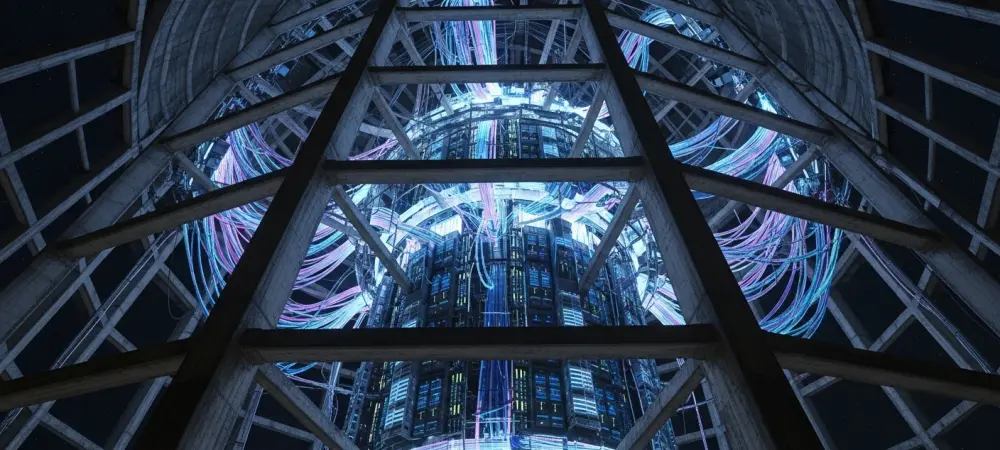
The skeletal remains of twentieth-century industrial giants, once symbols of a bygone era of manufacturing and fossil fuels, are now being resurrected as the critical nerve centers of our digital world. This transformation is not a coincidence but a strategic response to the insatiable global demand for cloud computing, which has collided with a growing scarcity of suitable “greenfield” sites for development. This analysis will explore the key drivers accelerating this trend, examine a pivotal real-world case, incorporate expert perspectives on the conversion process, and project the future of data center real estate.
The Accelerating Shift to Brownfield Redevelopment
Powering the Future Market Drivers and Statistics
The exponential growth of data, fueled by everything from streaming services to artificial intelligence, has created an unprecedented need for hyperscale data center capacity. Credible industry reports consistently point to a market struggling to keep pace, forcing developers to look beyond traditional construction on undeveloped land. Consequently, there is a clear and accelerating trend toward acquiring and redeveloping former industrial locations, commonly known as brownfield sites.
These sites offer compelling strategic advantages that are difficult to replicate. Chief among them is access to high-voltage power and established grid connectivity, a legacy of their former lives as power plants or heavy manufacturing hubs. This existing infrastructure dramatically shortens development timelines and circumvents one of the biggest hurdles in new data center construction: securing massive power allocations from utility providers. Moreover, these sites often come with favorable industrial zoning, simplifying the complex and lengthy permitting process.
Case Study From Coal Power to Cloud Power at Didcot
The recent acquisition of the former Didcot A power plant in the UK by Amazon Web Services (AWS) perfectly exemplifies this trend. The German energy company RWE sold the defunct coal plant site for a reported $265 million to the cloud giant, which plans to erect a major data center on the redeveloped land. This move highlights a hyperscaler directly targeting a retired industrial property specifically for its robust power and grid infrastructure.
The project’s evolution further underscores the long-term strategic planning involved in these large-scale redevelopments. An initial proposal for a two-building campus has since been revised into a plan for a single, massive data center, following the complete demolition of the plant’s remaining structures. With a new application now in the consultation phase and a target decision date in early 2026, the Didcot site is a clear illustration of an industrial past being methodically repurposed to power a digital future.
Expert Insights on Industrial to Digital Conversion
Perspectives from across the real estate, energy, and construction sectors confirm the viability of this redevelopment strategy. Analysts consistently point to accelerated project timelines as a primary benefit. By leveraging existing grid connections and road access, developers can bring capacity online much faster than they could at a greenfield site, which is a critical advantage in a market defined by speed. This is often coupled with a more streamlined permitting environment, as local authorities are typically eager to see a defunct industrial site brought back into productive use.
However, experts also caution that these projects are not without significant obstacles. The primary challenges include the substantial costs associated with demolishing massive industrial structures and the potential for extensive environmental remediation to address soil contamination from previous operations. Furthermore, upgrading legacy power systems to meet the exacting reliability and redundancy standards of a modern data center can be a complex and expensive engineering feat, requiring specialized expertise to integrate old infrastructure with new technology.
The Future Landscape of Data Center Development
The long-term implications of this industrial-to-digital conversion trend are profound, impacting both the technology industry and the communities hosting these new facilities. As prime industrial sites with power infrastructure become scarcer, the industry is already looking toward the next wave of redevelopment candidates. Defunct shopping malls, abandoned big-box retail stores, and former large-scale manufacturing plants are increasingly being evaluated for their potential, given their large footprints and access to regional power grids.
This adaptive reuse of land offers clear benefits, including the revitalization of local economies through new investment and the promotion of more sustainable land use by avoiding sprawl onto undeveloped terrain. In contrast, these projects also present significant challenges. The immense and constant power consumption of hyperscale data centers can place a considerable strain on regional energy grids, raising questions about energy sourcing and sustainability. Communities must therefore balance the economic advantages with the long-term environmental and infrastructural impact.
Conclusion Building on the Past to Power the Future
The analysis showed that data center site redevelopment became a critical and pragmatic strategy, driven by the non-negotiable requirements for immense power and physical space. This approach moved from a niche alternative to a mainstream solution for hyperscalers seeking to expand their global footprint rapidly and efficiently.
The strategic acquisition of the Didcot A power plant by Amazon served as a definitive example of this trend in action, illustrating how the robust bones of old industry provided the ideal foundation for new digital infrastructure. This fusion of past and present ultimately forged a new and enduring blueprint for how the physical footprint of the internet would be built, shaping the landscape for years to come.