

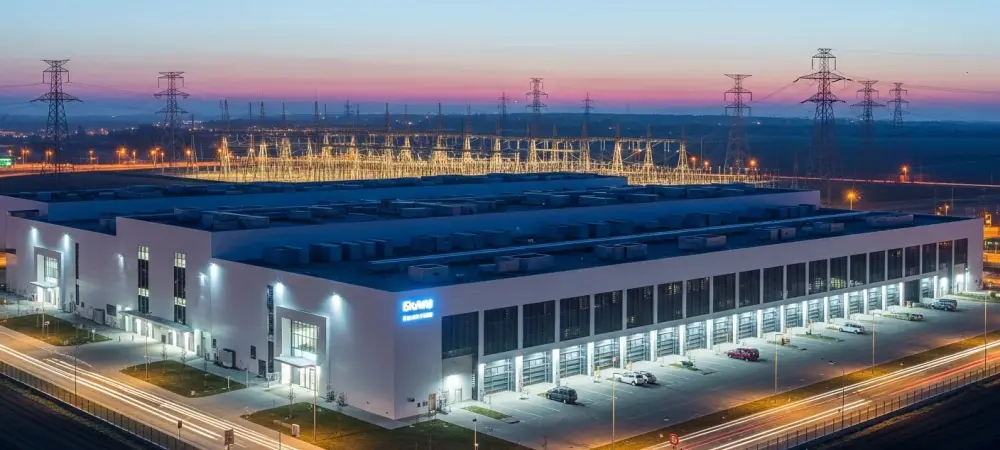
The silent hum of progress from the artificial intelligence revolution is becoming a deafening roar for the nation’s aging power grid, threatening to short-circuit the very innovation it powers. This insatiable demand for electricity, once a niche concern for engineers, is rapidly evolving into a mainstream crisis that extends from the tech hubs of Silicon Valley to every American household. The escalating power consumption of data centers has become a critical economic and political challenge, forcing a confrontation between technological ambition and infrastructural reality. This analysis will dissect the scale of this energy surge, examine a groundbreaking policy proposal aimed at holding tech giants accountable, explore expert reactions, and forecast the future implications for the technology, energy, and public sectors.
The Scale of the Surge: From Data to Demand
Charting the Exponential Growth in Energy Needs
The global race for AI dominance has ignited a voracious and unprecedented demand for electricity, driven by the proliferation of large-scale data centers. This surge in consumption is far outpacing the development of new power generation, creating a fundamental supply-and-demand imbalance that threatens to destabilize energy markets across the country. The sheer scale of these facilities means that a single data center can consume as much electricity as a small city, placing an immense burden on regional infrastructure.
This strain is acutely felt in areas like the one managed by PJM Interconnection, the nation’s largest grid operator, which oversees a territory that includes the world’s highest concentration of data centers in Northern Virginia. Grid operators are now sounding the alarm about their ability to maintain stability and reliability in the face of such concentrated and rapidly growing demand. Failed capacity auctions and an inability to secure adequate future power supplies have underscored the severity of the challenge, pushing the system toward a potential breaking point.
Consequently, consumers are already feeling the direct impact through their utility bills. The national average retail price for electricity has climbed to a record high, with residential costs experiencing one of their most significant increases in over a decade. This trend transforms the data center boom from an abstract industrial issue into a tangible cost-of-living concern for millions, creating political pressure for immediate and decisive action.
A Real-World Response: The Northeastern Power Proposal
As a direct response to this escalating crisis, the Trump administration, in a rare collaboration with a bipartisan coalition of Northeastern governors, has put forth a landmark plan to manage the energy surge. This initiative represents a significant intervention into the energy market, designed to address the root cause of the problem without penalizing the general public for the energy-intensive ambitions of a single industry. The proposal centers on an “emergency wholesale electricity auction” that would compel technology companies to directly finance an estimated $15 billion worth of new power plants. This would be achieved by requiring them to bid on and secure long-term, 15-year contracts for new generation capacity. This mechanism departs radically from standard market practices, which typically involve short-term, 12-month contracts, by providing the long-term financial certainty needed to build major infrastructure projects. At its core, this “take-or-pay” model fundamentally shifts the financial burden of new infrastructure from the public to the private sector. By forcing the creators of the demand—the data center operators—to pay for the necessary power plants, the plan aims to insulate everyday consumers from the associated costs. This approach directly links consumption with financial responsibility, creating a new precedent for how energy-intensive industries are integrated into the national grid.
Voices from the Front Lines: Industry and Policy Reactions
The political rationale behind the proposal was articulated clearly by President Donald Trump, who stated he does not want “Americans to pay higher electricity bills because of data centers.” This sentiment reflects a growing political awareness of the potential for a public backlash against the tech industry if its growth is perceived as directly contributing to rising household expenses, especially ahead of congressional elections.
From a technical standpoint, the plan has found some support among industry experts. Joe Bowring, who heads PJM’s independent market watchdog, described the proposed auction as a “logical extension” of existing market concepts. These concepts, sometimes termed “bring-your-own new generation,” are designed to manage situations where a single, large customer creates a substantial and specific new power demand, making the proposal an evolution of market principles rather than a complete departure.
The market, however, reacted swiftly and decisively, immediately signaling its anticipated winners and losers. Stock in GE Vernova Inc., a leading manufacturer of natural gas turbines, surged on the news, as the plan promised a massive new market for its products. In contrast, shares of independent power producers like Vistra Corp. and Constellation Energy Corp. declined amid investor fears that an influx of new, contract-supported power plants would increase competition and depress wholesale electricity prices, threatening the profitability of their existing assets.
Projecting the Future: A New Energy Paradigm
Potential Outcomes and Systemic Benefits
If successfully implemented, the proposal could secure a massive and reliable supply of new electricity, providing the foundational energy security needed for the continued growth of the AI and cloud computing industries. By directly addressing the looming power shortage, the plan aims to ensure that technological innovation is not throttled by infrastructural limitations, allowing the digital economy to expand without interruption.
Moreover, the policy could yield a significant systemic benefit by improving the accuracy of demand forecasting for grid operators like PJM. In the past, speculative data center projects have inflated demand projections, creating uncertainty for long-term planning. By forcing tech companies to make a binding, 15-year financial commitment to new power plants, the plan effectively filters out speculative ventures from serious, well-funded projects, providing a clearer picture of future energy needs.
For energy developers, the long-term guaranteed contracts represent a paradigm shift in project financing. The 15-year revenue certainty could dramatically de-risk investment, fast-tracking the construction of new natural gas and potentially even next-generation nuclear power plants. This guaranteed profitability could unlock billions in private capital, accelerating the modernization and expansion of the nation’s energy infrastructure.
Inherent Risks and Unintended Consequences
Despite its potential benefits, the policy carries inherent risks, particularly for market competition within the tech sector. The mandated energy costs could disproportionately impact smaller tech firms, which may lack the financial capacity of “hyperscalers” like Amazon and Google to absorb or pass on these new expenses. This could squeeze their profit margins, stifle innovation, and further entrench the market dominance of the largest players.
The influx of new, contract-supported power generation also threatens to disrupt the broader energy market. By adding a substantial amount of new capacity, the plan could depress wholesale electricity prices, negatively impacting the financial viability of existing power plants that are not supported by such long-term contracts. This could inadvertently harm investors and jeopardize the stability of the current generation fleet.
Finally, the top-down nature of the directive raises questions about its implementation and long-term market integration. The plan appeared to be imposed on the grid operator PJM without significant prior collaboration, creating potential friction and logistical hurdles. Navigating the integration of this emergency measure with PJM’s complex, established market rules will be a critical challenge in ensuring its success and avoiding unintended market distortions.
Conclusion: Rebalancing Power in the Digital Age
The escalating energy demand from data centers represents a critical inflection point where rapid technological progress collides with the physical and economic limits of the nation’s energy infrastructure. The proposal to have technology giants directly fund new power generation is a bold, interventionist strategy that seeks to realign financial responsibility with consumption. This approach is designed to protect consumers from rising costs while simultaneously fueling the innovation that demands more power in the first place. As this model is considered for potential replication in other regions facing similar challenges, its implementation and outcomes will set a crucial precedent for managing the resource demands of the 21st-century digital economy, forcing a necessary and long-overdue conversation about who should ultimately pay for the future.