

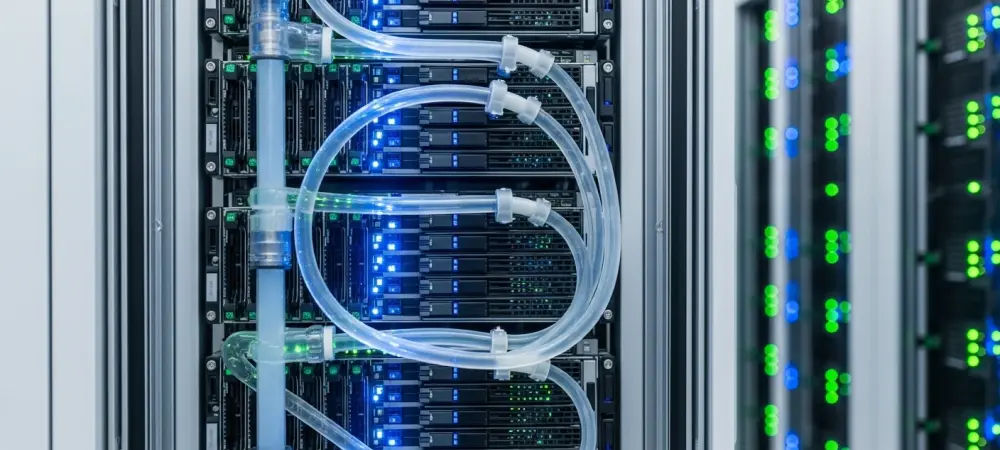
The boundless digital universe, powered by artificial intelligence and cloud computing, is rapidly colliding with the finite, physical constraints of our electrical grid, creating a paradox at the heart of modern technology. Fueled by the insatiable appetite of AI, the rapid expansion of data centers is outstripping the capacity of local power infrastructure, creating a critical bottleneck for future growth. This analysis will examine the root causes of these power constraints, analyze real-world examples of stalled projects, and explore the future implications and potential solutions for the industry.
The Collision of Digital Ambition and Physical Infrastructure
The Unprecedented Surge in Power Demand
The energy consumption of data centers has entered a period of exponential growth. This surge is driven by the shift toward high-density computing clusters required for demanding artificial intelligence and machine learning workloads, which consume orders of magnitude more power than traditional data storage. Industry reports project that dozens of new gigawatts—equivalent to the output of numerous conventional power plants—will be needed just to support the data center development planned from 2026 to 2028. This unprecedented demand is placing a level of strain on energy grids that they were never designed to handle.
Real-World Example Ambition Halted in Braidwood
This trend is starkly illustrated by the suspended Western Hospitality Partners (WHP) data center project in Braidwood, Illinois. The multi-building campus development was put on hold indefinitely because the local utility, ComEd, simply could not support the massive energy requirements with its current infrastructure. The situation highlights a profound irony: the proposed site sits adjacent to the 2.2-gigawatt Braidwood Nuclear Generating Station, proving that proximity to power generation is meaningless without adequate transmission and delivery capacity.
This is not an isolated incident but a recurring pattern. WHP has encountered similar roadblocks with other ambitious projects, including a proposed 750-megawatt campus in New Carlisle, Indiana, which was halted by local authorities. These cases demonstrate a clear and troubling trend where the digital ambitions of developers are being grounded by the physical realities of an aging and under-provisioned electrical grid.
Expert Perspectives on the Gridlock
The Utility Provider’s Challenge
From the perspective of utility providers, a single large-scale data center represents a sudden, massive, and concentrated load on the local grid. This is fundamentally different from the distributed and predictable residential or commercial growth for which most regional grids were engineered. The long lead times, complex regulatory hurdles, and immense capital investment required to upgrade high-voltage transmission lines and build new substations mean that utilities cannot respond to this demand on the tech industry’s timeline.
The Developer’s Growing Frustration
For data center developers, the primary constraint has decisively shifted from acquiring land or fiber connectivity to securing a reliable power source. Project viability is no longer just about location but about navigating years-long energy infrastructure timelines, which introduces significant financial risk and market uncertainty. This gridlock forces developers into a holding pattern, unable to move forward on multi-billion-dollar investments that are critical for supporting the digital economy.
The Path Forward Reimagining Power for the Digital Age
Emerging Strategies and Technological Solutions
In response to this crisis, the industry is actively exploring a range of innovative solutions. These include building on-site power generation, such as dedicated substations and microgrids, and even exploring the long-term potential of small modular reactors (SMRs). Other strategies involve forging direct partnerships with energy producers to co-locate facilities and seeking out regions with untapped power surpluses. Concurrently, advancements in liquid cooling technologies and more efficient hardware design are becoming critical to mitigating the overall power consumption per unit of computation.
Long-Term Consequences and Industry Shifts
These power constraints are poised to reshape the global data center landscape. The difficulty in securing power could slow the pace of AI expansion or significantly drive up the cost of cloud computing and other digital services. On a broader scale, this challenge may catalyze a new wave of national investment in grid modernization and trigger a strategic re-evaluation of where global data infrastructure can and should be built, shifting focus toward regions with robust and forward-looking energy policies.
Conclusion Power as the New Foundation of the Digital Economy
The analysis showed that the voracious energy demand of the data center industry has created a systemic crisis that the current electrical grid infrastructure cannot support. The stalled project in Braidwood exemplified how even proximity to immense power generation is insufficient without the last-mile delivery infrastructure. It became clear that overcoming these power constraints is no longer a mere technical challenge but a critical strategic imperative for the future of technology and economic competitiveness. This reality demands unprecedented collaboration between technology companies, utility providers, and policymakers to architect and build a modern, resilient grid capable of powering the next generation of digital innovation.