

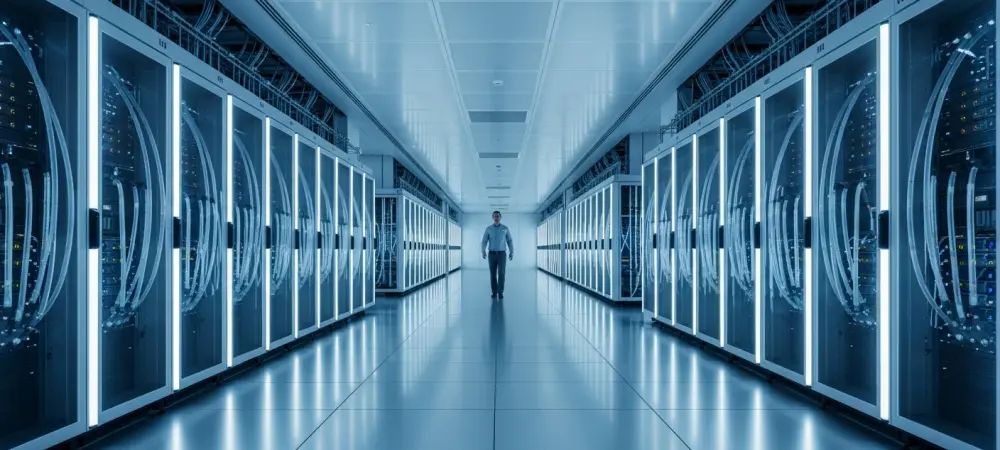
The traditional architecture of the global internet is currently being dismantled and rebuilt at a speed that defies historical precedent as artificial intelligence necessitates a complete reimagining of the physical structures that house the world’s digital consciousness. This radical metamorphosis is not merely a technical upgrade but a fundamental shift in how human civilization processes information, moving away from simple data storage toward active, real-time intelligence generation. As generative AI and large language models (LLMs) demand more than just space and cooling, the very definition of a data center has evolved from a passive warehouse of servers into a high-octane “AI factory” designed for extreme computational density.
This transformation is mirrored in a series of high-level executive maneuvers observed during the second quarter of 2026, where the industry’s most prominent players have begun reshuffling their leadership to prioritize power acquisition and infrastructure scaling. These moves signal a strategic pivot where the ability to secure gigawatt-scale energy and manage complex global supply chains has become more valuable than traditional software expertise. The digital landscape is no longer just about the cloud; it is about the physical power and the specialized hardware required to sustain the relentless growth of synthetic intelligence.
The following analysis explores the intricate layers of this industrial shift, examining the transition toward specialized high-density environments and the rise of a new class of “power-first” leadership. It maps out the evolution of operational scaling, the professionalization of the supply chain, and the emergence of energy orchestration as a core competency. Furthermore, the discussion extends to the future of sovereign AI clouds and the decentralization of the edge, providing a comprehensive roadmap for the infrastructure that will serve as the economic backbone for the remainder of the decade.
The Evolution of the Data Center Landscape
Market Growth and the Transition to AI Factories
The transition from standardized colocation to specialized high-density environments has reached a critical tipping point as the hardware requirements for modern AI workloads diverge from traditional enterprise computing. Standard data centers, which typically handle power densities of five to ten kilowatts per rack, are increasingly inadequate for the latest GPU clusters that require fifty to one hundred kilowatts in the same physical footprint. This shift has birthed the era of the “AI factory,” a facility engineered specifically for the heat and energy demands of massive LLM training. Consequently, the industry is seeing a surge in gigawatt-scale campus developments that prioritize raw power availability over proximity to urban centers.
This growth is fueled by a desperate demand for hyperscale capacity, leading to a total reimagining of thermal management. Air cooling, once the industry standard, is being rapidly replaced by liquid cooling technologies, including direct-to-chip and immersion systems, to handle the intense thermal output of advanced semiconductors. These “AI factories” represent a departure from the “jack-of-all-trades” data center design of the past decade. Instead, they are highly specialized machines, optimized for the singular task of processing the astronomical datasets required to keep pace with the current rate of technological acceleration.
Strategic Leadership Moves in Action
The executive reshuffle within major infrastructure firms provides a clear window into how the industry is preparing for this new hyperscale reality. For instance, Stream Data Centers has undergone a significant leadership transition following its acquisition by Apollo Funds, a move specifically designed to align the company with the capital-intensive demands of modern cloud providers. The appointment of Michael Lahoud as Chief Executive Officer reflects a desire for continuity and deep institutional knowledge during a period of aggressive scaling. By creating specialized roles such as Chief Development Officer and Vice President of Sustainability, the firm is acknowledging that rapid site development and environmental compliance are no longer peripheral concerns but central to the bottom line.
Similarly, Pure Data Centres Group has tapped Gary Wojtaszek, a veteran of multi-billion dollar global growth, to steer its international expansion. The move to bring in leadership with a background in massive financial acquisitions highlights the increasing capital requirements of the sector. As operators move toward managing portfolios exceeding one gigawatt of capacity, the divide between operational management and strategic development has widened. The emergence of these specialized roles demonstrates that the industry has outgrown the generalist management models of the past, requiring instead a sophisticated blend of real estate, finance, and high-tech engineering expertise.
Industry Perspectives on Infrastructure and Energy
Power Professionals: Addressing the Grid Crisis
The consensus among industry leaders has shifted toward a singular, dominant challenge: power certainty. Executives like John Bates of Prime Data Centers and Olivier Leonetti of Equinix are increasingly being recognized as “power professionals” who must navigate an aging and congested electrical grid. As the timeline for utility-scale power connections stretches into years, data center operators are no longer content to wait for local grids to catch up. Instead, they are taking an active role in the energy market, often functioning as independent power producers to ensure their facilities remain operational and scalable. This trend toward “behind-the-meter” assets represents a fundamental change in the relationship between tech and the environment. Operators are increasingly investing in on-site power generation, ranging from natural gas turbines to advanced microgrids and small modular reactors. This shift toward self-sufficiency is a defensive maneuver against the volatility of the public grid and a proactive strategy to meet sustainability mandates. By controlling their own energy generation and storage, these firms can bypass the bureaucratic hurdles of traditional utility companies, allowing them to bring massive amounts of new capacity online at a pace that matches the speed of AI development.
Supply Chain Resilience and Technical Modularity
The physical construction of these massive facilities has also undergone a professionalization of the procurement process. Leaders like Alicia Ruckteschler at Vantage have focused on mitigating equipment shortages through sophisticated supplier partnerships that span the globe. In an era where long-lead items like transformers and generators can delay projects by years, the Chief Procurement Officer has become a strategic architect of the company’s growth. This shift ensures that the physical components of the digital world are ready to be deployed the moment a site is cleared, preventing the supply chain from becoming a bottleneck for AI innovation.
On the technical front, the industry is moving away from bespoke construction toward modularity and standardized components. Michael Maiello of MCG has championed the adoption of medium-voltage architectures and “plug-and-play” data center modules. These standardized blocks allow for faster deployment and easier maintenance, treating the data center as a scalable product rather than a one-off construction project. This modular approach is essential for maintaining a competitive edge, as it allows operators to iterate on their designs and incorporate new cooling or power technologies without needing to redesign the entire facility from the ground up.
The Future of AI Infrastructure and Global Impact
The Rise of Energy Orchestration
The integration of artificial intelligence into the management of the data center itself is leading to the rise of energy orchestration. Firms like GridAI, under the leadership of Marshall Chapin, are pioneering the use of machine learning to optimize how data centers interact with the power grid in real-time. This involves predicting demand spikes, managing renewable energy intermittency, and even selling excess power back to the grid during times of stress. In this scenario, the data center is no longer a passive drain on resources but an active, intelligent participant in the local energy ecosystem, using its own computational power to minimize its environmental footprint.
This level of orchestration is critical as the industry faces increasing scrutiny over its carbon footprint and energy consumption. By using AI to manage power flows, operators can maximize the efficiency of their liquid cooling systems and optimize the timing of high-intensity training workloads to coincide with periods of high renewable energy availability. This creates a circular relationship where AI is both the consumer of the power and the architect of its efficiency, ensuring that the infrastructure remains viable even as energy regulations become more stringent.
Sovereign AI and National Security
As data centers become the engines of national productivity, infrastructure is increasingly being treated as a strategic asset of national security. The involvement of tech leaders in government advisory councils, such as the President’s Council of Advisors on Science and Technology (PCAST), reflects a growing awareness that the physical location of data is a matter of sovereignty. Countries are now racing to build “Sovereign AI” clouds—infrastructure that is owned, operated, and located within their own borders to protect sensitive national data and ensure technological independence. This trend is driving a geographical diversification of the industry, pushing development into regions that were previously overlooked.
Decentralization and the Edge
While massive hyperscale campuses dominate the headlines, a secondary trend toward decentralization is taking hold at the edge of the network. Doug Recker of Duos Technologies has highlighted the growing need for modular edge data centers that host GPUs closer to the end-user. As AI applications move from the training phase to the inference phase—where they are used in real-time by consumers and businesses—the latency involved in sending data to a distant regional hub becomes a liability. These smaller, modular units act as the “local branches” of the AI factory, providing the low-latency processing power needed for autonomous vehicles, medical diagnostics, and immersive digital environments.
Potential Challenges: Navigating Legal and Financial Complexity
Despite the rapid expansion, the industry faces significant headwinds in the form of legal complexities and rising construction costs. The acquisition of land suitable for gigawatt-scale campuses has become a legal minefield, requiring experts like Debra Raggio at PowerBridge to navigate a maze of zoning laws and environmental regulations. Furthermore, as the demand for specialized AI hardware continues to outpace supply, the capital intensity of these projects is reaching levels that challenge even the largest private equity firms. Balancing the urgent mandate for carbon-neutral operations with the immediate need for massive power capacity remains the most difficult act for the next generation of data center leadership.
Summary and Strategic Outlook
The leadership transitions and structural changes observed in the middle of 2026 provided a definitive blueprint for the future of the digital world. The industry moved decisively toward a model defined by energy mastery, where the ability to orchestrate power became just as important as the ability to process data. This era saw the emergence of the “power professional” and the “specialized executive” as the new standards for corporate success, replacing the generalist approaches that dominated the early days of the cloud. The focus shifted toward building resilient, sovereign, and modular infrastructure that could withstand both the physical demands of AI and the regulatory pressures of a changing world.
The strategic pivot toward AI factories and behind-the-meter energy generation ensured that the digital economy remained on a path of explosive growth despite the constraints of the traditional power grid. Leaders successfully professionalized the global supply chain, turning procurement into a strategic weapon that allowed for the rapid deployment of high-density cooling and modular components. These efforts transformed the data center from a simple utility into a sophisticated, intelligent engine of innovation, capable of supporting the most complex computational tasks ever attempted by humanity.
Ultimately, the decisions made by this new generation of leaders reaffirmed that the race for power and the ability to build resilient infrastructure would define the economic hierarchy of the decade. The data center was no longer seen merely as a support function for the internet but as the primary source of national and corporate power. By prioritizing energy orchestration and sovereign infrastructure, the industry solidified its role as the indispensable backbone of the modern era, setting the stage for a future where intelligence is the most valuable and widely distributed resource on the planet.