

A perfect storm is brewing for 2026, a critical convergence point where the voracious appetite of artificial intelligence for computational power will catastrophically collide with the stark physical limitations of our global energy and supply chain infrastructure. This impending crisis stems from a fundamental mismatch: the blistering pace of AI development, measured in months, is running headfirst into the slow, multi-year, and often decade-long timelines required to plan and build new power plants, transmission lines, and substations. The resulting friction threatens to stall the AI revolution before it fully materializes. This analysis dissects the five core pressures compounding this crisis and explores the necessary strategic shifts that will define survival and growth for the data center industry in the years to come.
The Anatomy of the Crisis Surging Demand Meets Physical Limits
The Exponential Growth of AI Driven Demand
The scale of the energy demand driven by AI is difficult to overstate, creating a tsunami of consumption that existing infrastructure was never designed to handle. Projections from Goldman Sachs forecast that global power demand from data centers will surge by an astonishing 165% by 2030, a rate of growth that far outpaces the development of new energy sources. This is not simply a matter of building more facilities; the very nature of the demand is changing. AI workloads require extreme power density, with individual server racks evolving from a standard of around 40 kW to a projected 250 kW in the near future.
This unprecedented concentration of power consumption is overwhelming urban grids, which were engineered for more distributed and predictable loads. The consequences are already visible in established Tier 1 markets, the traditional hubs of digital infrastructure. Cities like Dublin and Amsterdam, once prime locations for data center development, have been forced to implement moratoriums on new grid connections. Their power capacity is simply exhausted, and the complex, bureaucratic process of planning and executing major grid upgrades means relief is still many years away. This has effectively closed the door on large-scale AI development in the very locations that were once most desirable.
Real World Responses to Infrastructure Constraints
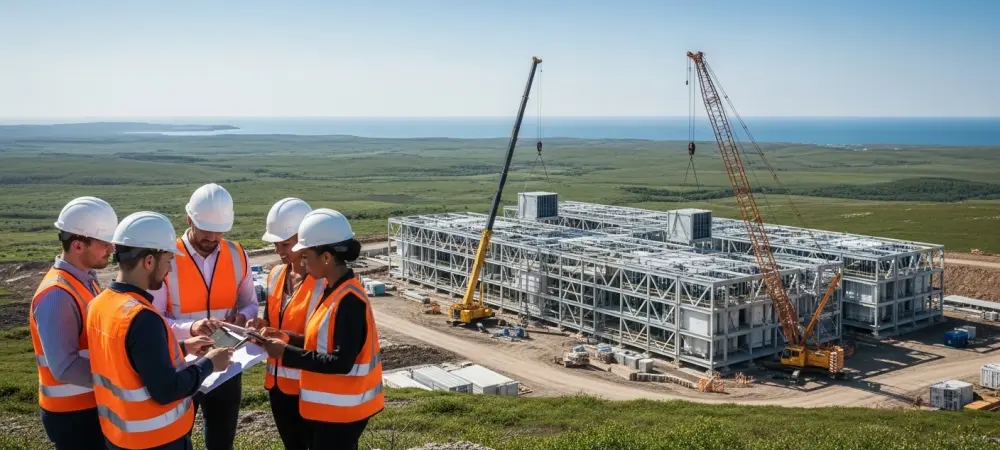
In response to these unbreachable physical limits, the industry is undergoing a forced geographic decentralization. Developers can no longer rely on the convenience and connectivity of saturated Tier 1 markets. Instead, a strategic migration is underway toward new regions with untapped power potential. Locations such as the coast of Northern Ireland are emerging as attractive alternatives, offering developers direct access to available generation capacity and more favorable grid conditions, thereby circumventing the multi-year queues plaguing established hubs. This shift is giving rise to a new breed of hyper-specialized AI training data centers, intentionally sited in remote, rural areas to access the three resources they need most: land, renewable power, and water for cooling. However, building massive, technologically complex facilities in undeveloped greenfield sites presents a host of logistical hurdles. To overcome these challenges and accelerate deployment, operators are increasingly adopting modular construction and novel design-build methodologies. These approaches de-risk construction by pre-fabricating components off-site, allowing for faster, more predictable assembly in remote locations and making the development of these essential new facilities feasible.
Industry Voices A Consensus on Impending Disruption
Across the industry, there is a growing consensus that the single greatest bottleneck stifling the growth of AI is not the speed of innovation in silicon or software, but the temporal disparity between compute demand and energy infrastructure development. While AI models can be developed and deployed in a matter of months, securing a new high-voltage grid connection can take anywhere from five to ten years. This profound lag creates an insurmountable barrier for companies seeking to scale their AI operations quickly, leaving ambitious projects stranded in a queue for power that may not arrive for the better part of a decade.
This infrastructure lag is dangerously compounded by critical fractures in the global supply chain for essential electrical components. Research from Deloitte highlights a concerning trend where large original equipment manufacturers are entering exclusive, multi-year procurement agreements with a handful of hyperscale clients. These deals are effectively taking vital equipment, such as switchgear, transformers, and power distribution units, off the open market for years at a time. This artificial scarcity creates crippling lead times for other developers, delaying projects and dramatically increasing costs.
Furthermore, the challenge of securing suitable land has intensified, adding another layer of complexity to site selection. The ideal data center site—one with ample power, robust fiber connectivity, and favorable zoning—is becoming exceptionally rare and expensive. This scarcity is exacerbated by growing community opposition, as local residents raise valid concerns about the environmental impact, noise, and water consumption of large-scale facilities. This forces operators to become more adaptable, leveraging flexible and customizable infrastructure designs that can be deployed on smaller, irregularly shaped, or otherwise compromised parcels of land that would be unsuitable for traditional construction methods.
The Path Forward A New Paradigm for Data Center Development
The convergence of these pressures is forcing a fundamental bifurcation of data center typologies. The future of digital infrastructure will likely be defined by two distinct models operating in parallel. The first consists of smaller, low-latency inference facilities located near urban centers to process real-time AI requests close to end-users. The second, and more transformative, model involves massive, power-proximate training facilities built in remote regions specifically to be near large-scale energy generation. This strategic uncoupling of training and inference workloads allows each to be optimized for its unique requirements.
This deliberate shift toward a more distributed model offers significant potential benefits. By moving energy-intensive training operations to remote areas, developers can gain greater access to abundant renewable energy sources like wind, solar, and hydropower, helping them meet increasingly stringent sustainability goals. This geographic diversification also contributes to the development of a more resilient global digital infrastructure, reducing the systemic risk associated with concentrating critical assets in a few crowded metropolitan areas.
However, this new paradigm is not without its own formidable challenges. Building and operating sophisticated facilities in remote locations requires navigating complex logistics for construction, securing a skilled workforce, and mitigating heightened geopolitical supply chain risks. Moreover, operators must comply with a complicated and often inconsistent patchwork of tightening ESG regulations across different jurisdictions. This crisis is ultimately forcing a necessary evolution away from standardized, monolithic development models. In this new landscape, architectural flexibility, supply chain resilience, and proactive regulatory compliance are no longer just best practices; they are the new cornerstones of the industry.
Conclusion Navigating the Perfect Storm
The analysis revealed a data center industry at a critical inflection point, strained by the convergence of five distinct and powerful pressures. The collapse of capacity in traditional Tier 1 markets, the transformative power demands of AI workloads, worsening land scarcity, severe geopolitical disruptions to the supply chain, and intensifying ESG mandates had created a landscape where old development models were no longer tenable.
It was demonstrated that the “perfect storm” predicted for 2026 represented a tipping point, a moment where the cumulative weight of these challenges would render outdated, centralized approaches to infrastructure obsolete. Success in the new era born from this crisis depended on a decisive and strategic pivot. The path forward was one defined by aggressive geographic exploration for new power sources, the widespread adoption of modular and flexible designs, the cultivation of localized and resilient supply chains, and the formation of deep partnerships with firms possessing the specialized expertise required to navigate this profoundly complex and rapidly evolving environment.