

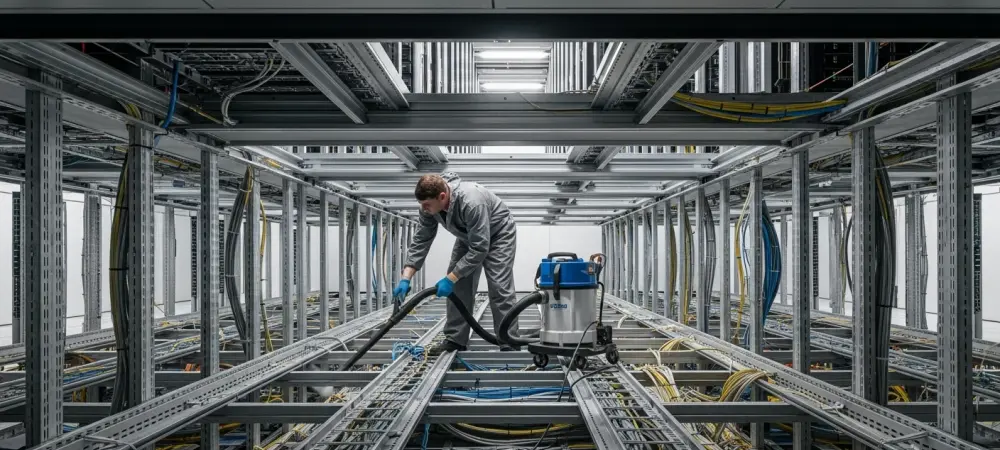
A seemingly spotless data center floor can conceal an invisible menace, where microscopic dust particles and unnoticed grime silently conspire against the very hardware powering the digital world. The growing significance of data center hygiene now extends far beyond simple aesthetics, directly impacting the performance, reliability, and longevity of multi-million dollar hardware investments. As facilities become denser and more powerful, the traditional approach to cleanliness is proving inadequate, forcing a strategic shift in operational priorities. This analysis will explore the key forces driving this trend, incorporating expert perspectives on best practices, examining the new challenges posed by technologies like artificial intelligence and liquid cooling, and forecasting the future of advanced contamination control.
The Evolving Landscape of Data Center Cleanliness
The Shift from Reactive to Proactive Maintenance
The industry is experiencing a fundamental transition away from infrequent, restorative deep cleans and toward disciplined, preventative maintenance programs. This proactive stance recognizes that contamination is an ongoing threat, not a one-time problem. By scheduling regular, professional cleanings, operators can prevent the slow accumulation of dust and debris that degrades performance over time. This approach mitigates risks before they can escalate into costly downtime or hardware failure, turning maintenance from a reactive expense into a strategic investment in operational resilience.
This trend is further solidified by the wider adoption of industry cleanliness standards, which provide measurable benchmarks for operational excellence. Guidelines such as ISO 14644-1, which defines air cleanliness classes in cleanrooms and controlled environments, and ASHRAE TC 9.9, which provides thermal guidelines for data processing environments, are increasingly being used to establish and maintain optimal conditions. Consequently, there is a rising investment in professional cleaning services, a move especially prominent among facilities deploying high-cost, high-density hardware. For operators managing vast arrays of GPUs for AI workloads, the cost of a comprehensive cleaning program is insignificant compared to the potential loss of even a single high-performance chip.
Critical Applications in Modern Facilities
Among the most critical applications of this heightened focus on hygiene is post-construction cleaning, which is now considered a non-negotiable first step in commissioning a new facility or expansion. Construction inevitably generates harmful particulates like concrete dust and drywall debris that can settle on every surface. If not meticulously removed before equipment is installed, these contaminants become airborne once cooling systems are activated, infiltrating sensitive electronics and causing irreparable damage. A thorough, specialized clean at this stage establishes a baseline of purity that is essential for long-term operational integrity.
This specialized approach extends to existing facilities, where targeted cleaning of critical zones is essential for maintaining performance. Underfloor plenums, for instance, are vital for airflow, yet they often become reservoirs of dust and debris that can be recirculated into the environment, choking cooling systems and causing equipment to overheat. Similarly, cable trays and the tops of cabinets are frequently neglected areas where contaminants accumulate. Expert techniques are required to address these different zones and surfaces effectively. For example, vinyl composition tile (VCT) and electrostatic discharge (ESD) floors demand specific care, often involving anti-static treatments and neutralizing solutions to mitigate the risk of electronic damage from static buildup.
Voices from the Field: Expert Insights on Contamination Control
Industry professionals consistently observe that the most vulnerable parts of a data center are often the least visible. Rich DeBlasi, president of Spec-Clean, points to underfloor plenums, ceiling voids, and the tops of racks as commonly neglected areas where dirt and grime accumulate unchecked. He warns against the significant risks of using standard janitorial services, whose staff are typically untrained for mission-critical environments. “Traditional vacuum cleaners, dusters, and everyday cleaning chemicals can create static, leave residue, or push dust into sensitive hardware,” says DeBlasi. Using improper equipment or chemicals, such as excessive water that could trigger leak detection alarms, can lead to immediate outages or catastrophic equipment failure.
The surge in artificial intelligence has dramatically raised the stakes, making proactive hygiene a vital, cost-effective strategy. Jon deRidder, vice president of technical solutions at Promera Solutions, notes that the massive investment in GPUs has shifted the financial calculation for many operators. When facilities house tens of millions of dollars in processing hardware, the budget for a professional cleaning program becomes a rounding error. “Too often, folks are reactive when it comes to maintaining proper cleanliness conditions,” explains deRidder. “They let the data center environment degrade to a point that cleaning becomes restorative vs. a simple maintenance task performed on a schedule.” A scheduled program prevents this degradation, protecting priceless assets and ensuring they operate at peak efficiency.
New technologies introduce new hygiene challenges, particularly with the expanding adoption of liquid cooling. In these systems, fluid purity is paramount. According to Ryan Jarvis, head of global services at Vertiv, the microscopic capillaries within direct-to-chip cold plates can be as fine as a human hair. “The presence of particulate can quickly lead to clogging and a drop in the cooling level,” he states. The consequence is not a slow decline but a rapid, catastrophic system failure, where a chip can overheat in less than a minute. His mantra is to start cooling loops clean and keep them clean through meticulous purging, filling, and ongoing monitoring. The higher operating temperatures of AI workloads accelerate fluid degradation, making vigilant fluid analysis and maintenance even more critical.
The Future Trajectory: What’s Next for Data Center Hygiene?
Looking ahead, the field of data center hygiene is poised for technological evolution. For liquid cooling, the integration of advanced, real-time fluid monitoring systems will likely become standard. These systems will analyze fluid viscosity, particulate count, and chemical composition to predict maintenance needs, allowing operators to address potential issues before they cause a failure. Furthermore, the rise of robotic cleaning solutions holds significant promise. Autonomous units could perform routine tasks like floor scrubbing and surface dusting with greater consistency and without introducing human contaminants, freeing up specialized technicians to focus on more complex tasks within the facility.
The primary benefits of this intensifying focus on cleanliness are clear and compelling. A well-maintained environment directly contributes to an extended hardware lifespan by preventing overheating and particulate-induced damage. It also improves energy efficiency, as clean cooling systems and unobstructed airflow allow HVAC equipment to operate under less strain, reducing operational costs. Ultimately, these factors culminate in enhanced operational reliability, which is the cornerstone of any mission-critical service. For businesses that depend on uninterrupted uptime, a proactive hygiene strategy is a direct investment in their continuity and reputation.
However, this forward trajectory is not without its challenges. The need for a more highly specialized workforce is a significant hurdle; technicians must understand not only cleaning protocols but also the intricacies of data center operations, from airflow dynamics to ESD safety. Managing the complexities of new cooling technologies, each with unique fluid and maintenance requirements, adds another layer of difficulty. Perhaps the most persistent challenge is overcoming organizational inertia to secure the necessary budget for proactive maintenance. Decision-makers must be educated to see professional cleaning not as an ancillary expense but as a core component of risk management and asset protection.
Conclusion: A Proactive Stance on Cleanliness
The analysis revealed that data center hygiene has evolved from a simple janitorial task into an essential discipline of risk management and operational strategy. What was once an afterthought has become a critical factor in ensuring the performance and longevity of increasingly complex and expensive digital infrastructure. This shift was not arbitrary; it was driven by tangible technological advancements and the immense financial stakes involved in modern computing. It became evident that the proliferation of AI, high-density computing, and advanced liquid cooling systems cemented professional, scheduled cleaning as an indispensable investment. The sheer cost and sensitivity of next-generation hardware made a reactive approach to contamination control untenable. The insights from industry experts confirmed that a proactive, specialized program was the only viable path to protecting these assets, optimizing energy efficiency, and guaranteeing reliability. To move forward, data center managers were urged to re-evaluate their existing practices, conduct thorough inspections of their facilities, and forge partnerships with specialists to implement a comprehensive hygiene program tailored to the demands of the modern digital landscape.