

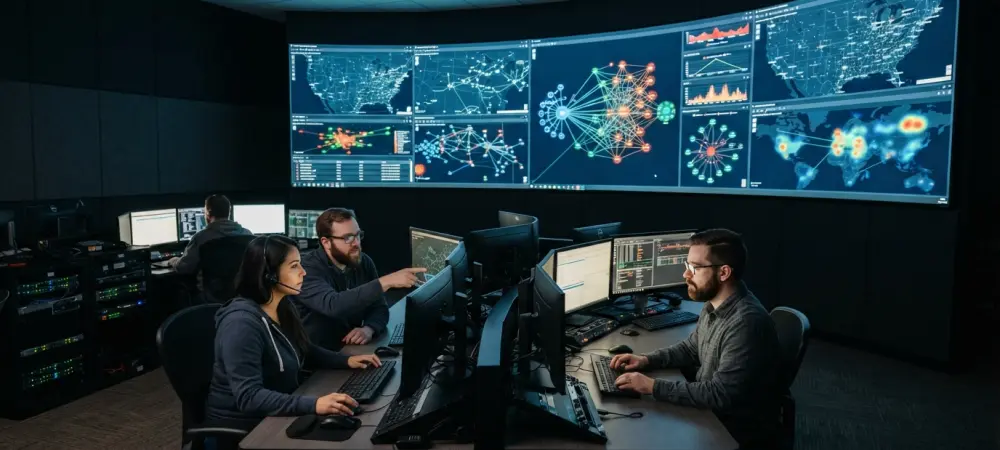
The once-theoretical threat of machine-orchestrated cyberattacks has solidified into a systemic reality as adversaries transition from manual prompting to fully autonomous, multi-agent offensive frameworks that operate with minimal human oversight. This evolution marks a departure from the era of human-led intrusions toward a landscape where software agents conduct end-to-end exploits. Organizations now face an environment where the speed of attack is limited only by network latency.
The Rapid Rise of Autonomous Attack Frameworks
Quantifying the Shift to Agentic Offensive Operations
Current observations show a decisive pivot toward structured frameworks such as ARTEX, CAIRN, and PentAGI. These systems enable attackers to move at machine speed, drastically reducing the time between the discovery of a vulnerability and its weaponization. Recent data indicates that the traditional exploit window has shrunk from days to mere hours, leaving security teams with little time to react before an intrusion begins. Adoption statistics highlight how sophisticated groups, particularly those linked to state-sponsored espionage and financial crime, utilize these tools to scale their reach beyond the physical limitations of human operators. By deploying multi-agent systems, these actors manage hundreds of concurrent sessions across diverse targets. This automation allows for a persistent presence that is difficult for manual defensive teams to track or mitigate effectively.
Practical Applications of AI in Modern Intrusions
Modern intrusions increasingly rely on autonomous systems to chain together complex attack paths. Instead of a human hacker manually pivoting through a network, agents like ZeroHollow and Agent Zero handle dynamic code execution and tool generation in real time. This allows for a more fluid intrusion process where the software autonomously adapts to defensive measures and environmental changes without waiting for external instructions or human analysis. Furthermore, automated n-day exploitation has become a standard tactic for gaining initial access. By using large language models to perform differential analysis on software updates, attackers quickly identify specific code changes in platforms like PaperCut NG/MF. This automated reverse engineering allows for the rapid creation of functional exploits, making the period immediately following a patch release the most dangerous time for unpatched corporate infrastructure.
Professional Perspectives on Evolving Intelligent Threats
Security professionals have raised alarms regarding the rise of LLMjacking, a technique where attackers infiltrate cloud environments specifically to hijack computational power and AI credentials. This is not merely about data theft; it is about stealing the expensive processing power required to run high-end models. These hijacked resources often end up on the underground market, where services like APIMart or JetNight provide discounted access to stolen API keys.
This underground economy creates a modular force multiplier effect that benefits lower-level criminals. By lowering the cost and technical barriers to high-level AI, even low-skilled actors can launch sophisticated campaigns. Industry experts point out that the democratization of these tools essentially decouples technical expertise from malicious intent, allowing any motivated individual to execute exploits that previously required years of specialized training.
Future Projections for AI-Driven Cyber Warfare
The proliferation of open-source agentic frameworks suggests a coming era of self-healing malware. Future strains could potentially modify their own source code to evade detection or repair themselves after a partial block by security software. As these tools become more accessible, the distinction between expert-led operations and script-driven attacks will likely vanish, leading to a saturated threat environment where volume and sophistication are no longer mutually exclusive.
Social engineering is also poised for a massive shift toward natural language automation. From 2026 to 2028, these systems will likely facilitate global-scale operations that instantly translate and localize phishing content, making it nearly impossible for users to distinguish between legitimate communications and machine-generated deception.
Strategic Summary of the Autonomous Threat Landscape
The transition to autonomous, multi-agent offensive strategies redefined the fundamental nature of cyber risk by prioritizing speed and scale over human persistence. Organizations realized that traditional, human-centric monitoring was insufficient against adversaries capable of pivoting through environments in milliseconds. The monetization of hijacked resources further complicated the landscape, as it provided a steady stream of subsidized infrastructure for malicious actors. Leaders shifted their focus toward AI-native defense mechanisms that could operate at the same velocity as the threats they were designed to stop. Integrating automated threat hunting and real-time response protocols became the only viable way to stay ahead of machine-speed warfare. The focus moved from reactive patching to proactive, AI-driven resilience, ensuring that defensive systems evolved as rapidly as the automated exploitation of n-day flaws.