

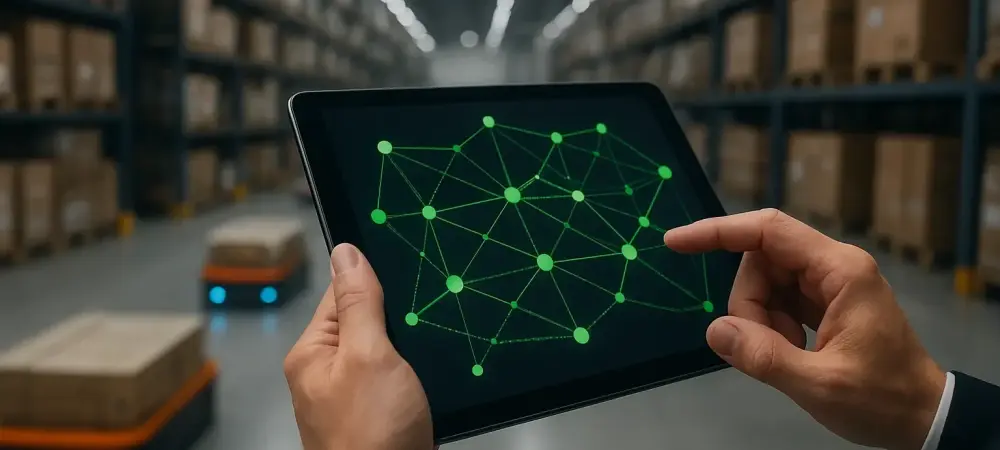
The persistent inability of modern logistical networks to bridge the gap between identifying a crisis and executing a solution has become the single greatest drain on global corporate profitability. In an era where global disruptions cost businesses nearly $184 billion annually, the ability to see a problem is no longer enough to save the bottom line. Historically, the supply chain industry operated on the assumption that visibility was the ultimate cure for volatility. However, recent data suggests that seeing a shipment delay in real-time does not provide value unless the organization possesses the agility to reroute that shipment before the delay propagates through the entire production cycle.
While the last decade focused on detection through digital twins and sophisticated dashboards, the new frontier is action—specifically transitioning from AI that merely alerts humans to AI that autonomously executes solutions. The bottleneck of the 2020s has not been a lack of data, but rather a lack of authority granted to the systems that process that data. The shift in competitive advantage is now clearly defined by the move from passive observation to bounded autonomy. This transformation is being driven by the realization that human response times are often too slow to handle the high-velocity interruptions that define the current global market.
The Evolution of Supply Chain Intelligence: Moving Beyond Detection
The Saturation of Visibility and the Detection Ceiling
Current statistics show a massive proliferation of control towers and risk heat maps, yet financial losses from disruptions remain at record highs. Most enterprise organizations have already achieved high-definition visibility, yet they continue to struggle with the actual remediation of the exceptions they discover. Analysis of reports from 2025 and 2026 suggests that more visibility is failing to improve EBITDA because the operational bottleneck has shifted from information gathering to decision execution. When every logistics manager is staring at a screen full of red alerts, the cognitive load becomes an obstacle rather than an asset. Data indicates that mid-market manufacturing teams spend roughly 30% of their time investigating disruptions, creating a lag that allows minor issues to become expensive failures. This “investigation period” is often a redundant loop where humans verify what the software has already correctly identified. This diminishing return on dashboard investment highlights the detection ceiling; knowing that a ship is stuck in a canal is only useful if the organization can trigger a backup procurement order within minutes. Without the move toward autonomous execution, visibility merely provides a front-row seat to an impending financial loss.
Real-World Applications of Bounded Autonomy
Modern logistics leaders are moving beyond tickets and alerts to implement automated retendering. In this model, AI agents re-book delayed shipments with alternate carriers within pre-approved price bands without waiting for a human signature. This ensures that when a primary carrier fails, the company secures the remaining market capacity before competitors even realize there is a shortage. By codifying pricing thresholds and service-level requirements into the software, companies are effectively treating their AI as a digital dispatcher with the authority to spend.
Dynamic resource allocation has also emerged as a critical application of bounded autonomy. Companies are now using AI agents for autonomous inventory rebalancing between distribution centers to address real-time forecast fluctuations. This allows the system to shift safety stock toward regions with surging demand or away from areas facing weather-related shutdowns. Similarly, retail giants are empowering software to automatically switch transport modes—from ocean to air—when specific service-level agreements are threatened. This level of automated mode swapping ensures that high-margin products arrive on time, protecting the customer experience without requiring a manual override for every exception.
Industry Perspectives on the “Decision Execution” Model
Industry experts emphasize that the current decision support model is a governance choice rather than a technical limitation. Many organizations remain hesitant to grant software “spending power,” even though the cost of delay often exceeds the cost of a slightly suboptimal automated choice. Thought leaders argue that the hesitation to move toward autonomy stems from a traditional corporate structure that was built for a slower, more predictable world. In 2026, the complexity of global trade has outpaced the ability of any human team to manage every variable manually.
While technology providers are pushing for autonomous agents, practitioners note that internal tribal knowledge must first be codified into digital policy to make these agents effective. This process involves translating the “gut feelings” of veteran planners into clear, logic-based parameters that a machine can follow. Experts argue that corporate culture must evolve to prioritize the risks of passive delay over the risks of active mistakes made by automated systems. The accountability gap remains a major hurdle; if an AI makes a wrong choice, the fallout is scrutinized more heavily than if a human team did nothing for three days while a crisis worsened.
The Future Landscape: Bounded Action and Machine Transactions
Future developments will focus on decision design, where AI agents are treated as digital employees with specific spending limits and audited authority within ERP and TMS systems. From 2026 to 2028, the industry expects to see a surge in “machine-to-machine” transactions where procurement, shipping, and payment are handled entirely by software agents. This shift will require a fundamental redesign of how companies interact with their vendors. Contracts will need to be written in machine-readable formats so that AI can automatically evaluate terms and execute orders without human legal review for every routine transaction.
The evolution will require legacy systems to transition from human-centric interfaces to machine-to-machine transaction hubs. Current software is often designed around the “user experience” for a human at a desk, but the future favors the “API experience” for an agent in a server. Companies adopting bounded autonomy are expected to resolve disruptions in minutes rather than days, creating a significant competitive divide. Those who continue to rely on human intervention for every minor exception will find themselves unable to compete with the speed and efficiency of a self-healing, autonomous supply chain.
Conclusion: Embracing the Era of Autonomous Authority
The transition from passive detection to autonomous action marked the definitive end of an era where insight existed without authority. Organizations moved away from the dashboard era and began the essential work of codifying the policies that allowed AI to execute decisions in real-time. This shift ensured that the supply chain transformed into an agile, self-healing infrastructure capable of navigating volatility without the constant friction of human sign-offs. Leaders recognized that in a world defined by structural instability, the ability of a system to steer itself out of harm’s way was the most valuable asset a company could possess.
Moving forward, the path to resilience required a focus on the risks associated with waiting, rather than just the risks of acting. Companies successfully implemented digital policies that defined the boundaries of machine authority, allowing them to recapture the 30% of time previously lost to manual investigation. This transformation redefined the relationship between human expertise and machine speed, placing humans in the role of architects who designed the rules, while agents acted as the tireless executors of those rules. The winners of this era were those who empowered their technology to act before the human team even reached the conference room.