

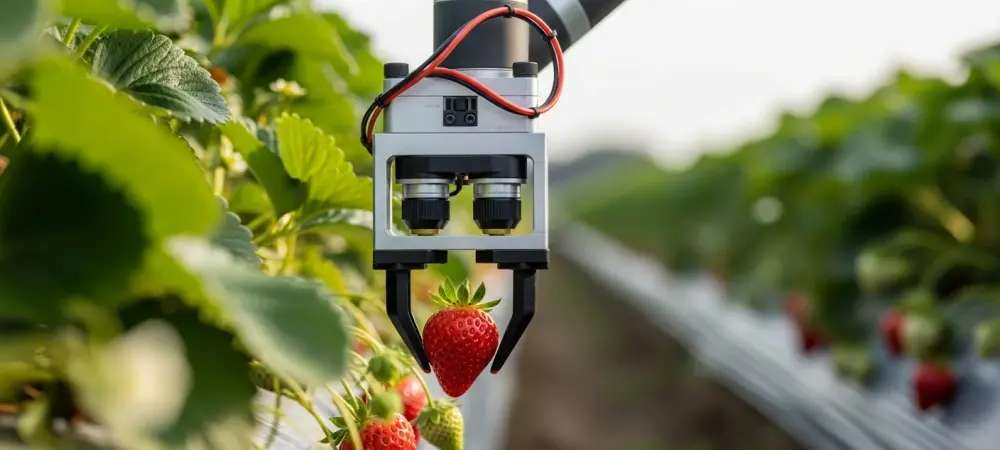
The immense and non-negotiable challenge of nourishing a global population expected to surpass 10 billion people is fundamentally reshaping one of humanity’s oldest practices, driving a technological revolution in the fields. At the heart of this transformation is Artificial Intelligence (AI), which is rapidly converting the art of farming, long guided by tradition and intuition, into a precise science powered by data. This analysis explores the current state of AI in the agricultural sector, detailing its real-world applications, charting its future trajectory, and examining the systemic challenges that temper its widespread adoption. AI is no longer a distant concept for the farm of tomorrow; it is the critical engine driving the efficiency, sustainability, and resilience of the food systems we depend on today.
The Rise of Smart Farming Market Growth and Key Applications
Quantifying the Agricultural AI Boom
The financial and technological momentum behind agricultural AI is undeniable, signaling a profound industry-wide shift toward data-driven operations. Market analyses from leading firms like MarketsandMarkets and Grand View Research consistently forecast explosive growth. The global Agriculture AI market is expanding at a remarkable pace, with a projected Compound Annual Growth Rate (CAGR) exceeding 25%. This trajectory is expected to elevate the market’s value from just a few billion dollars in 2026 to well over $20 billion by 2030, underscoring the immense confidence investors and industry leaders place in its transformative potential. This rapid expansion is not merely theoretical; it is fueled by a surge in tangible investment and accelerating adoption across the globe.
This financial enthusiasm is mirrored by a significant influx of venture capital into the Agri-Tech sector. Startups specializing in AI-driven solutions, from drone-based analytics to robotic automation, are attracting record levels of funding, creating a vibrant ecosystem of innovation. However, adoption rates reveal a more complex picture, with a noticeable disparity between different regions and farm scales. North America and Europe currently lead in the integration of these advanced technologies, largely due to established infrastructure and the prevalence of large, capital-intensive farming operations. In contrast, adoption in many developing nations is slower, hindered by smaller farm sizes, limited access to capital, and infrastructural gaps.
The market itself is composed of several distinct yet interconnected segments, each contributing to the broader trend of smart farming. Precision farming technologies, which include AI-powered sensor networks and data analytics platforms, currently represent the largest and most mature segment. This area is gaining the most traction due to its immediate return on investment through optimized resource use. Following closely is the domain of autonomous machinery, where AI-driven tractors and harvesters are addressing critical labor shortages and boosting operational efficiency. Finally, the segment of predictive analytics, focused on yield forecasting and disease modeling, is rapidly emerging as a crucial tool for risk management and strategic planning, empowering farmers to make proactive, rather than reactive, decisions.
AI in Action From Seed to Harvest
The practical application of AI is revolutionizing every stage of the agricultural lifecycle, delivering unprecedented levels of precision and insight. In precision farming and crop monitoring, AI algorithms act as a central nervous system for the farm, continuously processing a torrent of data from disparate sources like satellite imagery, aerial drones, and a vast network of on-field sensors. This constant stream of information is analyzed in real-time to create a dynamic, high-resolution map of crop health. The system can instantly detect subtle signs of nutrient deficiencies, identify areas suffering from water stress, or flag early indicators of disease, allowing farmers to move beyond broad, field-wide treatments and apply targeted interventions exactly where they are needed, conserving resources and maximizing plant potential.
Predictive analytics represents a monumental leap forward in strategic farm management, allowing producers to anticipate future outcomes with remarkable accuracy. By training machine learning models on vast datasets that include decades of historical weather patterns, detailed soil composition data, and past yield records, these systems can generate highly reliable forecasts for crop yields weeks or even months in advance. This foresight is invaluable, enabling farmers to optimize their harvesting schedules to capture peak quality and quantity, secure better terms on crop insurance, and strategically manage their position in the commodity markets. Moreover, this information helps stabilize the broader food supply chain by providing early warnings of potential surpluses or shortfalls.
Perhaps one of the most impactful applications of AI is in the early detection and management of pests and diseases, a constant threat to global food security. Advanced computer vision systems, integrated into drones or stationary field cameras, are trained to recognize the earliest, often microscopic, signs of infestation or infection long before they become visible to the human eye. Upon detection, the system can trigger an alert and pinpoint the exact location of the outbreak. This allows for the precise and targeted application of pesticides or fungicides, often deployed by intelligent sprayers that activate only over the affected plants. This surgical approach drastically reduces overall chemical usage, with some operations reporting reductions of up to 90%, thereby cutting costs, protecting beneficial ecosystems, and promoting a more sustainable farming model.
Simultaneously, AI is the driving force behind a new generation of agricultural automation and robotics, directly addressing the persistent challenge of labor shortages while enhancing operational efficiency. Autonomous tractors, guided by sophisticated AI navigation systems, can plow fields, plant seeds, and apply fertilizers around the clock with sub-inch accuracy, ensuring perfect spacing and depth for optimal growth. In the harvesting stage, intelligent robots equipped with computer vision can identify and selectively pick ripe fruits and vegetables, a task that has traditionally been highly labor-intensive. These automated systems not only perform tasks with superhuman precision and endurance but also free up human workers to focus on more complex, strategic aspects of farm management.
Water, a finite and increasingly precious resource, is being managed with unprecedented efficiency thanks to AI-powered smart irrigation systems. Instead of relying on fixed schedules, these intelligent systems create dynamic watering plans based on a real-time synthesis of multiple data points. They analyze moisture levels directly from soil sensors, factor in current and forecasted weather conditions to account for rainfall and evaporation, and consider the specific water requirements of the crop at its current growth stage. The AI then determines the precise amount of water needed and automates its delivery, ensuring that not a single drop is wasted. This approach not only conserves vast quantities of water but also prevents the yield losses associated with both under-watering and the root diseases caused by over-watering.
Voices from the Field Expert Perspectives on Agri-Tech
According to leading data scientists in the Agri-Tech space, the true power of AI lies in its ability to process massive, multi-layered datasets that are far too complex for human analysis. An expert in the field explains that this capability is fundamentally changing the unit of farm management. For centuries, decisions were made at the field or farm level. Now, AI allows for a granular shift to “plant-level” management. By integrating data on soil nutrients, sunlight exposure, hydration, and genetic potential for each small section of a field, AI models can prescribe unique interventions for individual plants or micro-zones. This hyper-precision ensures that every single plant is given the exact resources it needs to achieve its maximum potential, moving agriculture from a game of averages to a science of optimization.
From the perspective of industry leadership, the next major trend is ensuring this powerful technology becomes accessible to all. An Agri-Tech CEO notes that while the first wave of AI tools was often complex and expensive, designed for large corporate farms, the current industry focus is on democratization. The trend is moving toward the development of more affordable, user-friendly AI platforms, often delivered through intuitive mobile applications. The goal is to translate sophisticated data analytics into simple, actionable recommendations that a small-scale farmer can use directly from a smartphone. This shift is critical for ensuring that the benefits of the AI revolution—higher yields, lower costs, and greater sustainability—are not confined to a select few but are shared across the entire agricultural landscape.
However, an agricultural economist offers a sobering perspective on the systemic hurdles that remain. The expert commentary highlights that technology alone is not enough to guarantee widespread adoption. The significant upfront costs of AI systems, from drones and sensors to software subscriptions, remain a major barrier for the majority of the world’s small and medium-sized family farms. Furthermore, the persistent rural connectivity gap presents a fundamental infrastructural challenge. Most advanced AI tools rely on high-speed internet to transmit and process data in real time, a service that is still unreliable or unavailable in many farming communities. These economic and infrastructural barriers must be addressed through policy and investment to prevent the emergence of a new digital divide in agriculture.
The Future Harvest Projections Promises and Pitfalls
Emerging Innovations and Opportunities
Looking ahead, the evolution of agricultural AI points toward a future defined by hyper-automation and the deployment of more advanced robotics. The current trend of single, large autonomous machines will likely give way to fully autonomous farm ecosystems managed by swarms of smaller, more agile, and intelligent robots. These robotic teams will work collaboratively to perform highly specialized tasks with unparalleled precision, such as identifying and removing individual weeds without disturbing the surrounding soil, selectively harvesting produce at the perfect moment of ripeness, and conducting continuous, mobile soil analysis. This vision of a fully automated farm promises to further enhance efficiency, reduce soil compaction, and enable 24/7 operational capability.
The advent of powerful Generative AI models is poised to revolutionize the farmer’s user experience, making data-driven insights more accessible than ever before. The future will see the rise of conversational AI assistants, akin to a specialized consultant for farm management. Farmers will be able to interact with these systems using natural language, asking complex questions like, “What is the optimal fertilization plan for my cornfield next week, considering the incoming weather front and current soil nitrogen levels?” The AI will then synthesize vast amounts of relevant data and provide a clear, actionable recommendation in simple terms, effectively bridging the gap between raw data and practical decision-making.
Beyond productivity, AI is set to become a cornerstone of sustainable agriculture and supply chain transparency. As environmental regulations tighten and consumers demand more information about where their food comes from, AI will provide the tools for robust verification. AI platforms will meticulously track and record resource usage, from water and fertilizer inputs to fuel consumption, and calculate the farm’s carbon footprint with high accuracy. This verifiable data will not only help farmers comply with environmental standards and access green incentives but will also provide consumers with a traceable record of a product’s journey from seed to shelf, building trust and rewarding sustainable practices.
Overcoming Key Challenges and Risks
Despite the immense promise of AI, its implementation is shadowed by the persistent challenge of the digital divide. There is a significant and growing gap in technology access, affordability, and digital literacy between large, well-capitalized agricultural corporations and the millions of small-to-medium-sized family farms that form the backbone of global food production. Without targeted initiatives to lower costs, provide financing, and develop scalable solutions, there is a serious risk that the AI revolution will exacerbate existing inequalities, leaving the most vulnerable farmers further behind and concentrating productivity gains in the hands of a few.
As farms become increasingly connected and data-driven, the issues of data governance and security become critically important. Farmers generate vast amounts of valuable proprietary data related to their operations, soil conditions, and yield performance. This raises crucial questions about who owns this data, who has the right to access and use it, and how it is protected from cyber threats. Establishing clear, fair, and transparent regulations on data ownership, privacy, and security is essential. Without a framework that protects farmers’ interests and builds trust, widespread reluctance to share data could severely limit the potential of AI models, which rely on large, diverse datasets to improve their accuracy and effectiveness.
The rapid technological advancement in agriculture is creating a significant technical skills gap that must be addressed through education and training. The modern farmer increasingly needs to be a savvy operator of sophisticated digital systems, capable of interpreting data analytics, managing autonomous equipment, and troubleshooting software issues. The current agricultural workforce, as well as the next generation entering the field, requires robust and accessible training programs to develop the necessary digital literacy. A failure to invest in upskilling farmers and farmworkers will not only hinder the adoption of AI technologies but also prevent the industry from realizing the full potential of its investment in them.
Finally, the most fundamental prerequisite for the majority of AI technologies is a robust digital infrastructure, which remains a major deficiency in rural areas worldwide. Reliable, high-speed internet access is the pipeline through which the data from sensors, drones, and machinery flows to the cloud for analysis and back to the farm for execution. In many remote farming communities, connectivity is slow, unreliable, or non-existent, making the deployment of real-time, data-intensive AI solutions impossible. Expanding broadband access to these underserved regions is not just a matter of convenience; it is a critical piece of national and global infrastructure necessary to unlock the future of agriculture.
Conclusion: Cultivating a Data-Driven Future
The analysis demonstrated that Artificial Intelligence has fundamentally shifted the agricultural paradigm. It has successfully moved farming from a practice based on generational wisdom to a highly precise, predictive, and productive science. Through key applications in real-time crop monitoring, automated machinery, and sophisticated predictive analytics, AI has provided farmers with the tools to optimize resource use, reduce environmental impact, and enhance yields in ways that were previously unimaginable. This technological integration has proven to be a powerful force for efficiency and resilience in the face of growing global challenges.
It became clear that AI’s role transcended mere operational efficiency; it has emerged as a critical component in the construction of a sustainable and secure global food system. The ability of AI to enable precision agriculture, conserve vital resources like water, and reduce the reliance on chemical inputs is essential for meeting the demands of a growing population while protecting the health of the planet. The trend confirmed that data-driven farming is not a temporary innovation but a necessary evolution for ensuring long-term food security.
Ultimately, the journey toward a fully realized AI-powered agricultural future required collaborative and concerted action. Overcoming the significant barriers of high costs, the rural digital divide, and the technical skills gap demanded a unified effort from policymakers, technology companies, and agricultural communities. By working together to create supportive policies, develop accessible and affordable technologies, and invest in robust education, stakeholders could ensure that the profound benefits of the AI revolution were distributed equitably, cultivating a future where every farmer is empowered to help feed the world.