

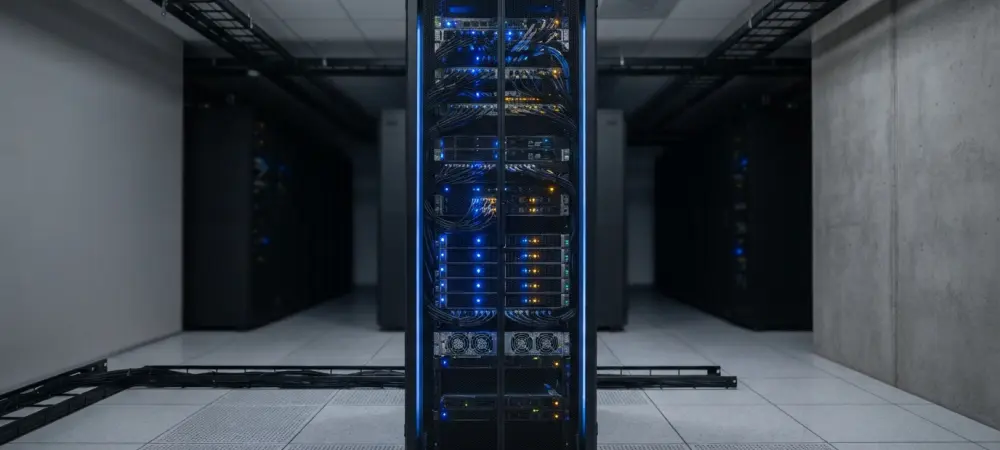
The traditional concept of a “walled garden” has been radically reinvented as global security imperatives force a complete separation between frontier artificial intelligence and the open internet. Organizations that once viewed the air gap as a technological handicap now see it as the ultimate strategic fortress for digital sovereignty. As of early 2026, the transition toward localized, sovereign AI ecosystems is no longer a niche requirement for intelligence agencies but a standard operational paradigm for any entity handling sensitive data. This movement represents a fundamental shift from public cloud dependency to high-performance, autonomous infrastructure that provides the full power of generative AI within physically isolated perimeters.
The Rising Demand for Sovereign Intelligence
Market Growth: Adoption of Isolated AI
Adoption is accelerating among defense departments, intelligence agencies, and critical infrastructure providers requiring 100% data isolation. Market trends show a shift toward “packaged sovereignty,” where cloud providers deliver pre-integrated stacks to meet strict regulatory compliance. Current data indicates a growing preference for hybrid models that keep sensitive inference tasks on-premises while leveraging public clouds for non-sensitive operations. This allows for a tiered security approach that optimizes costs while maintaining a zero-trust posture for the most classified workloads.
Furthermore, the surge in demand is fueled by the realization that data residency laws are becoming increasingly restrictive across global jurisdictions. Organizations are no longer willing to risk the legal or security exposure associated with transferring proprietary datasets across international borders or into shared cloud environments. Consequently, the deployment of dedicated, air-gapped clusters has transitioned from a temporary security measure to a permanent pillar of corporate and national IT strategy.
Real-World Use: High-Security Sectors
In the realm of national defense, intelligence agencies utilize Gemini 1.5 Flash in air-gapped environments for high-speed reasoning and multimodal analysis of classified data. This allows for the rapid synthesis of intelligence from various sources, such as satellite imagery and intercepted communications, without the risk of external data leaks. By keeping the entire analytical pipeline within a secure perimeter, defense units maintain a critical tactical advantage while adhering to the most stringent security protocols. Enterprise search is also undergoing a transformation as organizations deploy Retrieval-Augmented Generation to query vast, disconnected data sources through secure conversational interfaces. This technology enables analysts to interact with historical records and technical documentation more intuitively, reducing the time required to find mission-critical information. The internal nature of these systems ensures that the indexing and retrieval processes are shielded from the vulnerabilities inherent in web-connected search engines.
Secure communication platforms are integrating local AI to provide automated summaries and translations within isolated government networks. Tools like Mattermost allow teams to collaborate in real time while AI-driven agents handle the heavy lifting of data organization and linguistic bridging. Because these AI models run entirely on local infrastructure, the integrity of the communication remains absolute, preventing any possibility of metadata harvesting or external surveillance by foreign actors.
Insights: Industry Leaders and Experts
Experts highlight that the air gap is no longer a barrier to innovation, as localized hardware now mirrors public cloud performance. Thought leaders emphasize the importance of the “open-model approach,” allowing agencies to choose between proprietary models like Gemini and open-source options like Mistral or Gemma. This flexibility ensures that the specific requirements of a mission or a regulatory framework can be met without compromising the quality of the intelligence generated. Moreover, the ability to fine-tune these models on-site ensures that the AI’s outputs are highly relevant to the specific domain in which it operates.
Security professionals note that integrating security information and event management and endpoint detection and response tools, such as Elastic Security, into isolated zones is essential for maintaining a modern security posture. Without the benefit of external telemetry, these tools must function with absolute autonomy. The integration of such robust security frameworks allows organizations to detect internal threats and anomalies with the same precision as cloud-connected systems, effectively closing the gap between isolation and intelligence.
The Future of Disconnected Cloud Ecosystems
Hardware Progress: Localized Compute Power
The integration of NVIDIA HGX B300 systems suggests a future where massive compute power is standard in localized clusters. These advancements ensure that training and fine-tuning large language models are no longer exclusive to hyperscale data centers. As hardware continues to shrink in footprint while growing in capacity, the deployment of private AI clouds will become feasible even for smaller, highly specialized tactical units operating in the field.
Ecosystem Expansion: Marketplace Integration
Expect a surge in third-party marketplace integrations, such as Teradata for local analytics and Solo.io for microservices governance, as the market matures. These partnerships create a comprehensive software stack that allows for sophisticated data processing without external pings. The growth of these ecosystems means that the air-gapped environment is becoming a mirror image of the public cloud, complete with a full suite of enterprise tools and developer resources that support complex application lifecycles.
Operational Impact: Speed and Networking
Developments from 2026 to 2028 will likely focus on reducing the bottleneck between storage and GPUs, with networking speeds exceeding 100 Gbps to support large-scale AI agents. This technical evolution is critical for real-time decision-making in environments where every millisecond counts. Enhancing the internal data fabric will allow for more complex multi-agent systems to operate in tandem, sharing insights across the isolated network without latency issues.
Long-Term Impact: Decoupling and Sovereignty
The trend suggests a permanent decoupling of cutting-edge AI from internet dependency, allowing highly regulated industries to innovate at the same pace as the commercial sector. This shift will fundamentally change the competitive landscape of the defense and financial sectors, where data privacy is the primary currency. Eventually, the concept of a connected AI may be seen as a vulnerability rather than an advantage for the world’s most sensitive operations.
Summary: The Air-Gapped AI Evolution
The transition of Google Distributed Cloud and similar platforms signified that air-gapped environments became comprehensive intelligence hubs. High-performance hardware, multimodal AI models, and robust partner ecosystems solidified as the three pillars of secure, localized infrastructure. As generative AI became central to national security, the move toward “packaged sovereignty” redefined how the world’s most sensitive data was processed and protected. Organizations successfully bypassed the risks of the public web by investing in autonomous compute zones that prioritized internal integrity over external connectivity. Moving forward, the focus shifted toward the standardization of these environments to ensure interoperability between different sovereign clouds. Stakeholders prioritized the development of “cold-start” AI capabilities that functioned immediately upon deployment in remote areas. This era marked the end of the connectivity requirement for high-level intelligence, proving that the most powerful insights often flourished in the quietest, most isolated settings.