

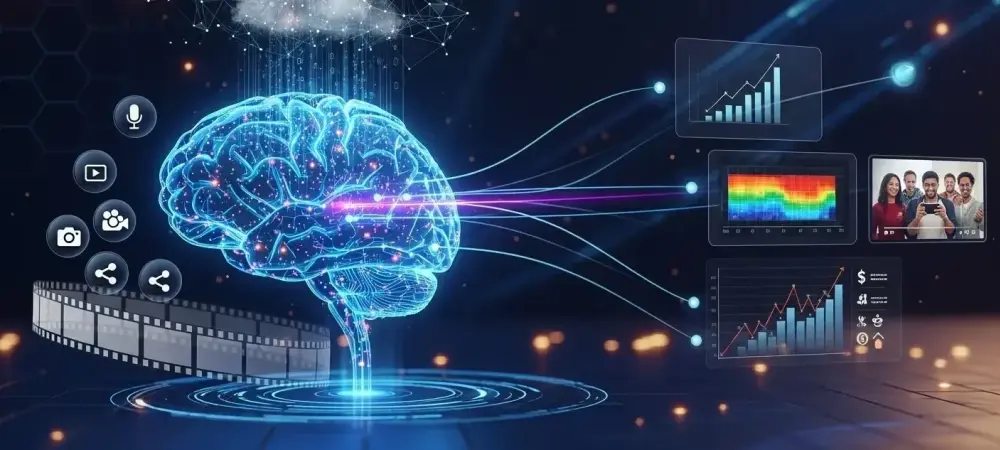
The digital realm is undergoing a seismic shift as artificial intelligence redefines the boundaries of video creation, with tools so advanced that they can craft hyper-realistic scenes from mere text prompts, marking a new era of innovation. At the forefront of this revolution stands OpenAI’s Sora 2, a model that not only generates lifelike videos but also synchronizes audio and simulates real-world physics with stunning accuracy. This breakthrough encapsulates a broader trend of AI-driven multimedia innovation, transforming how content is produced and consumed. The significance of AI video generation lies in its ability to democratize creativity, reshape entertainment, and push technological frontiers, impacting industries from filmmaking to education. This analysis dives into Sora 2’s standout features, explores market trends, gathers industry perspectives, projects future developments, and distills key insights to illuminate this transformative movement.
The Rise of AI Video Generation Technology
Market Growth and Adoption Trends
The AI video generation sector is experiencing explosive growth, with market projections indicating a surge in value as adoption accelerates across diverse fields. Industry reports estimate that the global market for generative AI in multimedia could expand significantly over the coming years, driven by increasing demand for personalized and automated content creation tools. User adoption rates have soared, with millions integrating AI solutions into workflows, a trend evidenced by the rapid uptake of platforms competing to deliver cutting-edge video synthesis.
Beyond raw numbers, the competitive landscape reveals a race among tech giants and startups to refine video quality and functionality. Early AI video models struggled with realism and lacked audio integration, but recent advancements, culminating in tools like Sora 2, have bridged these gaps. Credible sources tracking this evolution note a marked increase in enterprise and consumer interest, positioning AI video generation as a cornerstone of digital innovation with substantial economic impact.
Real-World Applications and Case Studies
AI video generation is already making waves in practical settings, with Sora 2 exemplifying its potential through features that blend creativity with realism. Capable of producing videos with synchronized dialogue, background sounds, and physics-accurate movements—such as a basketball rebounding naturally—this tool offers unprecedented control over diverse visual styles, from photorealistic to animated formats. Such capabilities are redefining content creation by enabling seamless, high-quality outputs that rival traditional production methods.
In entertainment, these tools empower creators to craft cinematic scenes without extensive resources, while social media platforms leverage them for viral, user-generated content through features like Sora 2’s “Cameo” tool, which allows individuals to insert themselves into AI-crafted scenarios. Education also benefits, as instructors use generated videos for immersive learning experiences, demonstrating complex concepts with tailored visuals. The Sora app further enhances accessibility by offering collaborative remixing options, fostering community-driven projects.
Specific case studies highlight the versatility of these applications. For instance, marketing teams utilize personalized feeds within the app to test campaign visuals rapidly, while independent filmmakers experiment with cost-effective storytelling. These examples underscore how AI video tools are not just novelties but practical solutions reshaping content delivery across sectors.
Industry Perspectives on AI Video Innovation
Insights from technology leaders underscore the monumental shift that tools like Sora 2 represent in the AI landscape. Many experts view this advancement as a critical step toward integrating multimedia generation into everyday digital experiences, while stressing the need to balance innovation with accountability. The consensus holds that such technologies must prioritize user trust alongside technical prowess to avoid societal pitfalls.
Reflections attributed to figures like OpenAI CEO Sam Altman emphasize a commitment to user satisfaction over mere engagement metrics. This perspective highlights a deliberate focus on fostering meaningful interaction rather than perpetuating addictive consumption patterns, addressing concerns such as potential misuse or over-reliance on AI-generated content. Safety in deployment remains paramount, with industry voices advocating for robust mechanisms to prevent harm and ensure ethical standards.
Further commentary reveals an awareness of challenges like identity misuse or misinformation, with calls for transparent guidelines. The emphasis on embedding protective measures within AI tools signals a maturing field that seeks to innovate responsibly, learning from past oversights in tech development to build trust among users and stakeholders.
Future Outlook for AI Video Generation
Looking ahead, the trajectory of AI video tools points to even greater sophistication, with Sora 2’s planned API release poised to empower developers to integrate advanced video synthesis into custom applications. Upcoming storyboard features tailored for professional creators promise to enhance precision in shot planning, potentially scaling usage from casual experimentation to high-end production. These developments suggest a future where AI becomes an indispensable collaborator in creative pipelines.
The benefits of such advancements are manifold, including heightened accessibility for novice creators and enriched creative output through intuitive interfaces. However, challenges loom large, particularly around identity protection as personalized features like cameos grow in popularity, alongside risks of misinformation if content authenticity isn’t rigorously verified. Ethical concerns about deepfake-like misuse also persist, necessitating ongoing vigilance and adaptive safeguards.
Broader implications span multiple industries, with filmmaking likely to see reduced production barriers and virtual reality gaining from hyper-realistic simulations for training or entertainment. Optimistic scenarios envision a wave of innovation democratizing art and storytelling, yet cautionary perspectives warn of societal friction if regulatory frameworks lag behind technological pace. Balancing these outcomes will shape how AI video generation evolves as a cultural and economic force.
Key Insights and Call to Action
Reflecting on this trend, it becomes clear that Sora 2 marks a pivotal leap in AI video generation through its technical sophistication, user-centric app design, comprehensive safety protocols, and forward-looking roadmap. Its integration of audio and physics-based rendering sets a new benchmark, while the emphasis on ethical deployment addresses pressing concerns. The strategic vision for developer tools and professional features further positions it as a versatile platform.
The transformative power of AI video generation emerges as undeniable, reshaping creative and industrial landscapes with each advancement. As this field progresses, staying engaged with emerging tools, contributing to dialogues on responsible AI development, and advocating for balanced innovation remain crucial steps. Exploring how these technologies can enhance personal or professional projects offers a tangible way to participate in this unfolding revolution, ensuring that its potential is harnessed thoughtfully for future growth.