

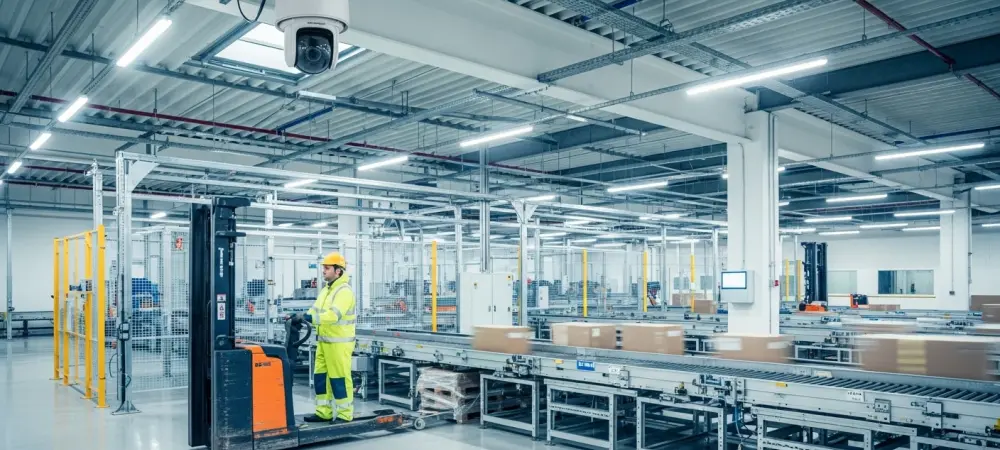
The century-old foundations of workplace safety, built upon reactive measures and sporadic human observation, are now being fundamentally reshaped by intelligent systems capable of seeing, understanding, and acting in real time. This technological evolution marks the most significant transformation to impact the $170 billion workplace safety market in generations. It signals a definitive move away from investigating incidents after they cause harm and toward a new paradigm of proactive prevention, where risks are identified and neutralized before they can escalate.
At the heart of this change is the shift from a compliance-driven, after-the-fact safety model to a data-driven, real-time intervention framework powered by artificial intelligence. For decades, organizations relied on manual audits, safety checklists, and the hope that employees would consistently follow protocols. Now, intelligent technology offers continuous, unbiased oversight that was previously unattainable. This analysis will explore the market forces driving this trend, the core technology enabling it, current patterns in adoption and integration, and the future trajectory toward a truly predictive safety environment.
The Dawn of a New Safety Paradigm
The Economic and Human Case for Change
The inadequacy of traditional safety protocols is starkly reflected in their enormous economic and human costs. Globally, workplace incidents drain over $170 billion from the economy annually through direct expenses like medical care and indirect impacts such as lost productivity and equipment damage. In the United States, this translates to workers’ compensation claims reaching an astonishing $1 billion every single week. These figures represent a persistent and costly failure of a system that has reached its operational limits.
This financial burden is paralleled by a frustrating stagnation in injury reduction rates. Despite significant corporate investment in safety programs and personnel, the frequency of incidents has plateaued in many industries. This is not a failure of human effort but a fundamental limitation of human oversight; it is simply impossible for safety officers to monitor every corner of a dynamic industrial environment simultaneously. This inherent constraint has created a ceiling on safety performance that traditional methods cannot break through.
In response to this challenge, AI-powered computer vision is emerging as the definitive solution. By leveraging existing camera infrastructure, these systems provide continuous, automated monitoring across an entire facility, 24/7, without distraction or fatigue. They are trained to instantly identify hazardous behaviors and non-compliant conditions, turning safety management from a reactive, investigative function into a proactive, preventative one. This technology does not replace safety professionals but rather augments their capabilities, handling the relentless task of observation so experts can focus on strategic improvements and training.
Real-World Implementation How AI Transforms Workplaces
The practical applications of AI safety monitoring are already transforming high-risk environments. The technology excels at detecting clear visual violations that often precede incidents, such as an employee failing to wear the proper Personal Protective Equipment (PPE) like a hard hat or high-visibility vest. It can also create virtual boundaries, or geofences, around dangerous machinery or hazardous areas, automatically alerting supervisors the moment an unauthorized individual enters a restricted zone. Furthermore, these systems can identify unsafe behaviors, like improper lifting techniques or operating heavy equipment too close to pedestrians.
Pioneering companies in sectors like manufacturing, construction, and logistics are leading the charge in implementing these solutions. By deploying computer vision platforms, these early adopters are demonstrating measurable success, reporting significant reductions in recordable injury rates and, as a direct result, achieving lower insurance premiums. Their success provides a powerful proof of concept for the broader market, showcasing a clear return on investment that goes beyond compliance to tangible operational and financial benefits.
This transformative capability is built upon a sophisticated two-tier technology architecture. At the local level, on-site edge computing devices process video feeds in real time. This approach ensures minimal latency, allowing for instantaneous alerts that are critical for immediate intervention. It also enhances privacy and reduces network bandwidth demands by processing raw video on-premises. Complementing the edge is a cloud-based analytics platform, which aggregates data from across an enterprise. This second layer provides leadership with a high-level view of safety performance, enabling them to identify systemic risk trends, benchmark facilities, and make data-informed strategic decisions.
Enterprise Integration and Market Maturation
The Evolving Business and Adoption Model
The adoption of AI safety technology has followed a classic diffusion curve, beginning where the need is most acute. The first wave of implementation was led by organizations in high-risk industries such as oil and gas, mining, and heavy manufacturing. For these companies, where a single safety failure can lead to catastrophic financial and human consequences, the business case was immediate and compelling. The validation from these pioneers has been crucial in building market confidence. The market is now entering a second, broader wave of adoption as the technology moves into moderate-risk sectors like warehousing, logistics, and retail distribution. In these environments, the driver is not just avoiding catastrophic events but also achieving significant gains in operational efficiency and reducing the high costs associated with more frequent, less severe incidents. This expansion signals the technology’s maturation from a niche solution into a mainstream enterprise platform.
This market growth has been enabled by a necessary evolution in business models. Early attempts to sell the technology through a traditional one-time software licensing fee largely failed due to high upfront costs and a lack of ongoing vendor support. In its place, a subscription-based (SaaS) model has become the industry standard. By pricing services on a per-camera or per-facility basis, vendors have lowered the barrier to entry and created a partnership model focused on long-term value through continuous updates and support. A more advanced, outcome-based pricing model is also emerging, where a portion of the cost is tied directly to measurable improvements in safety metrics, creating the ultimate alignment of interests between vendors and customers.
Creating a Connected Operational Ecosystem
The true value of an AI safety platform is unlocked when it moves beyond a standalone tool and becomes an integrated component of a company’s broader operational ecosystem. By connecting with other core business systems, it transforms isolated safety alerts into actionable, automated workflows that enhance both safety and efficiency. This connectivity multiplies the return on investment and embeds safety intelligence directly into the operational fabric of the organization.
Key integrations are already becoming standard practice. When an AI system detects a violation, it can automatically trigger a case file in an Incident Management System, populating it with video evidence, timestamps, and location data to streamline investigation and reporting. It can also connect to Building Management Systems to initiate physical responses, such as locking a door to a hazardous area or activating an alarm. This creates a responsive environment where the facility itself helps enforce safety protocols.
Perhaps most strategically, feeding safety data into Business Intelligence (BI) platforms allows executives to correlate safety performance with other key performance indicators. This integration makes it possible to visualize how production pressure might impact safety compliance or how safety incidents affect operational uptime. By doing so, it elevates safety from a siloed compliance function to a strategic pillar of overall business intelligence, proving that a safer workplace is also a more productive and efficient one.
The Future Outlook From Prevention to Prediction
Overcoming Hurdles and Navigating Growth
Despite its rapid advancement and clear value proposition, the AI safety monitoring industry still faces several challenges on its path to widespread adoption. A primary focus for vendors is the continuous improvement of model accuracy to minimize false positives. While the technology is remarkably effective, too many erroneous alerts can lead to “alert fatigue,” causing personnel to ignore the system. Additionally, the technology is currently limited to detecting visual hazards, leaving a gap in monitoring for non-visual risks like chemical exposure, air quality issues, or excessive noise levels. Navigating the complex and evolving landscape of data privacy regulations also remains a critical task for both vendors and their customers.
The competitive landscape is dynamic and fragmented, consisting of three main categories of players. Established surveillance and security companies are adding AI safety modules to their existing product suites, leveraging their large installed base of cameras. In contrast, specialized startups are building purpose-built platforms focused exclusively on safety workflows, often offering deeper functionality and a more intuitive user experience. Finally, vertical-specific providers are emerging to offer highly tailored solutions for industries like construction, which have unique safety challenges and system integration needs.
Propelling the market forward are two powerful accelerators. First, regulatory bodies are increasingly recognizing AI monitoring as a valid and effective tool for demonstrating compliance, which is critical for driving adoption in heavily regulated industries. Second, a significant surge in venture capital and private equity investment is fueling rapid innovation and commercial expansion across the sector. This influx of capital validates the market’s enormous potential and ensures that the technology will continue to evolve at a breakneck pace.
The Next Frontier Predictive Safety Analytics
The long-term vision for this technology extends far beyond its current responsive capabilities. The industry is on a clear trajectory from preventing incidents as they happen to predicting them before they even begin. This evolution represents the ultimate goal of AI in the workplace: to create an environment where risks are anticipated and mitigated proactively, rather than retroactively.
Achieving this will require leveraging machine learning to analyze massive, multi-faceted datasets that go beyond simple visual violations. The next generation of safety platforms will aim to identify the subtle combinations of precursor conditions that reliably precede accidents. These could include analyzing patterns of worker movement to detect fatigue, correlating environmental factors like lighting or temperature with incident rates, and monitoring sensor data from machinery to spot unusual behavior indicative of a potential failure.
By identifying these leading indicators, future systems will be able to alert supervisors to a heightened risk state before a specific violation occurs. This would allow for interventions—such as assigning a fatigued worker to a less demanding task or performing pre-emptive maintenance on a piece of equipment—that prevent incidents entirely. This shift from prevention to prediction will enable organizations to cultivate a truly proactive safety culture where risks are managed before they have a chance to manifest.
Conclusion: A New Standard for Workplace Safety
The analysis demonstrated that AI-powered computer vision has fundamentally reshaped industrial safety by enabling a proactive, data-driven approach that was previously unimaginable. It moved beyond the limitations of human observation to create a persistent layer of intelligent oversight, transforming safety from a reactive cost center into a strategic operational advantage. The trend’s profound importance was found in its ability to align the goals of worker safety and business efficiency, proving that they are complementary, not competing, imperatives. By providing real-time insights and automating prevention, this technology has allowed organizations to protect their most valuable asset—their people—while simultaneously improving productivity and reducing financial risk.
Looking ahead, the trajectory established by these advancements suggested an inevitable conclusion: by 2030, AI safety monitoring will become an essential, non-negotiable component of the enterprise technology stack. Just as network security is considered a fundamental requirement for digital operations today, intelligent safety monitoring will become the standard for any organization operating in the physical world, setting a new and far higher benchmark for what it means to run a safe and responsible business.