

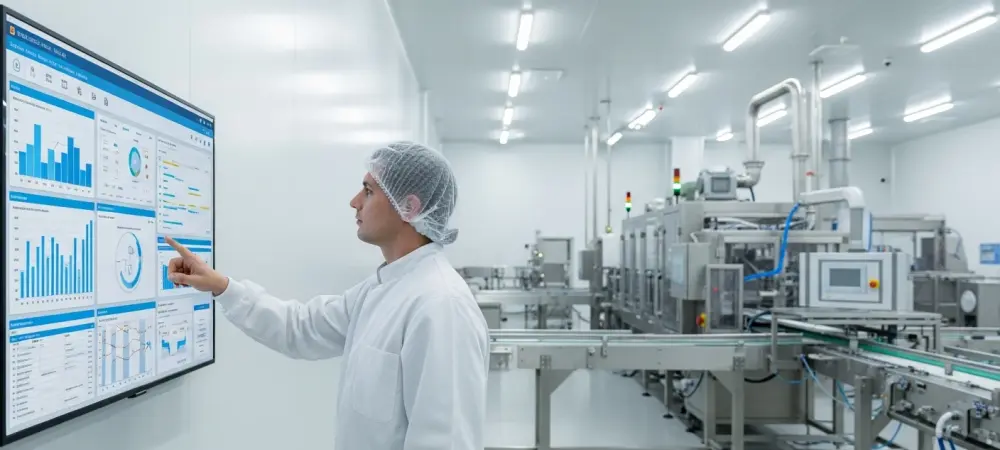
The traditional hum of the food processing plant is increasingly punctuated by the silent, sophisticated logic of machine learning as operators abandon the humble clipboard for integrated digital ecosystems. This shift represents a fundamental transition from the era of manual, pen-and-paper record-keeping to a sophisticated period of intelligent automation. For many in the food industry, this change is not merely an upgrade in technology but a survival imperative. Bridging the gap between fragmented legacy systems and contemporary artificial intelligence is essential to maintaining a competitive edge in a global market defined by thin margins and rigorous safety standards. The road to genuine AI readiness involves a meticulous journey through data digitization, the implementation of integrated Enterprise Resource Planning (ERP) systems, and a commitment to workforce succession planning. By establishing a robust digital foundation, manufacturers can move beyond reactive problem-solving toward a future of predictive excellence and operational agility.
The Evolution of Digital Maturity in Food Processing
Transitioning from Manual Records to Digital Foundations
The prevalence of manual documentation remains a significant hurdle for small and mid-sized enterprises, particularly within specialized sectors like commercial bakeries and protein processors. Many facilities still rely on handwritten logs to track batch temperatures, ingredient weights, and maintenance schedules. This reliance creates massive silos of inaccessible data that cannot be utilized by modern analytical tools. Transitioning toward an integrated ERP system is the critical first step in breaking these silos. It shifts the organizational focus from retrospective accounting to real-time operational awareness.
High-quality datasets are the lifeblood of any intelligent system, and these datasets can only be generated when data capture occurs at the point of action. When a worker on the shop floor records a production event digitally as it happens, the information becomes immediately available for analysis. This elimination of the time lag between an event and its digital recording ensures that the data is accurate and granular. Without this real-time digital foundation, any attempt to implement artificial intelligence will likely fail due to the “garbage in, garbage out” principle, where poor data quality leads to unreliable insights.
Real-World Integration: Building the Connected Operating Record
Modern food manufacturers are increasingly turning to platforms like Microsoft Dynamics 365 Business Central to serve as the central nervous system of their operations. By centralizing core functions such as finance, procurement, and production, companies create a unified digital environment. However, the true power of this system is unlocked through the integration of specialized Independent Software Vendor (ISV) solutions. Tools from Insight Works or Tasklet Factory extend the reach of the ERP into warehouse management and distribution, ensuring that every movement of goods is tracked with precision. The result of this integration is what industry experts call a “connected operating record.” This serves as a single source of truth where data from the production line, the warehouse, and the distribution fleet flows into a unified stream. Machine learning models require this level of consistency to identify patterns in spoilage, demand fluctuations, or equipment failure. Moreover, a cohesive ecosystem allows for seamless communication between different departments, ensuring that the supply chain remains responsive to the needs of the production floor and the final customer.
Strategic Perspectives on AI Governance and Readiness
Expert Insights: The Shift to Problem-First Envisioning
Technology adoption often fails when companies prioritize the “how” before the “why.” Strategic consultants recommend the use of envisioning workshops to flip this script. These sessions focus on identifying specific, high-value business challenges—such as excessive project intake lag or inaccurate yield forecasting—before a single line of code is written. By defining the problem first, manufacturers can determine exactly what data is needed and how the AI should be configured to deliver a measurable return on investment.
This phase also involves a deep dive into data architecture and terminology. It is common for critical information to be buried in unstructured formats like SharePoint folders or local spreadsheets. Experts play a vital role in helping organizations classify this data and establish standardized terminology. Ensuring that “batch yield” means the same thing across all departments is essential for training Large Language Models (LLMs). When data is enriched and made discoverable, it transforms from a static record into a dynamic asset that AI can query to provide actionable business intelligence.
Protecting Proprietary Secrets: The Four Walls Strategy
A significant barrier to AI adoption is the fear of losing intellectual property to public training models. Food manufacturers often possess unique recipes or proprietary processing techniques that provide a distinct competitive advantage. To address this, organizations are adopting a “four walls” strategy, which involves deploying AI within private, secure cloud environments. This ensures that sensitive data remains internal and is never leaked into the public domain. Adherence to the NIST AI Risk Management Framework provides a structured approach to this security challenge. By focusing on the four pillars—Govern, Map, Measure, and Manage—manufacturers can create a safe environment for innovation. Governing involves setting clear internal policies on who can use AI and for what purposes. Mapping and measuring the impact of AI systems allow for constant evaluation of performance and risk. This comprehensive governance model ensures that as the company adopts more advanced technologies, its most valuable secrets remain shielded from external exposure.
The Future of AI: Workforce Sustainability and Innovation
Bridging the Knowledge Deadline: Succession Planning
The food manufacturing sector is facing a critical turning point as a generation of highly experienced staff approaches retirement. These individuals hold “tribal knowledge”—informal production procedures and troubleshooting tricks that are rarely documented in official manuals. Capturing this wisdom before it leaves the building is a primary focus of AI readiness. AI can be used to digitize and structure this informal knowledge, turning the intuition of a veteran operator into a searchable database for new hires.
This application of technology serves as a vital tool for succession planning. Instead of losing decades of experience when a senior manager retires, companies can use AI to archive and retrieve that institutional knowledge. For the next generation of workers, who are often more tech-savvy, using AI as a training and retrieval tool feels natural. This transition ensures business continuity and reduces the risks associated with staff turnover, making the organization more resilient to the shifting demographics of the workforce.
Scaling Industry-Specific Efficiencies: Development
The maturation of AI is also changing how software is built and maintained for the food sector. There is a growing trend toward “out of the box” AI functionality that reduces the need for expensive, bespoke software customizations. Manufacturers can now leverage pre-built models for tasks like route planning and demand forecasting, which can be easily integrated into existing ERP systems. This shift allows companies to achieve high levels of efficiency without the overhead of maintaining complex, custom-coded solutions.
Furthermore, AI-assisted coding is empowering developers to build more robust and testable solutions at a faster pace. By automating repetitive coding tasks and assisting in the identification of bugs, AI helps in creating software that is easier to maintain and upgrade. This development efficiency translates directly to operational agility. Manufacturers can pivot more quickly to meet new regulatory requirements or consumer trends, ensuring that their technology stack supports growth rather than hindering it.
Holistic Navigation: The Path to Intelligence
The journey toward full AI readiness required food manufacturers to look beyond simple software purchases and instead embrace a complete cultural and structural evolution. Organizations that succeeded were those that recognized digitization was the prerequisite for intelligence, moving away from fragmented records toward a unified source of truth. They prioritized the security of their proprietary data by following established risk frameworks, ensuring that their competitive secrets remained protected while leveraging the power of Large Language Models. By documenting the tribal knowledge of a retiring workforce, these companies bridged a critical gap in institutional memory, securing their operations for the future.
Looking ahead, the emphasis must remain on maintaining the integrity of these digital systems while remaining open to the rapid pace of algorithmic development. Manufacturers should continue to invest in the education of their staff, ensuring that the human element remains at the center of the technological shift. The implementation of AI-assisted development will likely lower the barriers to entry for advanced analytics, allowing even smaller processors to compete on a global scale. Ultimately, the transition to an AI-enhanced future was built on the foundation of clean data and strategic governance, providing a blueprint for long-term sustainability in the food sector. Manufacturers who maintained this holistic approach found themselves better equipped to handle the complexities of the modern supply chain.