

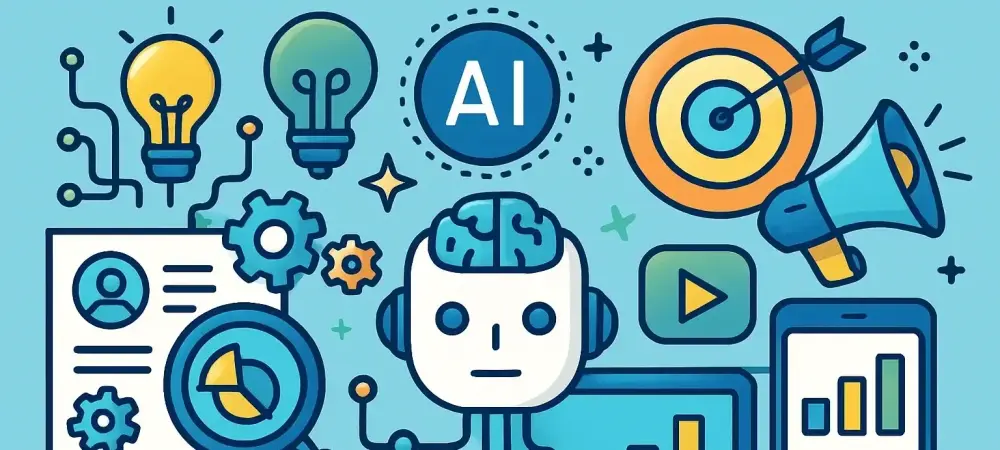
In today’s hyper-competitive business environment, marketing agencies face relentless pressure to deliver results that are faster, more cost-effective, and deeply personalized to stand out in a crowded market. Clients demand campaigns that resonate instantly while expecting budgets to shrink and timelines to tighten. Amid this challenging landscape, Artificial Intelligence (AI) emerges as a transformative force, empowering agencies to scale operations, streamline processes, and achieve unprecedented success. AI is no longer just a futuristic concept; it’s a vital tool reshaping how marketing is done in real time. This analysis dives into the meteoric rise of AI-driven marketing tools, explores their practical applications across industries, captures insights from industry leaders, projects future possibilities, and offers actionable steps for agencies ready to embrace this revolution.
The Rise of AI in Marketing: A Game-Changing Shift
Explosive Growth and Adoption of AI Tools
The adoption of AI in marketing has surged dramatically, with recent studies indicating that over 60% of marketing agencies now integrate AI tools into their workflows, a number projected to climb even higher by 2027, according to industry reports. This rapid uptake reflects a broader shift toward automation and data-driven strategies as agencies seek to keep pace with client demands. Platforms equipped with AI are no longer niche; they’ve become essential for staying competitive in a fast-evolving field.
Beyond mere adoption, the impact of these tools is measurable in time and cost efficiencies. Reports suggest that AI-driven solutions can reduce content creation time by up to 50% and cut campaign analysis costs significantly, allowing teams to redirect resources toward strategy and innovation. Tasks such as drafting social media posts, generating reports, and segmenting audiences, once labor-intensive, are now handled swiftly by algorithms, proving that AI is a cornerstone of modern marketing efficiency.
Real-World Applications Across Industries
AI marketing tools are demonstrating remarkable versatility, with platforms like HubSpot automating customer relationship management, Jasper crafting compelling content, and Mailchimp optimizing email campaigns through predictive analytics. These tools handle everything from SEO enhancements to social media scheduling, enabling agencies to manage multiple clients without sacrificing quality. Their ability to adapt to specific needs makes them indispensable across varied sectors.
In legal marketing, for instance, firms like AP Family & Divorce Lawyers leverage AI to refine content strategies, ensuring messages resonate with clients during sensitive times. Similarly, in the EdTech space, companies like Edumentors use AI to tailor learning experiences, boosting engagement through personalized recommendations. These examples highlight how AI transcends industry boundaries, delivering targeted results whether the focus is on trust-building or education.
The diversity of applications underscores a key point: AI isn’t a one-size-fits-all solution but a customizable asset. From drafting empathetic emails for legal clients to scheduling dynamic social media posts for educational platforms, the technology adapts to unique challenges, driving measurable outcomes like increased website traffic and improved user retention across the board.
Voices from the Field: Expert Insights on AI’s Impact
Industry leaders consistently highlight AI’s role in enhancing operational efficiency while stressing the importance of maintaining a human element in marketing. Angela Princewill, a lawyer at AP Family & Divorce Lawyers, notes, “Marketing in the legal space is sensitive, but AI tools have helped maintain professionalism and personalization, increasing website traffic by 30% through AI-assisted SEO and blog writing.” Her perspective emphasizes AI as a supportive mechanism rather than a standalone solution.
Similarly, Tornike Asatiani, CEO of Edumentors, shares, “AI personalizes learning journeys for students, improving engagement by 40% through instant tutor and content matching, allowing the team to focus on impactful outcomes.” This insight reveals how AI frees up human resources for high-value tasks. Meanwhile, Liam Derbyshire, Founder of Influize, adds, “Deploying HubSpot AI for drafts cut content time by 35%, and tools like Jasper scaled efforts without losing human oversight.” His experience underscores the balance between automation and creativity.
A common thread among these experts is the belief that AI excels as a partner, not a replacement. While it streamlines repetitive tasks and amplifies scalability, the human touch remains crucial for strategy and emotional connection. This consensus suggests that the most successful agencies will be those that integrate AI thoughtfully, ensuring technology enhances rather than overshadows personal engagement.
The Future of AI in Marketing: Opportunities and Challenges
Looking ahead, AI in marketing is poised to evolve with groundbreaking trends like predictive modeling, which forecasts customer behavior with uncanny accuracy, and advanced natural language generation that crafts near-human content. Innovations in voice and video capabilities are also on the horizon, promising to create immersive campaign experiences that captivate audiences in entirely new ways. These developments could redefine how brands connect with consumers.
The potential benefits are substantial, including higher lead conversion rates through precise targeting and improved customer retention via tailored interactions. However, challenges loom large, such as data privacy concerns that require stringent safeguards and the risk of over-reliance on automation, which could erode authentic communication. Agencies must navigate these hurdles to fully harness AI’s promise without compromising trust or originality.
Early adopters of these emerging technologies are likely to carve out a significant competitive advantage, shaping the marketing landscape over the next three to five years. Conversely, those slow to adapt may struggle to keep up as AI becomes increasingly integral. Striking a balance between innovation and ethical considerations will be critical for agencies aiming to lead rather than follow in this dynamic space.
Key Takeaways and Your Next Steps with AI
AI stands as a pivotal force in transforming marketing, offering automation, data-driven decision-making, and scalability that empower agencies of all sizes to thrive. From slashing time on mundane tasks to providing deep insights into customer behavior, this technology equips marketers to meet modern demands with precision. Its role in enabling growth without proportional increases in resources cannot be overstated.
Importantly, AI functions as a growth partner rather than a threat, allowing marketers to prioritize creativity and strategic thinking while offloading repetitive duties. This synergy between human ingenuity and machine efficiency is what makes AI indispensable. Agencies that recognize this balance are better positioned to deliver exceptional results and build lasting client relationships.
To embark on this journey, start small by selecting a single AI tool to address a specific pain point, such as content creation with Jasper or analytics with Google Analytics 4. Test its impact over a few weeks, tracking metrics like time saved and engagement rates. Embracing AI as a cornerstone of future success means taking incremental steps today to build a foundation for tomorrow’s achievements.