

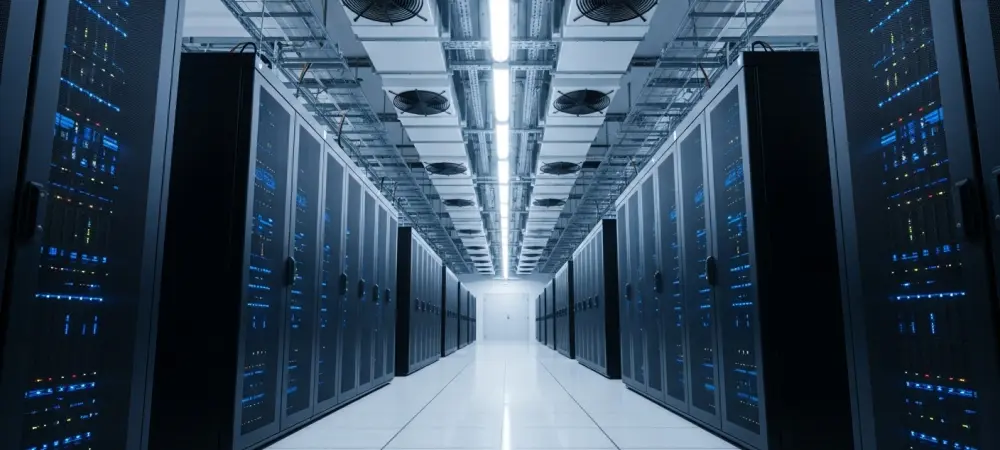
The sheer magnitude of the capital currently flowing into data centers suggests that the digital backbone of the global economy is being completely rewritten in real-time. This unprecedented influx of investment signifies a fundamental shift where artificial intelligence is no longer treated as a speculative experiment but as the central nervous system of modern corporate strategy. While early skeptics questioned the long-term viability of these outlays, the current financial data paints a picture of an aggressive and calculated expansion. The transition from a software-first approach to a hardware-heavy reality is now the defining characteristic of the tech landscape.
The Shift from Speculation to a Hardware-Driven Economy
Quantitative Surge in Capital Expenditure and Revenue
The global technology landscape is witnessing a massive recalibration as the “Big Four”—Microsoft, Alphabet, Meta, and Amazon—funnel an unprecedented $630 billion to $650 billion into collective capital commitments. This surge represents a tangible bet on the infrastructure required to power the next generation of digital services. Unlike previous investment cycles, this spending is tied directly to the construction of massive physical assets that will dictate market share for the next decade.
Evidence of this transformation is most visible in the cloud sector, where growth rates are defying the traditional laws of scale. Microsoft Azure has achieved a remarkable 40% growth rate, while Google Cloud has seen its revenue surge by 63%, proving that the demand for high-performance computing is effectively insatiable. These figures suggest that enterprises are not just exploring AI; they are migrating their core operations to the cloud to leverage these new capabilities. This migration is providing a robust revenue base that justifies the staggering costs of the hardware involved.
Furthermore, the decoupling of AI revenue from speculative bets has become a defining characteristic of this hardware-driven economy. Market leaders are now reporting AI-specific annual earnings exceeding $37 billion, a milestone that moves the conversation away from theoretical potential and toward realized financial gains. This revenue stream validates the current infrastructure cycle as a necessary investment for capturing a rapidly expanding market. It demonstrates that the companies willing to spend the most on physical infrastructure are the ones capturing the lion’s share of the new digital economy.
Real-World Applications and Physical Bottlenecks
The emergence of the “Agentic Computing” era at Microsoft marks a new chapter where AI shifts from simply responding to prompts to autonomously managing enterprise workflows. By integrating these agents into the software stack, the company is creating an ecosystem where efficiency is baked into the very fabric of business operations. This move toward autonomy is designed to reduce human friction and maximize the throughput of existing digital assets, turning abstract intelligence into a functional tool for every department.
Meta has demonstrated a similar trend within the advertising sector by utilizing its Advantage+ AI framework to drive a 33% increase in advertising efficiency. This transition proves that massive hardware investments can yield immediate dividends in core business models by optimizing every ad placement and user interaction. By using AI to refine the precision of its marketplace, Meta is effectively turning its data centers into high-margin revenue generators that outperform traditional algorithms.
However, a new constraint has emerged in the form of “Supply-Limited Growth,” where physical boundaries are now the primary ceiling for innovation. Data center capacity and power-ready real estate have become as valuable as the code itself, forcing Alphabet and Microsoft to compete for physical territory. This shift underscores the reality that the next phase of growth depends as much on civil engineering and energy procurement as it does on software development. The bottleneck is no longer human imagination, but the availability of electricity and specialized floor space.
Amazon is navigating these bottlenecks by doubling down on its own custom silicon, specifically the Trainium and Inferentia chip lines. By building its own hardware, Amazon is attempting to insulate itself from the volatility of the global semiconductor supply chain while aiming for a $20 billion revenue run rate. This vertical integration strategy provides a blueprint for how firms can maintain control over their margins in an increasingly expensive environment. By reducing reliance on external chip designers, Amazon is securing its own operational future.
Industry Perspectives on the “Capex Escalation Trap”
Analysts have increasingly identified a “Moving Goalpost” phenomenon where every instance of proven ROI is immediately met with even higher spending forecasts for the next cycle. This creates a psychological trap for the market; as soon as a company demonstrates it can make money from AI, it announces that it must spend twice as much to stay ahead. This cycle of escalation suggests that the price of entry into the top tier of technology is rising at a compounding rate, leaving little room for error. The current reality is undeniably “Compute Constrained,” a fact recently admitted by Sundar Pichai. This admission highlights that the limit to innovation is no longer a lack of ideas or customer interest, but a physical shortage of high-end processing units and the facilities to house them. When the most powerful companies in the world are waiting for hardware to arrive before they can launch new products, it signals that the supercycle is dictated by the pace of physical manufacturing rather than digital coding. To combat rising component costs and protect operating margins, “Hardware Sovereignty” has become a vital survival strategy for the industry’s titans. By developing proprietary chips and building out independent energy solutions, firms are trying to vertically integrate their entire stack from the ground up. This reduces reliance on a handful of external suppliers who currently hold immense pricing power over the essential building blocks of the AI era. Sovereignty over the physical layer is now seen as a prerequisite for long-term financial health.
Despite record-breaking financial performance, a notable disconnect persists between corporate reality and investor sentiment. While these firms are beating earnings expectations by significant margins, the market often reacts with caution due to the capital intensity of the build-out. This hesitation stems from a fear of the long-term “capex-to-revenue” ratio, as investors weigh immediate profits against the staggering costs of maintaining a global infrastructure footprint. The tension between showing growth and spending to enable it has never been more visible.
Future Implications of Permanent Capital Intensity
The evolution of the “Cloud Utility” model suggests that high-level infrastructure spending will soon be viewed as a permanent cost of doing business rather than a one-time surge. Since AI hardware becomes obsolete at a much faster rate than traditional servers, the industry is entering a continuous cycle of replacement and upgrading. This transforms the capital expenditure profile of tech giants into something resembling a public utility, where constant, massive reinvestment is mandatory to keep the lights on and the models running.
A significant risk in this new era is “Efficiency Erosion,” where the productivity gains provided by AI are eventually consumed by the massive overhead of the hardware itself. If the cost to power and cool a data center grows faster than the revenue generated by the algorithms inside it, operating margins will inevitably shrink. Companies must find a way to make their hardware and cooling systems exponentially more efficient or risk being trapped in a cycle of diminishing returns where they spend more to earn less.
The broader consequences of this race extend far beyond the balance sheets of Silicon Valley, affecting global energy demands and semiconductor supply chains. The search for “power-ready” real estate is already influencing national energy policies and driving massive investments in nuclear and renewable sources. As tech firms become some of the world’s largest energy consumers, their operational decisions will have profound geopolitical implications. The demand for silicon and electricity is restructuring global trade and infrastructure priorities.
Looking further ahead, the likely outcome is a consolidated market where only “Sovereign Scale” firms can afford the entry price for frontier AI development. The staggering cost of building and maintaining these systems means that mid-sized competitors may find themselves priced out of the hardware race entirely. This could lead to a landscape dominated by a few massive entities that possess the physical and financial endurance to sustain multi-hundred-billion-dollar infrastructure budgets, creating a high barrier to entry.
Summary and the Path Toward Operational Excellence
The narrative surrounding artificial intelligence shifted definitively from speculative hype to a data-backed infrastructure supercycle. Major players moved beyond the initial “bubble” phase by proving that massive capital outlays could translate into tangible revenue acceleration and cloud growth. The conversation evolved into an accounting of physical assets, where data centers and custom silicon served as the primary indicators of future market dominance. This change highlighted that the digital future was rooted firmly in physical capacity. The industry established that the winners of this new era were defined by their physical capacity and financial endurance rather than software innovation alone. As infrastructure became the primary constraint, firms that successfully secured power and hardware solidified their positions at the top of the hierarchy. This transition underscored the reality that in a compute-heavy world, the ability to build and maintain the physical foundation was the ultimate competitive advantage. Those who lacked the capital to keep up found themselves falling behind in the race for intelligence.
In the final analysis, the necessity for firms to balance staggering infrastructure bills with sustainable operational efficiency became the central challenge for leadership. Shareholders demanded proof that the billions spent on hardware would eventually lead to higher margins and long-term stability rather than just endless spending. The path forward required a delicate coordination of aggressive expansion and disciplined resource management to ensure that the AI revolution remained a profitable venture. Leaders focused on maximizing every watt of power and every cycle of compute to satisfy both innovation needs and financial stakeholders.