

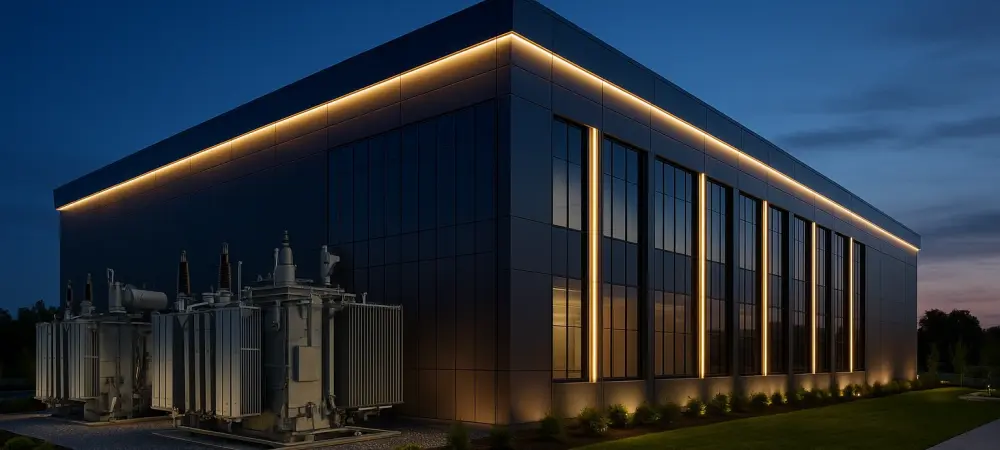
The architectural footprint of American capitalism has undergone a tectonic shift as the nation prioritizes the silicon-driven requirements of artificial intelligence over the traditional pursuit of residential expansion. For the first time in modern economic history, private investment in data centers and their associated high-tech equipment has eclipsed the total capital allocated to residential construction. This transition indicates that the United States is no longer primarily defined by the growth of its housing stock but by the massive expansion of its digital brain. As the “AI boom” solidifies its position as the central driver of macroeconomic activity, it is fundamentally altering the flow of capital, the demand for labor, and the distribution of power across the national landscape.
The Monumental Shift in Capital Allocation
Statistical Milestones and the Rise of the Hyperscalers
The year 2026 has witnessed a historic threshold where private investment in data centers officially surpassed residential construction spending. This shift is not merely a temporary fluctuation but a structural realignment of the American economy. Current data reveals a 57 percent year-over-year surge in data center spending, which has reached an annualized pace of $75 billion. This aggressive capital deployment is fueled by the relentless demand for processing power, as the infrastructure required to host complex large language models becomes the most valuable real estate in the country. The influence of the “Hyperscalers”—Amazon, Google, Microsoft, and Meta—cannot be overstated, as these four entities have collectively committed to capital expenditure programs totaling nearly $800 billion for 2026. This concentration of wealth is accelerating a trend where data center CAPEX as a share of Gross Domestic Product is projected to rise from 0.3 percent in 2019 to a staggering 3.1 percent by 2027. Such a trajectory suggests that the digital economy is consuming an ever-larger portion of the nation’s financial output, potentially at the expense of traditional infrastructure and social investment.
Real-World Applications and Geographic Expansion
This monumental shift in capital is physically manifesting in regions like Prince William County, Virginia, which serves as a primary case study for dramatic land-use transformations. Once targeted for suburban housing, land in this corridor is now being acquired at astronomical property premiums as tech giants compete for proximity to fiber networks and power substations. In some instances, land values have increased tenfold within a single year, pricing out residential developers and permanently altering the local landscape. These windowless, high-security structures have become the new cathedrals of the digital age, demanding more space and resources than the neighborhoods they replace.
The expansion of AI infrastructure is also revitalizing rural America, providing a significant boost to local tax revenues and employment in areas that were previously overlooked by the tech industry. As hyperscalers look for vast tracts of land with available power, small towns are seeing a sudden influx of high-paying construction jobs and long-term facility management roles. This trend has not gone unnoticed by private equity firms like Starwood Capital, which has recently pivoted toward “digital infrastructure” as its primary asset class. This institutional interest confirms that data centers are now viewed as a more stable and lucrative investment than traditional office buildings or retail centers.
Sectoral Displacement and Resource Competition
The sheer volume of AI infrastructure investment is creating a “crowding out” effect that ripples through the broader economy. As billions of dollars pour into server farms, they consume land, capital, and raw materials that were previously reserved for housing and manufacturing. This competition is particularly fierce in the supply chain for electrical components and cooling systems, where lead times have extended to several years. The result is a tightening of the market for essential building materials, which in turn drives up costs for other construction sectors and complicates the national effort to address the housing shortage. Labor market strain is perhaps the most visible sign of this sectoral displacement, with skilled electricians and project managers being siphoned away from traditional construction by 25 to 30 percent salary premiums. These incentives make it increasingly difficult for residential homebuilders or small-scale manufacturers to find the talent necessary to complete their projects. Furthermore, the massive energy demand of AI facilities is placing unprecedented pressure on the national power grid. In response, a 2026 bipartisan bill was introduced to address energy upgrade costs, aiming to ensure that the massive utility requirements of tech giants do not result in skyrocketing electricity rates for local residents.
Expert Perspectives on Economic Reorientation
Prominent economists, including Torsten Slok of Apollo Global Management, have noted the unprecedented velocity of the AI boom, comparing its speed to the 2000s housing bubble but highlighting its unique technological foundation. Analysts are increasingly vocal about the widening gap between the $770 billion being spent on infrastructure and the $64 billion in actual revenue currently generated by AI platforms. This discrepancy suggests that while the hardware is being built at a record pace, the software and services have yet to prove they can generate the returns necessary to justify such costs.
Professional opinions also vary regarding the risks associated with rapid hardware depreciation and the estimated $3 trillion debt load linked to this massive buildout. Because AI chips and server configurations evolve so quickly, there is a legitimate fear that billions of dollars in equipment could become obsolete before the debt used to purchase it is repaid. Some analysts warn that this could lead to a localized financial crisis if the revenue growth of AI services fails to meet the aggressive expectations of investors. The focus remains on whether the efficiency gains promised by AI will materialize quickly enough to service the massive liabilities incurred during this frantic construction phase.
Future Outlook and Systematic Implications
Projecting the long-term sustainability of the $1 trillion annual investment trajectory depends heavily on the speed of enterprise AI adoption. While the infrastructure is currently being built in anticipation of a massive productivity boom, the actual integration of AI into daily business operations is still in its early stages. If adoption remains steady, the investment will likely continue; however, persistent labor shortages and grid permitting bottlenecks could eventually slow the pace of expansion. The rising electricity rates in communities hosting these facilities also present a political risk, as local populations may eventually push back against the resource-intensive nature of the data center industry. The risk of a “lopsided economy” remains a central concern for policymakers who must balance the undeniable benefits of AI-driven GDP growth against the essential needs of a diversified industrial base. A nation cannot thrive on silicon alone, and the neglect of the housing market or traditional manufacturing could lead to long-term social instability. Technological mitigations, such as the deployment of long-duration storage batteries, are expected to play a crucial role in stabilizing future infrastructure demands. These innovations could help data centers operate more harmoniously with the existing grid, potentially reducing the friction between the tech sector and local utility consumers.
Summary of the Structural Pivot
The transition from an economy centered on “bricks and mortar” to one dominated by “steel and silicon” represented a fundamental change in the American identity. This structural pivot signaled a departure from historical norms, necessitating a new framework for national resource management. Policymakers and industry leaders recognized that the initial gold-rush phase of infrastructure building required a more tempered approach to prevent long-term industrial atrophy. By integrating energy storage and localized grid modernization, the market sought to alleviate the friction caused by the rapid expansion of server farms.
The focus eventually turned to ensuring that the gains from AI efficiency were distributed fairly across the broader population, rather than being concentrated solely in the digital real estate sector. The dual nature of the AI boom as both a catalyst for macroeconomic resilience and a source of systemic imbalance became the defining challenge for the decade. As the nation looked toward the future, the primary goal was to balance the voracious needs of technological advancement with the necessity of affordable housing and energy stability. The decisions made during this pivotal era ensured that the rise of the machine did not come at the permanent expense of the human environment.