

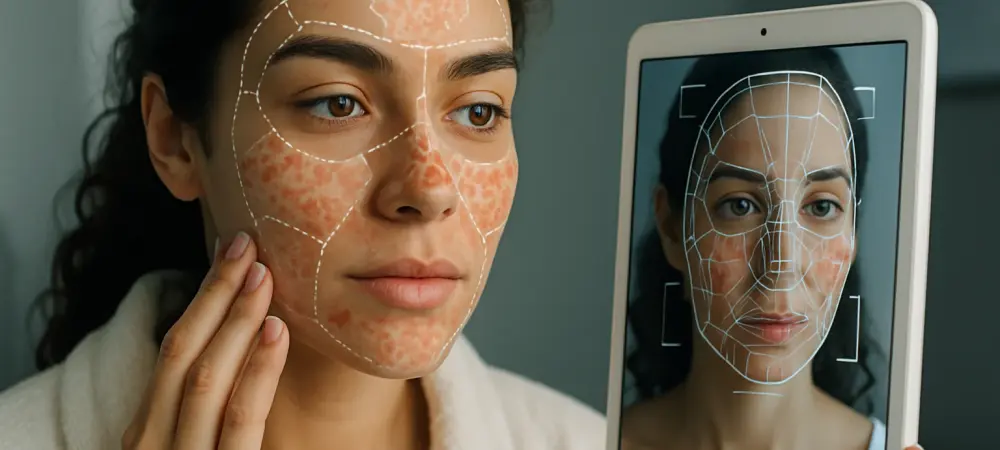
Picture a scenario where a smartphone app can scan a troubling spot on your skin and, within seconds, offer a preliminary diagnosis with startling accuracy, guiding you on whether to seek a dermatologist’s expertise. This is no longer science fiction; artificial intelligence (AI) is emerging as a virtual skin doctor, revolutionizing personal healthcare. The significance of AI in skincare diagnostics lies in its ability to meet the rising demand for accessible, tech-driven health solutions, particularly in underserved regions where dermatologists are scarce. This analysis explores the current landscape of AI in skincare, delving into real-world applications, expert perspectives, future potential, and critical takeaways to understand how this technology is reshaping skin health management.
The Rise of AI in Skincare Diagnostics
Growth and Adoption Trends
The integration of AI into skincare diagnostics has seen remarkable growth, driven by advancements in machine learning and image recognition. Reports indicate that certain AI tools achieve up to 90% accuracy in detecting melanoma, a deadly form of skin cancer, rivaling the precision of trained specialists in controlled studies. This statistic underscores the technology’s potential to transform early detection efforts globally.
Consumer adoption of AI-powered skincare apps is on a steep upward trajectory, with studies showing a growing reliance on these tools for initial skin assessments. Millions of users now turn to digital platforms for quick evaluations of rashes, acne, or suspicious moles, reflecting a shift toward self-managed care. This trend is particularly impactful in reducing wait times for non-urgent cases, allowing individuals to make informed decisions about seeking professional help.
Beyond individual use, the global reach of AI tools offers a lifeline in regions with limited access to dermatologists, easing the burden on overstretched healthcare systems. In rural or developing areas, where specialist care can be hours away, AI provides a critical first layer of insight. This scalability highlights the technology’s role in democratizing skin health resources, paving the way for broader healthcare equity.
Real-World Applications and Case Studies
AI is already making tangible impacts through innovative tools designed for everyday use. One striking example is the Aysa app, which demonstrated an 86% success rate in identifying skin conditions among its top three suggestions during a trial involving 700 patients in India. Such results showcase how AI can deliver reliable preliminary assessments, especially for common issues like eczema or psoriasis.
Leading companies and platforms are at the forefront of this revolution, with names like SkinVision and DermAssist pushing boundaries in early detection of skin cancer and other conditions. These tools analyze user-uploaded images against vast databases, flagging potential concerns and prompting timely medical consultations. Their contributions are vital in catching serious issues early, often before symptoms become severe.
Moreover, AI applications are bridging significant healthcare gaps by providing instant feedback for minor skin concerns, reducing unnecessary visits to clinics. For individuals hesitant to seek care due to cost or stigma, these tools offer a discreet, accessible entry point. By empowering users with actionable information, AI is reshaping how skin health is approached on a global scale.
Expert Perspectives on AI’s Role in Dermatology
The dermatology and tech communities offer a balanced view of AI’s capabilities in skincare diagnostics. Experts praise the technology for its speed and accessibility, noting that it can process images and deliver results in moments, a feat impossible for traditional systems. This efficiency is seen as a game-changer for triaging routine cases and guiding patients toward appropriate care pathways.
However, limitations are equally acknowledged, particularly AI’s struggle with rare or complex conditions that require contextual understanding beyond visuals. Dermatologists caution that factors like medical history or skin texture—elements AI cannot fully assess—remain crucial for accurate diagnoses. This gap underscores the consensus that technology should complement, not replace, human expertise in clinical settings.
A pressing concern raised by specialists is data bias, especially the reduced accuracy of AI tools for darker skin tones due to training datasets that lack diversity. This imbalance poses ethical challenges, potentially exacerbating health disparities if left unaddressed. Experts advocate for inclusive data collection and rigorous testing to ensure fairness, while emphasizing the need for professional oversight to mitigate risks of misdiagnosis.
Future Outlook for AI in Skincare Diagnostics
Looking ahead, AI in skincare diagnostics holds immense promise with potential advancements on the horizon. Innovations could enable tools to monitor treatment progress by tracking changes in skin conditions over time or even predict risks before visible symptoms emerge. Such capabilities hinge on improved algorithms and higher-quality, more diverse datasets to enhance precision across demographics.
The anticipated benefits are substantial, including greater accessibility for remote populations and enhanced efficiency in managing routine skin concerns. Yet, challenges persist, notably around data privacy as these tools handle sensitive personal images. Stricter regulations and transparent practices will be essential to build trust and protect user information from misuse or breaches.
Broader implications suggest that AI could fundamentally reshape personal health management by fostering proactive care. However, striking a balance between technological innovation and the irreplaceable value of human judgment remains critical. As AI evolves, its integration into dermatology must prioritize collaboration with professionals to ensure that advancements serve as supportive aids rather than standalone solutions.
Conclusion: Balancing Innovation and Caution
Reflecting on the journey of AI in skincare diagnostics, it is evident that this technology holds transformative promise as a rapid, accessible aid for early detection, though it grapples with limitations in accuracy and inclusivity across diverse skin types. Privacy concerns also loom large, demanding robust safeguards. Moving forward, stakeholders must prioritize the development of unbiased datasets and advocate for stringent regulations to address ethical gaps. Collaboration between technologists and dermatologists emerges as a cornerstone, ensuring AI remains a complementary tool rather than a substitute for expert care. Staying informed about these evolving dynamics and supporting inclusive, responsible innovation will be key to harnessing AI’s full potential in promoting equitable skin health for all.