

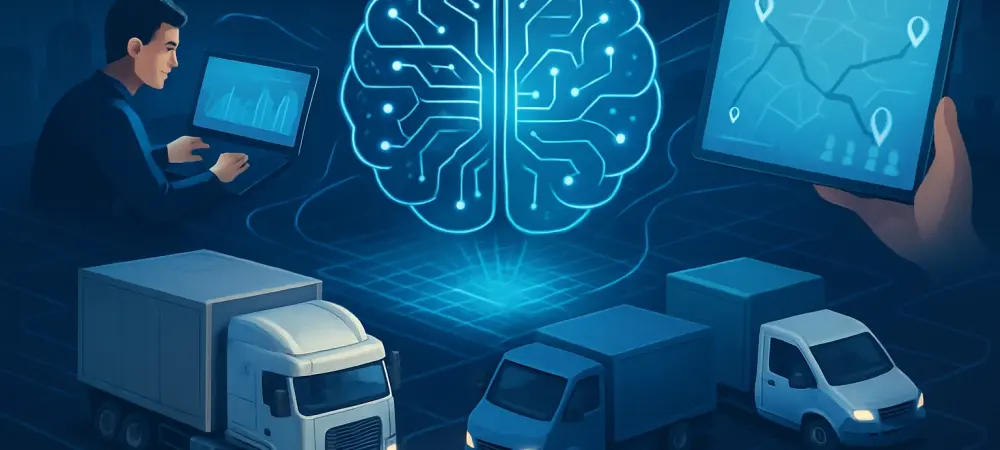
Imagine a world where every delivery truck dodges traffic snarls effortlessly, vehicles predict their own breakdowns before they happen, and fuel costs shrink without sacrificing speed or service. This isn’t a distant dream but the reality unfolding in fleet management today, driven by the relentless advance of artificial intelligence (AI). In an era of skyrocketing customer expectations and razor-thin profit margins, AI stands as a game-changer, transforming how fleets operate with unmatched efficiency and insight. The digital age has redefined logistics, pushing companies to adapt or fall behind, and AI is at the heart of this revolution, offering not just tools but a strategic edge.
The significance of AI in this space cannot be overstated. With rising demands for faster deliveries, sustainability, and cost control, fleet operators face complex challenges that traditional methods can no longer address. AI steps in as a critical ally, tackling operational bottlenecks and enabling businesses to stay competitive in a cutthroat industry. This analysis dives deep into AI’s role in optimizing fleet management, exploring its current applications, real-world success stories, expert opinions, future potential, and essential takeaways for staying ahead of the curve.
The Rise of AI in Fleet Management
Growth and Adoption Trends
The adoption of AI in fleet management has surged dramatically, reflecting a broader shift toward technology-driven logistics. Industry reports indicate that the market for AI in transportation is projected to grow significantly from this year through 2027, with investments in smart fleet solutions climbing as companies recognize the value of data-driven operations. Major research highlights that over half of large fleet operators now integrate some form of AI, whether for route planning or vehicle diagnostics, a stark contrast to just a few years ago when such tools were considered experimental. This rapid uptake signals a mainstream embrace of AI, as businesses prioritize efficiency in an increasingly demanding landscape.
Beyond sheer numbers, the momentum behind AI adoption speaks to a fundamental change in mindset. Fleet managers are no longer viewing technology as a luxury but as an essential component of survival. The push for real-time insights and cost savings has accelerated investments, with logistics firms allocating substantial budgets to AI tools that promise measurable returns. This trend underscores a pivotal moment in the industry, where staying competitive hinges on leveraging cutting-edge solutions to outpace rivals.
Real-World Applications and Case Studies
AI’s practical impact on fleet operations shines through in several key areas, from route optimization to predictive maintenance. By analyzing live traffic data, weather patterns, and road conditions, AI algorithms chart the most efficient paths for drivers, slashing delivery times and fuel costs. For instance, a leading logistics provider reported a significant reduction in travel time after implementing AI-driven routing, allowing more deliveries per shift without added strain on resources. Such outcomes illustrate how AI turns raw data into actionable strategies.
Another transformative application lies in predictive maintenance, where AI monitors vehicle health to flag potential issues before they escalate. A notable case involves a major trucking company that adopted AI sensors to track engine performance, cutting downtime by preempting breakdowns and saving substantial repair costs. This proactive approach not only extends vehicle lifespan but also ensures smoother operations, a critical advantage in a sector where delays can erode customer trust.
Fuel management further showcases AI’s value, with tools that analyze usage patterns and driver behavior to curb waste. A prominent delivery service, for example, used AI to provide real-time tips to drivers on reducing idling and optimizing speed, resulting in notable savings over months. These examples reveal a clear pattern: AI doesn’t just tweak operations—it redefines them, delivering efficiency and safety in ways previously unimaginable.
Expert Perspectives on AI’s Impact
Industry leaders and technology specialists alike herald AI as a cornerstone of modern fleet management, emphasizing its power to streamline decision-making. A veteran fleet manager recently noted that AI tools provide unparalleled visibility into operations, enabling quick responses to disruptions that once took hours to resolve. This ability to pivot swiftly, they argue, is what separates thriving fleets from struggling ones in today’s fast-paced market. Such insights point to AI’s role as a catalyst for agility and precision.
However, challenges remain, and experts are candid about the hurdles of integration. Data compatibility issues and the need for workforce training often slow adoption, as highlighted by a tech consultant specializing in logistics solutions. Despite these obstacles, the long-term payoff—enhanced competitiveness and reduced operational stress—outweighs initial growing pains. The consensus holds that AI’s benefits, from cost control to strategic planning, make it an indispensable asset for forward-thinking companies.
Moreover, specialists stress that AI augments rather than replaces human expertise. A transportation analyst pointed out that the technology’s true strength lies in supporting managers and drivers with insights they might otherwise miss, fostering a partnership rather than a takeover. This balanced view reinforces AI’s potential to elevate the industry, provided firms navigate implementation with care and foresight.
The Future of AI in Fleet Mobility
Looking ahead, AI’s trajectory in fleet management promises even greater strides, particularly in safety and connectivity. Enhanced algorithms could further refine collision avoidance systems, while deeper integration with the Internet of Things (IoT) might enable seamless communication between vehicles and central hubs. Such advancements could redefine operational flexibility, allowing fleets to adapt instantly to shifting conditions or unexpected demand spikes, a vital edge in unpredictable markets.
Yet, with progress comes complexity. Privacy concerns around data collection and the risk of over-reliance on automation pose real challenges, as do the costs of scaling AI systems across large fleets. Early adopters may reap outsized rewards, crafting smarter, leaner operations, but a cautious approach is warranted to maintain human oversight. Balancing tech-driven efficiency with the human touch will be key to avoiding pitfalls while maximizing gains.
On the optimistic side, AI’s potential to revolutionize cost control and sustainability offers a compelling vision. Smarter fuel optimization and reduced maintenance expenses could lower the environmental footprint of fleets, aligning with growing calls for green logistics. As these innovations unfold, the industry stands at a crossroads, poised to embrace a future where technology and strategy converge to create resilient, responsive mobility solutions.
Conclusion and Key Takeaways
Reflecting on the journey of AI in fleet management, it became clear that this technology reshaped the landscape through unparalleled efficiency, rigorous cost control, and sharp, data-driven insights. Its integration proved not just beneficial but essential for maintaining a competitive stance in the ever-evolving mobility sector. The transformation witnessed across operations—from streamlined routes to preempted repairs—underscored AI’s role as a linchpin of modern logistics.
Looking forward, businesses were encouraged to strategically adopt AI, viewing it as a partner rather than a mere tool. A deliberate approach, focusing on training and data governance, could ensure sustainable success while mitigating risks like technology dependency. Staying attuned to emerging trends and innovations offered a pathway to not just keep pace but to lead, positioning fleets to thrive amidst future challenges and opportunities.