

Artificial Intelligence is no longer a distant theoretical concept whispered in academic halls but has firmly established itself as the new bedrock of the global economy, driving a business transformation on a scale comparable only to the Industrial Revolution. The technology has evolved from a niche tool for specialized tasks into an indispensable engine powering the world’s most competitive enterprises. Understanding its role is no longer optional; it is a core component of modern corporate strategy, essential for unlocking new efficiencies, fueling innovation, and securing a sustainable advantage in an increasingly complex market. This analysis will explore the current state of AI adoption, its most transformative applications, the future of the AI-augmented workforce, and the critical ethical considerations that must guide its implementation.
The State of Play: AI’s Integration into Modern Business
The Growth Trajectory: From Experimentation to Essential
The corporate journey with Artificial Intelligence has seen a rapid and decisive shift from peripheral experimentation to deep, strategic integration. What began as isolated pilot programs in IT departments has now permeated every facet of the business, with adoption statistics showing exponential growth across sectors. This is not merely an increase in usage but a fundamental change in operational philosophy.
This integration marks a strategic pivot from traditional business models, which were reactive and based on analyzing historical data, toward a proactive, predictive paradigm. AI’s ability to process and find patterns in immense datasets in real time allows organizations to anticipate market shifts, forecast demand with uncanny accuracy, and identify opportunities before they become obvious. This predictive power turns data from a backward-looking record into a forward-looking compass, guiding a company’s every move.
AI in Action: Transformative Use Cases
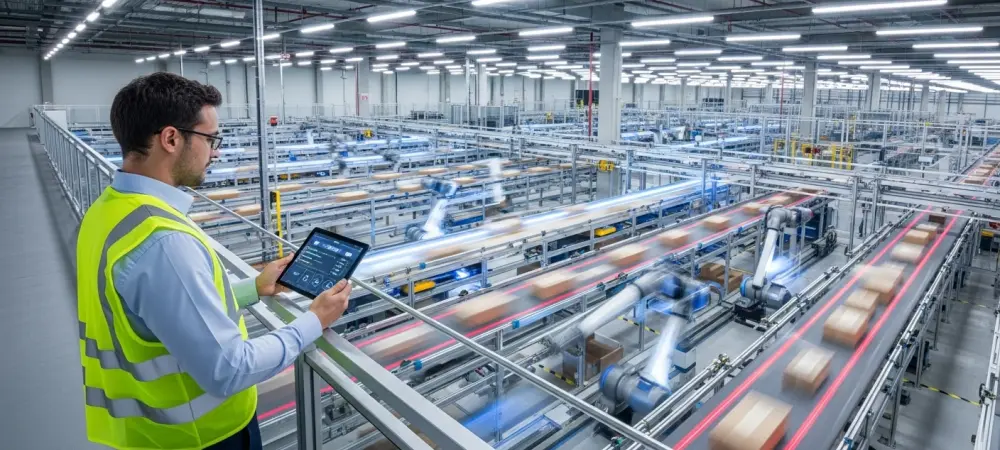
One of the most powerful applications of this shift is “intelligent automation,” particularly within supply chain management. Beyond simple robotics, AI algorithms now dynamically manage inventory by analyzing a vast array of real-time variables. These systems can factor in geopolitical events that might disrupt shipping lanes, adjust for sudden weather forecasts affecting logistics, and respond to fluctuating consumer demand, thereby optimizing stock levels to minimize waste and maximize capital efficiency.
Parallel to this, the concept of “Data Intelligence” has become central to corporate strategy, treating data as the “new oil” and AI as the critical refinery. Machine learning models sift through terabytes of customer data to uncover subtle behavioral patterns that would be invisible to human analysts. These insights inform high-stakes corporate decisions, from product development to market entry, transforming raw information into a clear competitive advantage and a deeper understanding of the consumer psyche.
The C-Suite Collaborator: AI in Strategic Decision-Making
The emergence of “Augmented Intelligence” reframes AI’s role in the boardroom from a potential replacement for human leaders to a powerful collaborative partner. This model leverages AI’s computational strength to enhance, not usurp, human expertise. The technology acts as an analytical powerhouse, processing information at a scale and speed that allows executives to focus on higher-level strategic thinking, judgment, and intuition.
A key function of this collaboration is the use of AI-powered simulations. Before committing to a major strategic initiative, such as entering a new global market, leadership can model thousands of potential scenarios. These simulations incorporate countless variables—competitor reactions, economic fluctuations, and regulatory changes—to generate a probability-based forecast of potential outcomes. This provides a data-driven foundation that significantly mitigates risk and enhances the confidence with which executives can make bold decisions. By clarifying the potential consequences of each path, AI empowers leaders to apply their experience with a much higher degree of clarity and strategic foresight.
The Next Horizon: Future Developments and Implications
Redefining Work: The Rise of the Augmented Workforce
The future of labor is not one of mass displacement but of profound augmentation. As AI systems become more adept at handling routine, data-intensive tasks, the value of uniquely human skills will be elevated. Automation will absorb the repetitive aspects of many roles, freeing employees to concentrate on complex problem-solving, creative ideation, and exercising ethical judgment—qualities that AI cannot replicate. This evolution necessitates the development of “AI fluency” as a fundamental competency across the workforce, as critical as literacy and numeracy were in previous eras. Professionals in every field will need a baseline understanding of how to work alongside AI systems, interpret their outputs, and leverage their capabilities to enhance their own performance. This collaborative dynamic will define the next generation of productivity and professional development.
The New Marketing Paradigm: From Mass Messaging to Hyper Personalization
In marketing, AI is rendering the inefficient “spray and pray” approach obsolete. In its place, AI-driven strategies enable “Segment-of-One” campaigns that deliver hyper-personalized messages to individual consumers at the most opportune moment. By analyzing browsing history, purchase patterns, and social sentiment, AI can tailor brand interactions with a level of precision that was previously unimaginable, fostering deeper customer loyalty.
Furthermore, generative AI is revolutionizing the creation of marketing content. Automated systems can now produce high-quality written copy, custom visuals, and dynamic email campaigns at scale, significantly accelerating time-to-market. This automation liberates human marketers from production-heavy tasks, allowing them to focus on the more strategic elements of their roles, such as crafting compelling brand narratives and developing long-term market strategy.
The Ethical Mandate: Governance in a Trust Based AI Economy
The widespread integration of AI brings with it a significant ethical responsibility that must be addressed at the board level. Issues such as algorithmic bias, which can perpetuate societal inequities, and the protection of consumer data privacy are no longer just compliance concerns but are central to maintaining brand reputation and consumer trust. Establishing transparent operational frameworks for AI is critical for navigating this complex landscape.
Beyond risk mitigation, AI also presents a powerful opportunity to advance corporate sustainability and achieve Environmental, Social, and Governance (ESG) goals. AI-powered systems can optimize energy consumption in data centers, streamline logistics to reduce carbon emissions, and model the environmental impact of new products. This capability allows companies to turn sustainability aspirations into measurable and achievable green business objectives, demonstrating a commitment to responsible corporate citizenship.
Conclusion: A Strategic Imperative for the Future
The analysis presented has demonstrated that AI is not a fleeting trend but a foundational strategic asset that has fundamentally reshaped the business world. It serves as a collaborator in the C-suite, a transformer of core business functions, and a catalyst for a more efficient and responsible global economy. The journey from a specialized technology to a ubiquitous business engine has been swift and decisive. Ultimately, the most successful enterprises were those that masterfully cultivated the synergy between AI’s unparalleled analytical power and the irreplaceable value of human creativity, vision, and ethics. The challenge for leaders was clear: to move beyond viewing AI as a mere tool and instead weave it into the very DNA of their organizations. By doing so, they unlocked new frontiers of innovation, built lasting value, and defined the future of commerce.