

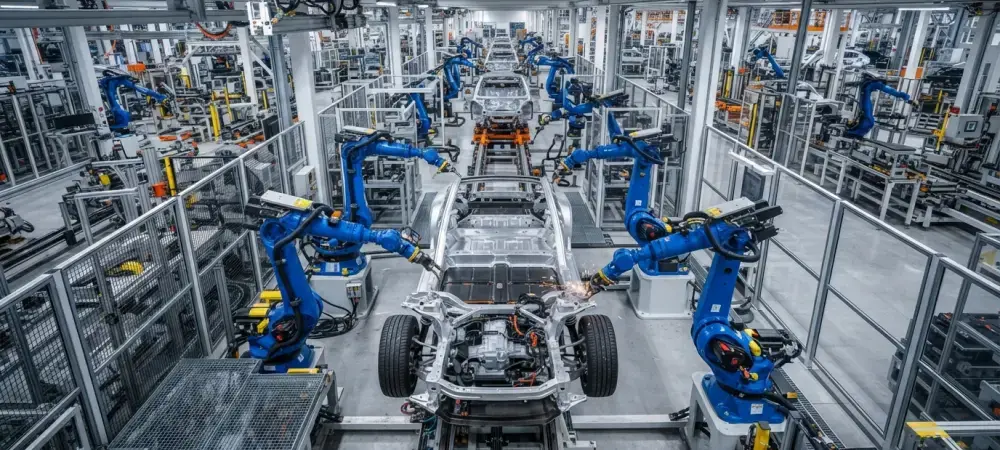
The relentless hum of a modern automotive assembly line is no longer just a mechanical rhythm but a complex digital symphony directed by sophisticated artificial intelligence algorithms. As the manufacturing sector navigates the complexities of the current year, the transition from rigid automation toward cognitive, self-learning systems has become the defining characteristic of industrial competitiveness. This shift represents more than a simple upgrade in hardware; it is a fundamental reimagining of how vehicles are conceived, constructed, and checked for quality in a world that demands near-perfection at an unprecedented scale.
The current landscape of automotive production is increasingly defined by the integration of machine intelligence that transcends basic robotics. While earlier iterations of automation focused on repetitive physical tasks, the current trend emphasizes the digitization of visual and auditory perception. This evolution allows factories to operate with a level of autonomy that was previously theoretical, enabling real-time adjustments to production variables that once required extensive manual intervention. The result is a manufacturing environment that is not only faster but significantly more resilient to the fluctuations of global supply chains and shifting consumer preferences.
The Growth and Adoption of Machine Intelligence on the Factory Floor
Statistical Evolution and Market Penetration
The trajectory of artificial intelligence within the automotive sector suggests a period of explosive growth that is reshaping the global industrial map. Current market data indicates that from 2026 to 2030, the compound annual growth rate of AI-driven solutions in manufacturing is expected to accelerate as companies move beyond experimental pilots into full-scale implementation. This surge is driven by a necessity to manage the extreme variability of modern vehicle configurations, where a single assembly line must handle hundreds of different trim levels and engine types without slowing down.
Furthermore, the adoption of these technologies is no longer limited to high-end luxury brands. While the initial investment in neural network infrastructure was substantial, the falling cost of edge computing and the proliferation of standardized software platforms have democratized access to high-level machine learning. The industry has reached a tipping point where the failure to integrate intelligent systems is equated with a loss of market relevance, as the efficiency gains are too significant to ignore.
Real-World Implementation: The BMW iFACTORY Case Study
A primary example of this digital transformation is the BMW iFACTORY initiative, which serves as a blueprint for the modern production network. At the center of this strategy is the Artificial Intelligence Quality Next (AIQX) platform, a system that utilizes deep learning-based computer vision to oversee the assembly process. By deploying high-resolution cameras across various stages of production, the system captures real-time images of components and compares them against vast datasets of both perfect and flawed examples. This allows for a level of precision in quality assurance that manual inspection could never consistently achieve, especially in the identification of microscopic defects.
The implementation at the Dingolfing plant in Germany specifically addresses the long-standing challenge of false positives in automated systems. Historically, highly sensitive sensors would flag non-critical variations—such as a droplet of oil or a speck of dust—as structural flaws, leading to unnecessary production halts. However, by training neural networks to distinguish between superficial anomalies and genuine defects, the system now provides a more accurate assessment. This consensus-driven approach ensures that the production line remains fluid, with human experts only intervening when the AI identifies a legitimate threat to vehicle integrity or safety.
Expert Perspectives on the Cognitive Manufacturing Shift
Industry thought leaders emphasize that the current shift toward cognitive manufacturing is less about replacing the human workforce and more about augmenting human capability. Experts argue that the complexity of modern vehicles requires a multi-sensory approach to quality control that combines the speed of AI with the nuanced decision-making of experienced technicians. For instance, at several advanced facilities, acoustic analytics are now used to detect mechanical misalignments that are invisible to the eye. By “listening” to the vibrations and sounds of a vehicle during testing, the AI can identify potential issues in the drivetrain or suspension before the car ever leaves the factory floor.
Moreover, the introduction of generative AI into the quality control loop has introduced a new level of hyper-customization. Specialists note that systems like the GenAI4Q project allow for the automatic creation of tailored inspection catalogs for every individual vehicle based on its specific identification number. This means that a technician on the floor receives a custom checklist on a mobile device that is unique to the exact car in front of them, accounting for its specific regional specifications and optional equipment. This seamless flow of data ensures that the massive variability of modern production does not result in a compromise of quality standards.
The Road Ahead: Future Developments and Industry Implications
As the industry looks toward the conclusion of the decade, the integration of “Car2X” communication is poised to create a fully circular data ecosystem. In this scenario, the vehicle being built is not a passive object but an active participant in its own assembly. By communicating directly with the factory software, the car can report its internal status and verify that its software modules are correctly flashed and functioning. This interconnectedness will likely reduce the need for separate testing stations, as the car performs continuous self-diagnostics throughout the entire production journey, leading to a leaner and more integrated manufacturing process.
However, the rapid expansion of AI also brings forward significant challenges regarding data security and the need for a specialized workforce. The transition requires a new generation of industrial workers who are as comfortable with data science as they are with mechanical engineering. Organizations that prioritize the upskilling of their current employees while also securing their digital infrastructure against cyber threats will be best positioned to thrive. The broader implication for the industry is a move toward “smart resilience,” where the factory can automatically reconfigure itself in response to external shocks, ensuring that production remains stable even in an increasingly volatile global environment.
Summary of Key Findings and Final Outlook
The primary findings of this analysis indicated that the integration of artificial intelligence was the central pillar of the automotive industry’s digital transition. The data confirmed that the shift from rule-based automation to deep learning models significantly reduced operational friction and improved the accuracy of quality assurance. The analysis showed that the implementation of systems like AIQX allowed manufacturers to handle extreme product variability with a level of precision that was previously unattainable. Furthermore, the collaboration between human expertise and machine perception emerged as the most effective model for maintaining high brand standards in a high-speed production environment.
The transition toward a fully digitized production floor demonstrated that the path forward required a holistic approach to technology, where hardware and software were indistinguishably linked. The findings suggested that the successful factories of the era were those that treated data as a primary raw material, utilizing it to predict failures before they occurred and to customize processes at a granular level. Ultimately, the evolution of AI in manufacturing was not a singular event but a continuous process of refinement that redefined the relationship between the product, the worker, and the machine. This cultural and technological shift ensured that the automotive sector remained a leader in the global move toward a more intelligent and responsive industrial future.