

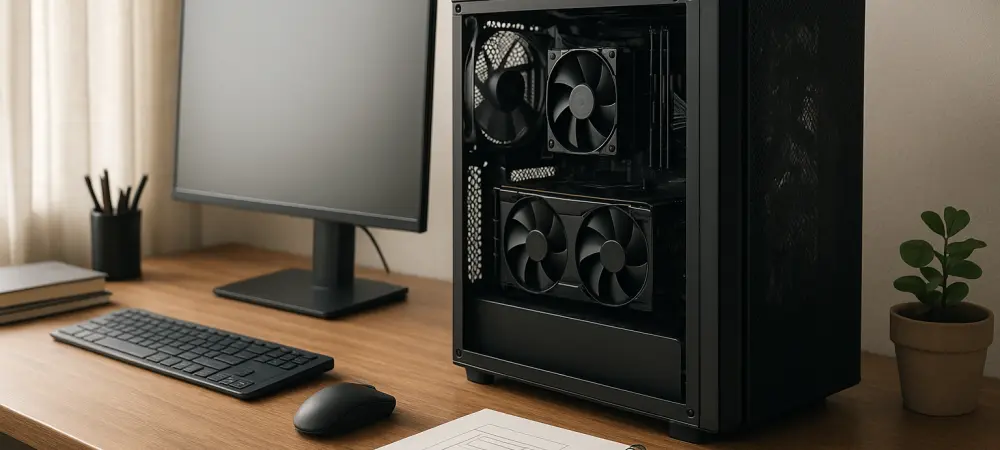
Artificial intelligence is often perceived as a silent revolution occurring solely within the realm of software, yet it is currently acting as a brutal and unforgiving physical stress test for the very hardware it relies upon to function. As large language models move from enterprise data centers to local workstations, the physical toll on consumer-grade components is becoming a critical point of failure. This analysis examines the technical reasons behind component exhaustion and the shifting requirements for sustainable computing between 2026 and 2028.
Evolution of Resource-Intensive AI Workloads
Trends in Local Model Scaling and Memory Bottlenecks
The transition from 7B parameter models to complex 30B+ architectures has forced enthusiasts to manage massive data sets through system RAM offloading. While high-end GPUs remain the preferred engine for these tasks, limited VRAM often creates a bottleneck that necessitates utilizing slower system memory to maintain model integrity. These AI tasks differ significantly from gaming because they require high-bandwidth, sequential read operations that never pause. This constant data streaming pushes hardware to its absolute limit, exposing vulnerabilities that traditional stress tests fail to identify in standard consumer environments.
Case Study: System Memory Failure During 35B Parameter Execution
A workstation utilizing an RTX 5070 Ti and 128GB of DDR4 ECC memory to run the Ornith-1.5-35B-A3B model provides a stark example of hardware fatigue. Within 90 minutes of operation, an 8GB stick failed completely, followed by errors in a second module just days later.
This failure occurred despite stable CPU temperatures, highlighting a dangerous trade-off where token quality was prioritized over component safety. The persistent read-heavy workload simply overwhelmed the architecture, leading to an irreversible hardware breakdown.
Expert Analysis of Component Fatigue and Thermal Oversight
Experts suggest that hidden thermal factors are often ignored, as standard monitoring rarely tracks individual RAM bank temperatures. DDR4 architecture lacks the advanced power management required for modern AI brute-forcing, leading to localized hotspots that bypass general system sensors.
Moreover, continuous, high-intensity read cycles can accelerate the failure of even enterprise-grade ECC memory. Hardware exhaustion is now a practical reality for users pushing older architectures to their limits, as the physical structures of the silicon degrade under such relentless electrical stress.
Future Outlook: Standardizing Resilience in AI Hardware
The industry is shifting toward DDR5 and beyond, as higher bandwidth and improved efficiency become mandatory for local AI. Future workstation designs will likely incorporate dedicated active cooling for memory banks and specialized AI-ready hardware certifications to ensure long-term durability.
Neglecting these trends could result in a significant increase in electronic waste and high replacement costs. Manufacturers may eventually need to revise warranty terms to account for the extreme wear caused by locally hosted generative models.
Conclusion: The True Cost of High-Performance Local AI
The move toward denser models successfully exposed the inherent vulnerabilities of traditional configurations that were never intended for such relentless workloads. Stakeholders recognized that achieving a balance between model complexity and hardware durability was essential for long-term operational success. The industry ultimately shifted toward prioritizing modern architectures and sophisticated cooling solutions to ensure that hardware burnout did not become a permanent barrier to innovation.